

Writer-director Angus MacLachlan“A Little Prayer” is a quiet domestic drama about an elderly couple in North Carolina, their troubled adult children, the children’s loved ones and their struggles to find peace and happiness despite the mistakes they have made and the distress they have caused others. It received respectful national attention and found a theatrical audience, even though it had little promotional money and featured only one actor who is close to a household name: an A-list actor. David Strathairn.
But you’ve probably heard of it if you’ve read this site in the past year, because many of our writers and editors love it. It was featured at last year’s EbertFest, where our editor Chaz Ebert introduced it:
MacLachlan has worked in theater for a long time, as a director, actor and writer. Her first screenplay was for 2005’s “Junebug,” which featured a firecracker performance from then-unknown Amy Adams that won her the Academy Award for Best Supporting Actress and launched her to stardom. “Junebug” was directed by his old friend Phil Morrison, who collaborated with him on the short film “Tater Tomater,” based on the McLachlan play “Behold Zebulon,” and is currently working on another film to make together. As a director, MacLachlan directed two other films, “Goodbye to All That,” with Paul Schneider and Melanie Lynskey, and “Abundant Acreage Available,” with Amy Ryan and Terry Kinney, and adapted another of his plays as the prison drama “Stone,” directed by John Curran.
MacLachlan spoke to RogerEbert.com on his film career, particularly the small-scale triumph of “A little prayer.” He discussed the inspiration behind his film, which stems from his experiences as a parent to his own daughter, as well as his thoughts on parenting with adult children, the relationship between writing and the subconscious, and more.
This interview has been edited for clarity and length.
Where does this particular story come from?
I started writing it nine years ago, actually even longer than that, and it came from a lot of different places: things I’ve experienced, things I’ve read, things I’ve seen. But I only realized in retrospect, because it took me so long to make the film, that I was actually writing about my daughter, who was 15 at the time, growing up and going off on her own, becoming an adult. This has happened to me more than once in my work, where I only discover what I write a few years later. It’s like my subconscious is trying to find a solution.
What about at the craft level? Was there a specific experience that sparked “A Little Prayer”? For some writers, it might be reading a news story, hearing a friend recount a difficult experience, reading a poem, or something similar.
I don’t remember the exact impetus, but it involved a father figure and a young woman. All the elements of the film that deal with Bill’s son, David, an Iraq war veteran, come, I could say, from my cousin, an Afghanistan veteran who came back and had a lot of problems. Her marriage ended and there were many difficulties. This had a strong resonance. There were also aspects of a play called The Dead Eye Boy that Lily Taylor did in New York that deals with drug addiction. There were so many things that I don’t know if I can pick one that stands out more than the others.
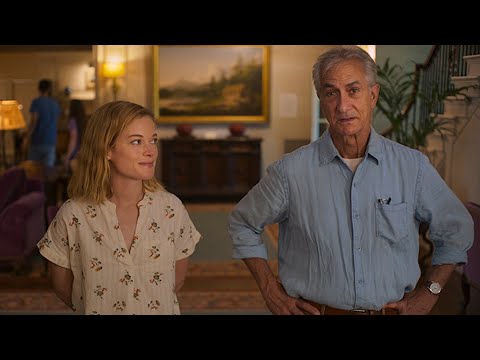
Was there a particular role model for David Strathairn’s character, Bill? He enjoys a still very comfortable marriage with his long-time wife, played by Celia Weston. But he must be diplomatic when he realizes his son’s marriage is falling apart because of his cheating, and whether he should tell his daughter-in-law what he knows. There is also tension at the sheet metal factory that Bill and David co-own, as David’s affair is with a subordinate. Her daughter returns to the family home with her children following a separation. I have never seen such a combination of challenges before.
I don’t know if there was a specific role model for Bill, but I can say that Bill was a character I knew very well at the time of casting the film. I knew I had to find someone to play Bill who would assure you that there was nothing fishy about his love for and attention to his stepdaughter, someone with real gravitas, decorum and honor. And so when David Strathairn came on board, I knew he was the perfect person, because not only can he play that kind of person, but he actually is that kind of person. He’s just the best person.
I’m sure you know from your experience the strange hope you have that the movie gods, the creative gods or the muses will align for you. I was extremely lucky with this film, even though it was in the making for so long. There’s so much luck in how any kind of creative project, especially filmmaking, turns out that I’m aware that I don’t have much control over it.


You remind me of that Orson Welles quote that a director is a person who presides over accidents.
I also remember hearing another quote about this, from Robert Altman, who made films for a long time, but went years between successes. He was talking about his film “Gosford Park”, a surprise success at the end of his career. He said, “You know, I’ve been working the exact same way this whole time. Sometimes you just catch lightning in a bottle.”
Sometimes everything comes together. I’m aware that’s what happened with this film, in many ways. People say, “Are you proud of that?” » I don’t know about the feeling of pride, because I don’t feel responsible for it. I feel an immense sense of accomplishment. I made it, and it’s finally available for people to see. But I was just trying to work as best I could, and thank God there was a lightning bolt stuck in the bottle.
I feel these mysterious presences and energies running beneath the surface of the film. They sometimes rise high enough for you to see them, then they come back down. Does this make sense?
Thank you very much for saying that, because that was certainly my intention. I’ve been an actor for a long time, so what really interests me is character. They are people. And always, as an actor and filmmaker, my question is: how do people experience life? Why is it so difficult? I was curious about how people get through difficulties. I know I write with a lot of subtext, and I think it’s there, and sometimes I’ve had experiences as a playwright where I felt like the people who were performing my other works weren’t seeing that side or feeling it, but if they were feeling it, the audience was feeling it, and it’s there. This is also the case in cinema.
One of the things I like about cinema is that you can continue to “write” in quotes if, after having shot it, you edit it. There were scenes where I realized that all we really needed to make a point was a reaction shot, or a shot that captures a thought that’s on a person’s face. David has this quality of a cinema actor. When we were shooting the film, he was very present and all the actors were also very good. But then, later, when I looked at the footage, David had this quality that I’ve heard about, that other great film actors have, in the sense that the camera captures so much more than what people observe when they’re on set. I felt like I saw what he was doing [when we were shooting]but during editing I saw all these other thoughts, emotions, changes and transitions that only the camera could see.
When you have an actor like that, you don’t need as much dialogue as the character originally intended. This might also explain the success of actors who aren’t trained, who are just incredibly good on screen, like Marilyn Monroe, who had something deeply magical that she couldn’t really control, and in her best performances, it’s something.

It’s also interesting, when an actor has this quality when he’s young, to see if it can become something as an adult. Are they still in contact with this stuff? Can they still do it? When I was in acting training, I had a teacher who said that a lot of child actors don’t really make it as adults because they have something as kids, but once they become adults, they can’t exploit it. They become too embarrassed.
That’s how I feel about the Fanning sisters. It looks like they just came out of the womb with that something you’re describing, and they’re still able to access it. This year again, I watched “Predator: Badlands“, and Elle Fanning was so extraordinarily energetic in it, playing two different roles, that I had a thought I certainly never had while watching a Predator movie: I wish Ingmar Bergman could have directed her.
It’s funny that you mention Bergman. Our film was screened last Sunday at the Museum of the Moving Image in New York. An audience member asked if Bergman’s “Wild Strawberries” inspired the relationship between father-in-law and daughter-in-law. And I said, “I’ll take that.”[[Laughter]But then I saw again [“Wild Strawberries”] and that has a lot of resonance with our film, particularly the close relationship between the father-in-law and the daughter-in-law.
Do you think “Wild Strawberries” was buried somewhere in your subconscious and only emerged when you were writing this film?
Yeah. I mean, it’s all there, in the subconscious. I truly, sincerely believe that the conscious and subconscious play an active role in the creative process. And that can be frustrating, because I have other writer friends, especially novelists, who say, “I’m working on my book, and I know what my next one is going to be, and I know I have plans for that one after that,” and they’re still producing work. I discovered that I’m just not like that! I have to wait for something to happen [to the conscious mind] to be expressed, and when I don’t have it, I tell myself. “I’ll never have another idea. I’ll never make another movie.” And I feel it now, because we’ve finally arrived at [theatrical] series of “A Little Prayer”.
It’s quite remarkable how far this film has strayed from the micro-budget indie track that usually ends in obscurity, with the film buried in a streaming algorithm. He really found an audience. But you did it on a shoestring budget, and the distributor, Music Box Films, is great, but they don’t really roll in the dough like the big studios. So it must be word of mouth, right?
From your mouth to the ears of God! I hope so. I mean, you always want to have more eyes on your work. I want to share it with more people. It was a matter of luck that we made it to Sundance. And then we thought we were ready once we sold it to a distributor, but it fell apart. And we were told, “That’s it, you’ll never have another distributor again.” » But finally, Music Box arrived. Thank God. They are a very small company and I am very grateful to them. Yes, it’s really gratifying that it received the attention that he received.

There is a spiritual dimension to your work that is unusual in American films: this feeling that there is something beyond what we perceive with our senses. All the parts of the film dealing with Bill and his daughter-in-law Tammy, where they hear this woman’s voice singing in their neighborhood and try to locate the source, it felt like something you would see in a Terrence Malick or Terrence Davies film, where there is no doubt that there is an invisible force that ties everything together.
Yeah. Absolutely. And when you talk about it, I get a little goosebumps, because I feel that myself. And I don’t know if anyone else records it or recognizes it. The Invisible Singer came about because when I was in New York for a while at a friend’s apartment, there was a woman singing while walking down the street. [below] every day at 5 a.m. She actually didn’t sing very well, but I ran to the window to try to see her. I never got to see her. I thought it was funny, haunting and interesting, so I decided to include it in the storyline.
About the singer: For me, that’s what it’s all about grace. Tammy feels something about the singer’s presence. The singer doesn’t come every day. It’s special when she does, and it’s special when she doesn’t. She and Bill try to find her, but they are unsuccessful. And then towards the end of the film, after Bill comes home drunk the next morning, you see footage of the neighborhood again, and you hear the soundtrack, the orchestration, and then it stops when you hear this woman. She’s not here.
To me, this explains how, at this point in the story, for Bill and Tammy, they have lost their connection to grace. It’s not until Bill takes him to the art museum and shows him The Andes of Ecuadorthe painting by Frederic Edwin Church, and she reads the sign about the idea of panoramas, which [she gets that] there is a bigger picture. That’s what all art does to me. Art takes you out of your grief, sorrow, or worry and connects you to something greater.