

NASA confirmed pending launch of the European Space Agency (ESA) Rosalind Franklin rover, which is sent to Mars. The current plan is to launch via a SpaceX Falcon Heavy rocket from the Kennedy Space Center. The timeline is still being worked out, but the space agency says it won’t happen until at least 2028.
It is a partnership between NASA and ESA, with the European agency providing the rover, spacecraft and lander. The United States will provide braking motors for the lander, heating units for the rover’s internal systems and, of course, assistance with the actual launch.
The rover will be equipped with scientific instruments to search for signs of ancient life on the Red Planet. These include a state-of-the-art mass spectrometer and an organic molecule analyzer, which will be useful when the vehicle collects samples at the Oxia Planum landing site.
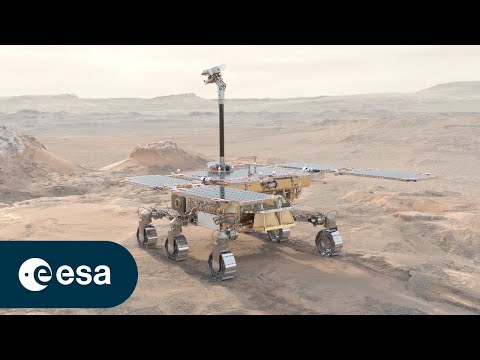
This is a mission that has suffered years of delays for all kinds of crazy reasons. In fact, it was first designed all this in 2001. The rover’s mission was initially planned for 2009, after NASA came on board. Budget constraints forced NASA to abandon the project in 2012, and so Russia agreed to become an ESA launch partner.
During this period, the mission technical problems encountered which additional delays were imposed. The ESA suspended its partnership with Russia in 2022 after the invasion of Ukraine. This left the mission in doubt until 2024, when NASA I came back home.
In the midst of a historic return mission to the Moon, this administration is proposing a 47% cut to NASA’s science budget and a 23% cut to NASA’s overall budget. Last week’s launch showed our country and the world what we are capable of when we work together toward a common goal. None of… pic.twitter.com/zW3i3iFaEQ
– Senator Mark Kelly (@SenMarkKelly) April 10, 2026
However, the setbacks don’t even stop there. The Trump administration has repeatedly attempted to end NASA’s involvement in the project, and many others, via severe budget cuts. The current proposal was made while the The crew of Artemis II was on a mission around the Moon, according to a report from The register. Hopefully the launch will take place in 2028.
This article was originally published on Engadget at https://www.engadget.com/science/space/nasa-restarts-work-to-support-europes-uncrewed-trip-to-mars-after-years-of-setbacks-161524488.html?src=rss