US uncovers alleged $200m ghost student fraud linked to Kenyan network
NAIROBI, Kenya, Oct 29— US authorities have seized more than $750,000 (about Sh97 million) in cryptocurrency linked to a transnational student financial aid fraud scheme involving Kenyan nationals, in what the Justice Department describes as its first international seizure of its kind in Kenya. The seizure was announced on Thursday as the US Justice Department unveiled indictments and criminal charges against five defendants in Operation Ghostbusters, a nationwide investigation into an alleged scheme that used stolen American identities to obtain federal student aid.
NAIROBI, Kenya, Oct 29— US authorities have seized more than $750,000 (about Sh97 million) in cryptocurrency linked to a transnational student financial aid fraud scheme involving Kenyan nationals, in what the Justice Department describes as its first international seizure of its kind in Kenya.
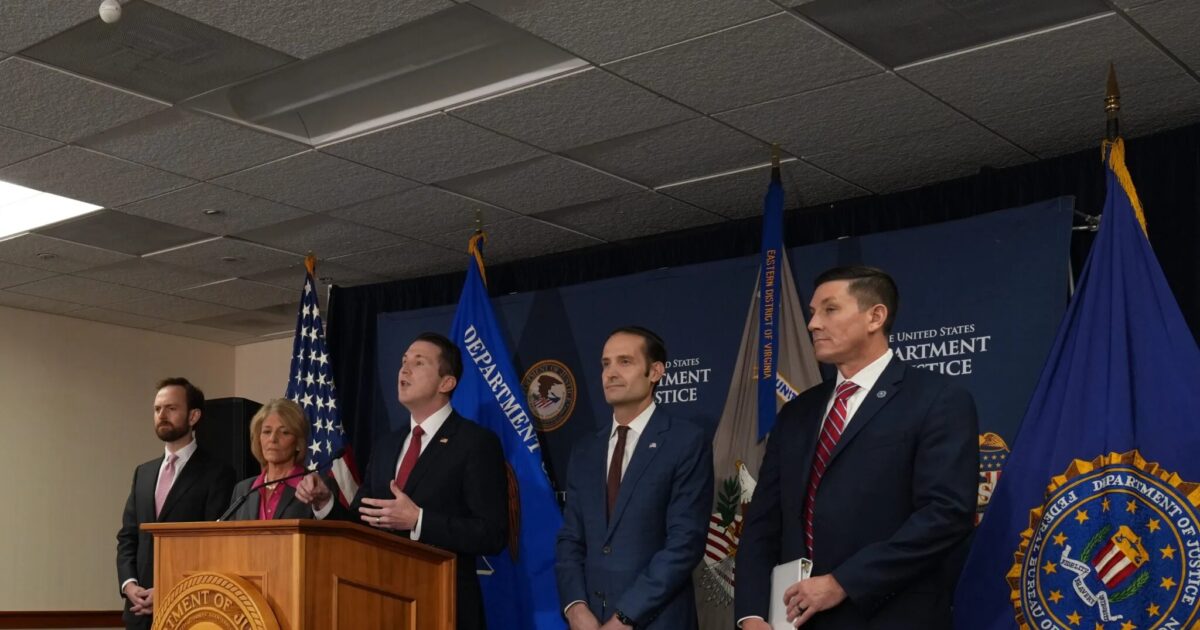
The seizure was announced on Thursday as the US Justice Department unveiled indictments and criminal charges against five defendants in Operation Ghostbusters, a nationwide investigation into an alleged scheme that used stolen American identities to obtain federal student aid.
Investigators allege that the network created fraudulent applications for Federal Student Aid (FAFSA) using the personal information of US citizens to enrol fictitious students in American colleges and universities, with the resulting loan and grant refunds diverted to accounts controlled by the conspirators.
The investigation has identified more than $32 million in losses from similar schemes, with the total suspected value of the wider fraud estimated at more than $200 million, according to the Justice Department.
The operation has also identified 830,840 potentially fraudulent Federal Student Aid IDs associated with nearly $130 million, prompting investigators to recommend that the US Department of Education disable the accounts in September and October 2026.
Assistant Attorney General Colin M. McDonald said the enforcement action was intended to stop the theft of public funds and protect financial aid programmes designed to support students.
“If you steal American identities, if you steal taxpayer dollars, if you exploit programs meant to help students build a future — we will find you,” McDonald said, warning that investigators would pursue suspects regardless of whether they were in the United States or Nairobi.
According to the Justice Department, the scheme involved Kenyan-based conspirators and US-based money mules who received fraudulent student aid refunds through bank accounts before transferring the proceeds overseas.
In one case, three defendants in New Jersey allegedly conspired with individuals in Kenya to obtain more than $1 million in federal student aid through fraudulent applications submitted using stolen American identities.
The US government alleges that the defendants received the funds through American bank accounts, deducted their share and transferred the remainder to co-conspirators in Kenya associated with a purported safari company.
All three were arrested following the filing of a criminal complaint.
The Justice Department said two alleged co-conspirators were in Kenya and that prosecutors intended to pursue charges against them as the investigation continued.
In a separate case, a Kenyan national was charged in Virginia following an indictment returned by a federal grand jury on October 21.
According to the indictment, the defendant allegedly received approximately $1.44 million through more than 700 fraudulent student aid refund deposits and participated in thousands of transactions that moved at least $1.3 million through accounts in the United States and Kenya.
In Nebraska, Kenyan citizen Francis Mogambi was indicted on October 19 on five counts of theft of government money and five counts of aggravated identity theft.
Prosecutors allege that between November 2025 and May 2026, Mogambi used stolen identities to obtain federal student aid, retaining 30 per cent of the proceeds and sending the remainder to associates in Kenya.
The indictment also alleges that he attempted to recruit another person into the scheme. He was arrested and detained pending trial.
The Justice Department said the fraud involved applications submitted using stolen personal information belonging to Americans who had not enrolled in the institutions listed in the applications.
Once the aid was disbursed, refunds were channelled to bank or other financial accounts controlled by the conspirators.
Investigators said the fictitious students were sometimes kept enrolled across multiple semesters, with fraudulent coursework allegedly completed to maintain eligibility for continued payments.
The scheme also affected people whose identities had been misused without their knowledge. Some victims reportedly held only high school qualifications and were shocked to discover that their personal details had been used to enrol them in colleges hundreds of miles away.
The investigation began after the FBI’s Richmond field office received a referral from the US Department of Education’s Office of Inspector General.
The Justice Department said more than 40 cases were now open across 26 FBI field offices and more than 20 US attorney’s offices, with investigators examining the wider network and additional suspected losses.
The cryptocurrency seizure followed a visit to Kenya in September by representatives of the Justice Department’s National Fraud Enforcement Division and partner agencies to advance cooperation on extradition, prosecutions and the recovery of assets allegedly stolen from US taxpayers.
The US government credited Kenyan law enforcement agencies, including the Directorate of Criminal Investigations, the Asset Recovery Agency and the Office of the Director of Public Prosecutions, with providing assistance and intelligence that supported the seizure.
The Justice Department said Operation Ghostbusters would continue working with Kenyan counterparts to trace the proceeds of the alleged fraud and pursue suspects operating outside the United States.
The investigation highlights the cross-border dimension of financial aid fraud, in which stolen identities, US-based bank accounts, digital assets and international transfers can be used to move money between jurisdictions.
The US authorities have not said how many people in Kenya may ultimately face charges or when proceedings against the alleged Kenyan-based co-conspirators might begin.
The Justice Department cautioned that an indictment, criminal complaint or information constitutes an allegation and that all defendants are presumed innocent until proven guilty beyond a reasonable doubt.
Bruhan Makong is a Senior News Reporter for Capital FM in Nairobi, covering diplomacy, foreign policy, national security, climate, and human rights across East Africa and the wider region.
- student
- aid
- fraud
- kenya
- department
- network
- justice
- scheme