House of Reps summons threaten the NCC/Telco compensation framework

On 21 October 2026, the House of Representatives Ad Hoc Committee investigating poor telecom service quality gave the chief executives of MTN Nigeria, Airtel Nigeria, Globacom and Mafab Communications seven days to appear before it, and warned that those who refused would face arrest warrants. By October, NCC Executive Vice Chairman Dr Aminu Maida reported at the 95th Telecom Consumer Parliament in Lagos that more than 75 million subscribers had received airtime or data compensation for service failures recorded between November 2025 and September 2026.
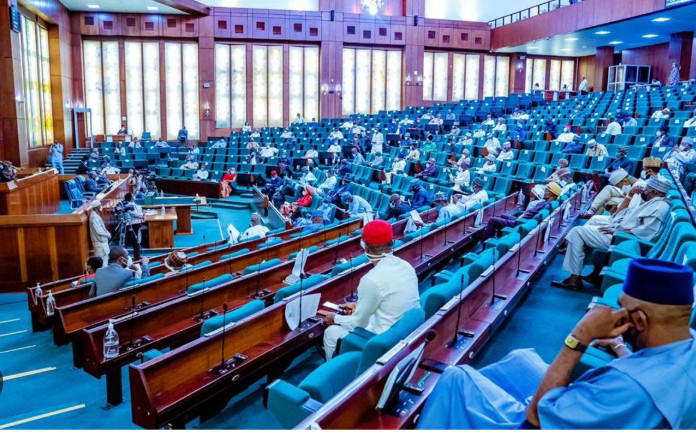
Nigeria’s telecommunications sector is caught between two forces that should be pulling in the same direction but are instead on a collision course. On one hand, the Nigerian Communications Commission has built a consumer compensation framework that, for the first time, holds mobile operators automatically accountable for service quality. On the other hand, the House of Representatives has escalated its oversight of the sector into direct confrontation with the same operators, issuing summons, threatening arrests, and openly questioning whether the NCC’s regulatory machinery is fit for purpose.
The tension runs deeper than procedure. It goes to the heart of how Nigeria regulates its most critical digital infrastructure: whether through patient, data-driven enforcement or through parliamentary theatre. As both tracks accelerate, the risk grows that one will undermine the other. On 21 October 2026, the House of Representatives Ad Hoc Committee investigating poor telecom service quality gave the chief executives of MTN Nigeria, Airtel Nigeria, Globacom and Mafab Communications seven days to appear before it, and warned that those who refused would face arrest warrants.
The committee chairman, Rep. Olumide Osoba (APC-Ogun), framed the matter in economic terms, noting that mobile connectivity now underpins point-of-sale operations, financial transactions and everyday commerce. Osoba alleged that invited CEOs repeatedly sent lower-ranking staff instead of appearing in person, calling the pattern unacceptable. This was not the first salvo.
In May 2026, the House had already faulted the NCC for what lawmakers described as weak regulatory oversight, accusing the commission of failing to enforce standards that would compel operators to deliver reliable service. Rep. George Ozodinobi, the deputy minority whip, accused operators of prioritising profits over quality. The chamber then directed the NCC to tighten its quality-of-service standards and constituted the ad hoc committee to investigate the root causes of poor service.
The NCC Has Been Proactive Meanwhile, the NCC has been building. In March 2026, the commission issued a landmark directive mandating mobile operators to compensate subscribers automatically when network performance falls below prescribed thresholds. The Framework for Compensation of Consumers, which took effect in April 2026, represents a fundamental shift in Nigeria’s telecom regulatory approach: for the first time, the burden of proving and pursuing redress moved from the subscriber to the operator.
By October, NCC Executive Vice Chairman Dr Aminu Maida reported at the 95th Telecom Consumer Parliament in Lagos that more than 75 million subscribers had received airtime or data compensation for service failures recorded between November 2025 and September 2026. Nearly three million subscribers also received refunds for failed airtime and data transactions, while operators carried out more than 6,500 network interventions in the same period.
Maida, however, struck a careful tone about the framework’s limits, cautioning that compensation alone falls short of solving the underlying problem. He noted that while redress matters, it cannot recover a lost business opportunity or a conversation that could not take place. His stated priority remains reducing the failures that make compensation necessary.
The framework has also drawn praise from the industry. The National Consumers Advocacy Network commended the NCC for introducing automatic compensation without requiring subscribers to file complaints, calling the approach a new benchmark for regulatory innovation. Legal analysts at Tope Adebayo LP described the model as a significant consumer protection intervention, though they noted critical gaps, particularly the absence of any right of appeal for subscribers who consider the compensation inadequate.
The Risk of Political Overreach Legislative oversight of critical sectors is legitimate and necessary. But holding regulators accountable differs from short-circuiting the very mechanisms those regulators are building. The NCC’s compensation framework is still in its first year of operation. The commission independently verifies operators’ claims of compliance.
The Quality of Service Business Rules 2024, which underpin the framework, are being enforced alongside a broader programme of non-monetary sanctions. This is precisely the kind of technocratic, data-driven enforcement that Nigeria’s telecom sector has needed for years. The risk is that aggressive parliamentary intervention (arrest threats, public hearings designed for television rather than resolution, blanket accusations of extortion) sends operators into a defensive posture rather than a compliance posture.
Telecoms CEOs, compelled to spend time answering lawmakers, have less time to invest in the infrastructure upgrades the country desperately needs. Mobile operators and tower companies invested a combined N2.5 trillion in network infrastructure
- ncc
- compensation
- framework
- house
- operator
- service
- subscriber
- nigeria