PIAC @15: Grant PIAC statutory powers to enforce infractions in its reports – CDD-Ghana boss

The Executive Director of the Ghana Centre for Democratic Development (CDD-Ghana), Prof. H. Kwasi Prempeh, has called for amendments to the Petroleum Revenue Management Act, 2011 (Act 815), to empower the Public Interest and Accountability Committee (PIAC) to take legal action against institutions and companies that fail to comply with petroleum revenue management obligations. PIAC is a statutory body established under section 51 of the Petroleum Revenue Management Act (PRMA), 2011, to provide additional oversight of the management and use of Ghana’s petroleum revenues.
The Executive Director of the Ghana Centre for Democratic Development (CDD-Ghana), Prof. H. Kwasi Prempeh, has called for amendments to the Petroleum Revenue Management Act, 2011 (Act 815), to empower the Public Interest and Accountability Committee (PIAC) to take legal action against institutions and companies that fail to comply with petroleum revenue management obligations.
He says PIAC should be granted legal standing to seek court orders compelling public agencies to fulfil their statutory duties and companies to settle outstanding payments owed to the state.
He questioned whether 15 years of reporting on petroleum revenue management had translated into meaningful accountability and development, arguing that Ghana continues to struggle with enforcing findings contained in PIAC’s reports.
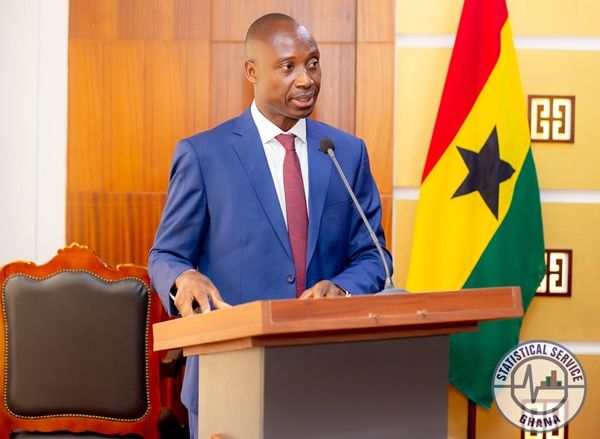
Prof Prempeh proposed this while delivering a lecture on the theme, “Beyond Excellence in Reporting: Building the Chain from Transparency to Accountability to Sustainable Development in Natural Resource Management.”
PIAC is a statutory body established under section 51 of the Petroleum Revenue Management Act (PRMA), 2011, to provide additional oversight of the management and use of Ghana's petroleum revenues.
PIAC’s 2025 annual report indicated that approximately 60 per cent of outstanding surface rentals were owed by three companies whose petroleum agreements had been terminated as far back as 2021.
Prof Prempeh noted it is not PIAC’s fault, explaining that the committee was established primarily as a monitoring body and a platform for public scrutiny rather than an enforcement agency.
“Public scrutiny of revenues accruing to the country was shrouded in secrecy. PIAC broke with that tradition through three statutory functions. Year after year, PIAC's reports flag the same breaches. Uncollected surface rentals, non-compliance with statutory expenditure caps, petroleum funds diverted into recurring spending instead of being put into a heritage fund, and on and on. In its 2025 annual report, PIAC noted that roughly 60% of surface rentals are owed by three companies whose petroleum agreements were terminated as far back as 2021.
“The agencies responsible face no deadline and no penalty for ignoring these findings. So, the findings are publicised, yet little changes. None of this is PIAC's fault. PIAC was designed quite deliberately as a monitor and a public platform rather than an enforcement agency. 15 years is long enough, I think, for us to ask whether that design should stand unmodified. Notice that the obstacle here is not a shortage of information,” he said.
Prof Prempeh is proposing an amendment to the Petroleum Revenue Management Act, 2011 (Act 815).
“There is clarity on whose obligations it is to report, to manage, to do these things. And then we spelt out a mechanism for enforcing those obligations. But in the absence of that, I think what we can do is grant PIAC an additional tool in the form of locus standi so that we can amend Act 815. PIAC should be able to go to court for orders to compel agencies to act and companies to pay what they owe. Constitutional trust cannot be enforced by the courts on its own terms, but Parliament can supply what the constitution does not,” he said.
The lecture formed part of activities marking PIAC’s 15th anniversary and was organised in collaboration with the Department of Petroleum Engineering at the Kwame Nkrumah University of Science and Technology (KNUST).
The lecture provided a platform to reflect on 15 years of petroleum revenue governance in Ghana, and strategise on strengthening transparency, oversight, and institutional accountability for sustainable national development.
Chairman of PIAC, Richard Ellimah, said the anniversary lecture was timely, given the finite nature of Ghana’s petroleum resources and the long-term implications of decisions on their management.
“The theme for this anniversary lecture is both timely and relevant. Ghana's petroleum resources are finite, and the decisions we make today will have lasting Implications for future generations. It is therefore imperative that petroleum revenues are managed prudently, invested strategically and utilised in ways that promote inclusive growth, improve livelihoods and support the country's long-term development priorities.
“Transparency must go beyond making information available. It must enable citizens to understand public decisions, scrutinise expenditure and demand explanations from those entrusted with managing the nation's resources,” he said.
- piac
- petroleum
- revenue
- management
- ghana
- act
- report
- company