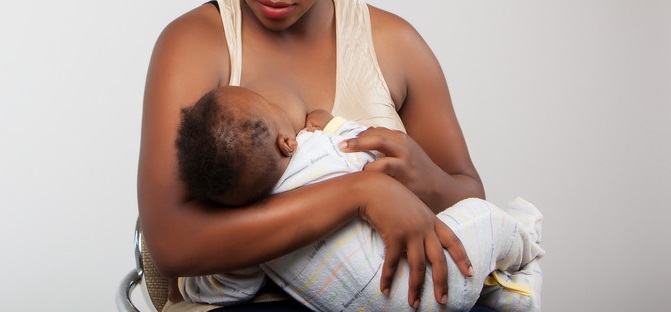
Breast cancer survivor who became a mother at 45 urges women not to fear treatment

A breast cancer survivor, Jemima Naana Boateng, has urged women diagnosed with the disease not to delay or abandon treatment out of fear that it could deprive them of the opportunity to have children. Urges women to seek early treatment Beyond her message about motherhood, Jemima urged women to seek medical attention as soon as they notice any unusual changes in their breasts, warning that delaying treatment could have serious consequences.
A breast cancer survivor, Jemima Naana Boateng, has urged women diagnosed with the disease not to delay or abandon treatment out of fear that it could deprive them of the opportunity to have children.
Jemima, who gave birth to her first child at the age of 45, six years after surviving breast cancer, says her experience should encourage women to prioritise their health while keeping hope alive about motherhood.
She had spent nine years hoping to become a mother after getting married at 30 when she was diagnosed with breast cancer, a development that made an already difficult journey even more challenging.
Speaking on Cosmopolitan Mix with Doreen Andoh on Joy FM, she recounted how the diagnosis left her worried about her future, particularly the possibility of never experiencing motherhood.
"I battled with having a baby. I got married at 30. I was waiting. I thought I'd done all that I could. You can just name it, for nine years, before expecting to be a mother. Then boom, you have breast cancer," she said.
The diagnosis came with fear and uncertainty, but Jemima said she eventually decided to focus on surviving rather than allow the condition to define her future.
"Emotionally, you can just put yourself in my shoes. But hey, I chose life. And I decided to close that docket. At least God has given me one more chance, another chance to live life," she said.
Her treatment journey involved chemotherapy, surgery and radiotherapy after doctors reportedly found traces of the disease in her lungs. She continues to receive treatment at home.
Six years after surviving breast cancer, Jemima welcomed a baby girl on December 31, at the age of 45, describing the birth as an unexpected blessing after years of waiting.
"One day, I was just there, and God decided to put that smile on my face and say, 'Oh girl, let me give you a gift, a priceless jewel and an amazing gift.' I said, 'Aseda [Thanksgiving], ' she recounted.
"Anytime I look at that girl, I see the goodness of the Lord in the land of the living," she added.
Jemima said her experience had strengthened her belief that women should not give up on life or assume that motherhood is no longer possible after cancer treatment.
She encouraged women undergoing treatment to discuss their fertility concerns with their medical teams rather than allow fear to prevent them from seeking care.
"You do what you're supposed to do. God knows how to wipe that pain and give you the joy he gave to me. It is possible that you can have babies after all the treatment," she said.
Beyond her message about motherhood, Jemima urged women to seek medical attention as soon as they notice any unusual changes in their breasts, warning that delaying treatment could have serious consequences.
She said she spent four months at home after her diagnosis because she struggled to understand the seriousness of the condition and did not know whom to approach for information and support.
"When I was diagnosed, a lot went through my mind. What is going to happen? This, that, but because I didn't know who to ask, and I'd not heard anything about it, I just went back home and relaxed," she said.
"I stayed for four months. Four months without doing anything."
Reflecting on the delay, she cautioned women against waiting until they experience pain or severe symptoms before seeking medical attention.
"Immediately you see something, any change in your breast, even the slightest thing, just go to any health facility. Everywhere, in every hospital, they are helping out. Just go and get screened," she said.
She stressed that not every breast lump is cancerous and that medical examinations are necessary to determine the cause of unusual changes.
"It's not every lump that is cancerous. Maybe it will just be a little lump that you need just a simple surgery to remove," she said.
Drawing on her own experience, she warned women against delaying assessment and treatment.
"If you wait as I waited, I am just living and surviving by grace. Maybe you will not have the same luck as me. So just go and get it checked and then follow the treatment to the letter," she said.
Jemima also appealed to the public to stop stigmatising breast cancer patients and survivors, saying insensitive comments and fear of public judgement could discourage women from speaking openly about their condition or seeking help.
She recalled an encounter with a customer at her shop who recognised her from an appearance on Adom TV and asked whether it was true that her breast had been removed.
She said such encounters could make survivors feel exposed and judged when they needed understanding and support.
"When people behave that way, it makes it difficult for people to come out and share their stories," she said.
"Please, stop the stigma. Give a helping hand to someone because a lot of people are fighting something silently. Nobody knows about it."
She urged the public to respond to people living with cancer with compassion rather than criticism, noting that the emotional burden of the diagnosis was already difficult.
"When you add insult to injury, you make it a bit difficult for even the person to survive," she said.
Jemima further appealed to men, particularly husbands, not to abandon their partners following a breast cancer diagnosis.
"Please, I'll beg everyone, and the men, please help the women. Don't leave them. A lot of people, their husbands have left them because of breast cancer. They are still human," she said.
She expressed gratitude to her own husband for standing by her throughout her treatment, saying he put his life on hold for two years to support her.
Despite the difficulties she faced, Jemima said she had chosen to focus on recovery and urged other women diagnosed with breast cancer to remain hopeful.
"Healing starts from the mind. Healing is in the mind. You always tell yourself what you want to see. They've diagnosed you with cancer. That is not a death sentence," she said.
She encouraged patients to follow their prescribed treatment and not abandon it midway.
"Don't start and stop before the next line. You do what you're supposed to do and leave the rest to God," she said.
- breast
- treatment
- cancer
- woman
- mother
- jemima
- fear
- survivor