Pedestrianisation won’t save Oxford Street
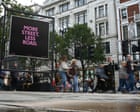
Oliver Schick writes that there is a limit to how much footfall is beneficial. Plus letters from Iain Nelson and Tom Hardy The real causes of the problems seen in Oxford Street (The long read, 22 October) are high rents, the chaotic system of business rates and the replacement of many smaller footprints with larger ones; these are the main factors that have made the street less viable.
Oliver Schick writes that there is a limit to how much footfall is beneficial. Plus letters from Iain Nelson and Tom Hardy
The real causes of the problems seen in Oxford Street (The long read, 22 October) are high rents, the chaotic system of business rates and the replacement of many smaller footprints with larger ones; these are the main factors that have made the street less viable. The large flagship shops depend on being surrounded by good-quality small businesses to attract customers.
Much of what the mayor of London is doing here is a de facto part-privatisation – stopping up a very important public highway for a large number of users of “unwelcome” modes of transport, to benefit private landowners.
Rather than buses being a main culprit here, it is much more likely that the gradual downgrading of bus services along Oxford Street has contributed significantly to its decline.
The strategic mistake of routing Crossrail along Oxford Street – long after this plan lost its part-justification (dating from when it was conceived decades ago) of stimulating the West End – has caused the dangerously high footfall levels that have become a main motivation for pedestrianisation.
The Crossrail route should have been changed to connect Heathrow and Stratford through centres in south London, but we have to live with it now. There is a natural limit to how much footfall is beneficial for urban centres, and disadvantaging everyone who doesn’t want to get there by underground railway isn’t going to change this.
The factors at play that have weakened Oxford Street are not unique to it, and none of them will be affected by these actions from the mayor of London, who is largely powerless to address them without central government taking corrective action. Oliver Schick London
I like to see Sadiq Khan contributing to the Guardian, but on this occasion I have to quibble with his description of Oxford Street as “our nation’s high street” (We’ve made Oxford Street traffic-free – and that’s just the start. Soon there’ll be green spaces for arts and music too, 26 October). I live on the border of Wales, and whether a street in London is pedestrianised or not is entirely irrelevant to me. It’s not my high street and never will be. Iain Nelson Selattyn, Shropshire
Credit where credit is due. Contrary to accusations at the time that businesses had suffered, footfall on Oxford Street actually increased by 13.5% as visitors were drawn to the utopia that was Extinction Rebellion’s blockade in April 2019 – a harbinger, in microcosm, of what a greener, less polluted world might look like. Tom Hardy London
- street
- oxford
- pedestrianisation
- business
- oliver
- schick
- limit
- footfall