Youth unemployment exceeds 32%; about 12m Ghanaians are between 15 and 35 years – GSS
The figures are presented in Ghana in Numbers, 2025, the new annual flagship publication of the Ghana Statistical Service (GSS), which brings official statistics on Ghana’s population, economy, society, governance and environment into one accessible volume. The publication and related data resources are available through the Ghana Statistical Service website, StatsBank and the GSS Stats App.
About 12 million Ghanaians were aged 15 to 35 in 2025, roughly one in every three people and the largest youth population in the country’s history.
The figures are presented in Ghana in Numbers, 2025, the new annual flagship publication of the Ghana Statistical Service (GSS), which brings official statistics on Ghana’s population, economy, society, governance and environment into one accessible volume.
The report examines whether Ghana’s large youth population is being matched by the education, skills and work opportunities needed for young people to participate fully in the economy.
Youth unemployment remains above the national rate
During the first three quarters of 2025, unemployment averaged 32.4% among people aged 15 to 24 and 21.9% among those aged 15 to 35. The national average was 12.8 percent.
This means that young jobseekers were more likely than the wider labour force to be unable to find work.
The average rate of young people aged 15 to 35 who were neither employed nor enrolled in education or training (known as the NEET rate) was 17.9% during the first three quarters of 2025.
In the third quarter alone, close to two million people aged 15 to 35 were in this group. Women made up more than 60%. The rate was 20.6% in urban areas, 18.0% in rural areas and 25.3% in the Central Region.
Job quality and skills matching also matter
About 65% of employed youth said their skills fitted their jobs, but only 58% said their level of education matched what the job required.
More than 70.0% of all jobs were informal. This means that the youth employment question is not only whether a person works, but also whether the work uses the person’s training and provides stable, protected employment.
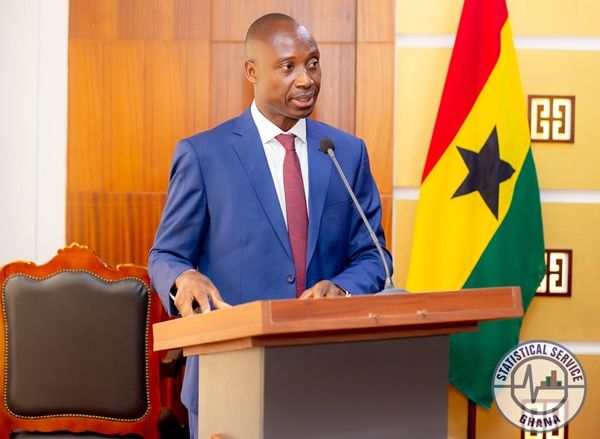
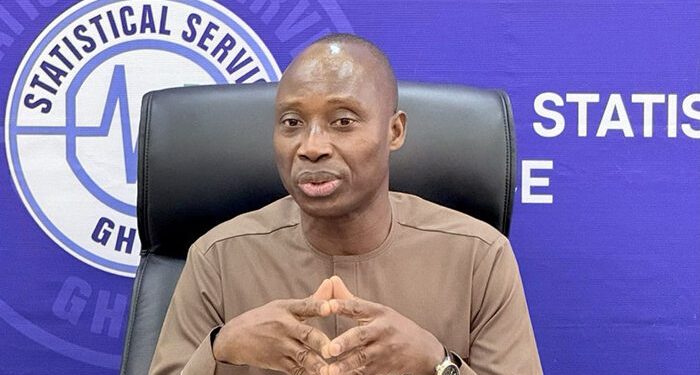
Dr. Alhassan Iddrisu, Government Statistician, said the labour figures should be read together: “Close to two million young people are neither working nor in education or training, what we refer to as the NEET group, and more than six in ten of them are young women.”
Ghana’s demographic opportunity is time-bound
The share of children aged 0 to 14 fell from 41.8% of the population in 2000 to 35.0% in 2025, while the youth share remained at about 35%. Ghana now has roughly as many people aged 15 to 35 as children aged 0 to 14.
This age structure can support faster development when a larger working-age population has the health, skills and jobs to be productive. The report says Ghana’s demographic window opened in the early 2000s and has been narrowing since 2019.
“Ghana’s youth window is open, but it is closing,” Dr. Iddrisu said. “Our choices on schooling, skills and jobs in the next ten years will decide whether it becomes a dividend or a burden.”
Evidence for education, employment and skills planning
Ghana in Numbers, 2025 brings population, labour market, education and skills indicators together to support decisions that can be tracked over time. Future editions will monitor youth unemployment, the NEET rate, informal work and the match between schooling and jobs.
The publication and related data resources are available through the Ghana Statistical Service website, StatsBank and the GSS Stats App.
- youth
- ghana
- unemployment
- people
- skill
- job
- gss
- population