Deadly goods on sale: How fake products damage organs, destroy lives
*Everyday purchases now turn to health hazards *Patients end up paying twice for treatment —Adefunke Adeniyi *Counterfeit drugs damage kidneys, liver — Amarachukwu Enahoro *Adulterated drugs can cause collapse of health sector — Pharmacists warn By Chioma Obinna It is an understatement to say that Nigeria is currently battling a health crisis. Dr Amarachukwu Enahoro, a medical doctor and public health physician at Lagos University Teaching Hospital (LUTH), said counterfeit medicines could defeat the very purpose for which they were purchased.
*Everyday purchases now turn to health hazards *Patients end up paying twice for treatment —Adefunke Adeniyi *Counterfeit drugs damage kidneys, liver — Amarachukwu Enahoro *Adulterated drugs can cause collapse of health sector — Pharmacists warn By Chioma Obinna It is an understatement to say that Nigeria is currently battling a health crisis. Virtually every product, drug, food or drink is being counterfeited in the country and the consequence is fatal.
Toddlers are no longer safe because counterfeit baby foods are everywhere. Parents now need to exercise caution in the choice of biscuits to give to their children as some biscuits have been discovered to contain toxic. A tablet swallowed to cure malaria could end up damaging the kidneys or liver while a bottle of drink bought to quench thirst could expose the consumer to dangerous substances.
Similarly, cooking oil packaged under a trusted brand could contain ingredients far removed from what the label promises. For millions of Nigerians, the growing menace of fake and substandard products has turned everyday purchases into a potentially deadly gamble, with consequences ranging from failed treatment and organ damage to disability and death.
The scale of the threat is underscored by the National Agency for Food and Drug Administration and Control (NAFDAC), which reported destroying unsafe, falsified and non-compliant regulated products worth ₦22.73 billion between January and August 2026. Yet, beyond the billions of naira in seized and destroyed goods lies a more disturbing reality: the human cost of a trade that preys on consumers, undermines medical treatment, drains family resources and puts lives at risk.
Health experts have therefore raised the alarm that harmful substances in counterfeit medicines, drinks and food products can damage vital organs. The question now is no longer just how much Nigeria is losing to fake products, but how many lives are being put in danger. When the medicine fails The danger is particularly serious when counterfeit or substandard medicines are used to treat common illnesses such as malaria.
A patient experiencing fever and body aches may buy an antimalarial, take it as directed and expect to recover. But a medicine containing insufficient active ingredients, no effective ingredient or an inappropriate substance may fail to treat the illness, allowing the patient’s condition to worsen. Dr Amarachukwu Enahoro, a medical doctor and public health physician at Lagos University Teaching Hospital (LUTH), said counterfeit medicines could defeat the very purpose for which they were purchased.
“The consequence for that person might be that the main purpose for which this medicine was put, which is to treat malaria, will not be achieved,” she said. “The second implication is that it can now cause damage. Depending on what they used to prepare the fake medication, it can now cause damage to the kidneys and the liver.” The effects depend on the substances involved, the quantity consumed and the person’s health.
While some injuries may be reversible with prompt treatment, severe damage can result in lasting loss of organ function, disability and a diminished quality of life. “The liver can be affected. The kidneys can be affected. And these have the potential to cause disability, loss of function, when these organs are damaged. It affects the quality of life of the people,” Enahoro said.
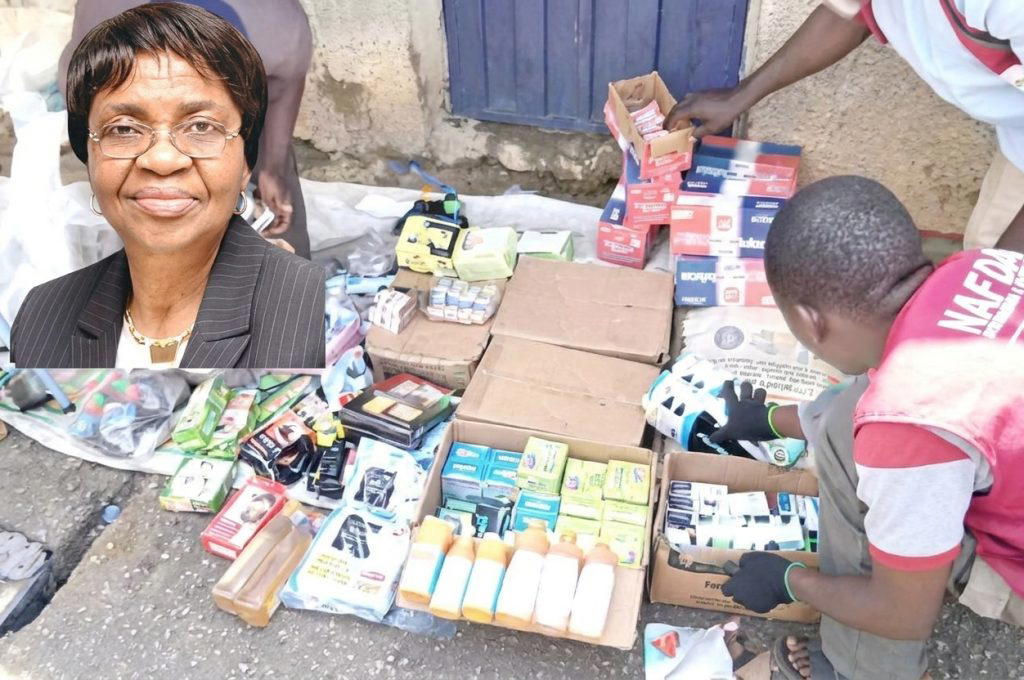
A major NAFDAC operation in Lagos in February 2026 illustrated the potential scale of the threat. The agency reportedly seized more than 10 million doses of counterfeit malaria medicines and cosmetic products valued at approximately ₦3billion during a raid at Trade Fair Market. The reported haul included antimalarials, antibiotics and other medicines.
Eight truckloads of products were removed, while four suspects were arrested. Another warning came in April 2025, when NAFDAC alerted Nigerians to counterfeit Aflotin 20/120 antimalarial tablets circulating under the name of a genuine medicine. The alert followed the identification of discrepancies in the counterfeit product’s packaging and batch information.
For patients who depend on timely treatment, the danger is clear: a medicine may carry a familiar name without providing the quality, safety or effectiveness they expect. The danger beyond the medicine cabinet Counterfeit and adulterated food products can also expose consumers to harmful substances, sometimes affecting several people who consume the same product.
Reports of deaths and hospitalisations following the consumption of locally made alcoholic and herbal drinks in Ondo State have raised concerns about the safety of beverages consumed at social gatherings. Reports have also linked suspected contaminated juices in Kano State to severe illness, including kidney-related complications. These incidents highlight the potential consequences when the contents and safety of products cannot be guaranteed.
In January 2026, NAFDAC also reported an operati
- damage
- product
- medicine
- health
- organ
- life
- treatment
- drug