Can Tinubu’s education reforms rescue a generation? – Inside Alausa’s ambitious agenda
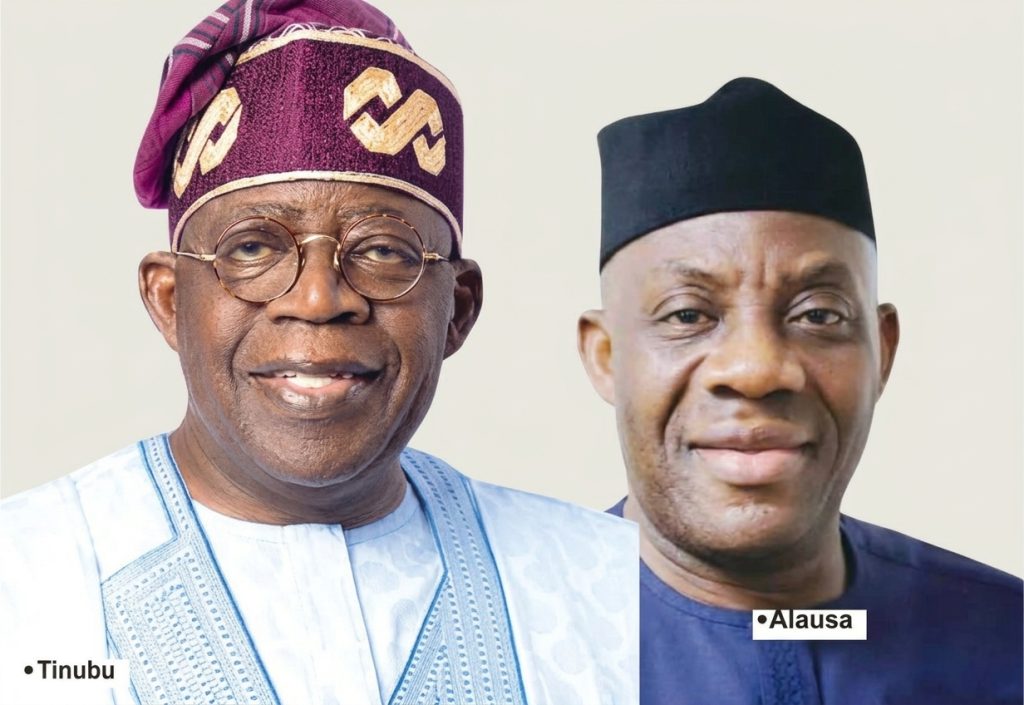
By Joseph Erunke, Abuja With nearly 46 million children reportedly captured in a new education data system, almost 250,000 Nigerians undergoing technical skills training and the government claiming to have returned one million out-of-school children to classrooms, the Tinubu administration is making an ambitious case for an education turnaround. For decades, Nigeria’s education crisis has been defined by millions of children outside classrooms, overcrowded schools, inadequate facilities, poorly equipped laboratories, frustrated teachers and graduates struggling to find employment despite…
By Joseph Erunke, Abuja With nearly 46 million children reportedly captured in a new education data system, almost 250,000 Nigerians undergoing technical skills training and the government claiming to have returned one million out-of-school children to classrooms, the Tinubu administration is making an ambitious case for an education turnaround. But can impressive figures translate into lasting educational transformation?
For decades, Nigeria’s education crisis has been defined by millions of children outside classrooms, overcrowded schools, inadequate facilities, poorly equipped laboratories, frustrated teachers and graduates struggling to find employment despite their qualifications Now, in the office of the Minister of Education, Dr Tunji Alausa, a digital dashboard is offering a different picture–one the minister says provides an unprecedented opportunity to monitor schools, track enrolment, identify infrastructure gaps and examine the distribution of teachers and pupils nationwide.
With a few clicks, Alausa explained, officials can drill down into individual schools to examine enrollment figures, the number of girls, available facilities and teaching personnel. For a country long challenged by fragmented education statistics, this represents a potentially significant shift. But the real test of Nigeria’s education reforms is not how impressive the dashboard appears in Abuja.
It is whether the technology delivers better classrooms, competent teachers, improved learning outcomes and greater opportunities for millions of children. That is the central question confronting Alausa as he presents President Bola Tinubu’s education reforms as the beginning of a measurable turnaround. Alausa Speaking while receiving notification of his selection for Vanguard’s Public Sector Icon of the Year award, the minister outlined six priority areas: technical and vocational education and training, science and technology education, reducing the out-of-school population, girls’ education, data and digitalisation, and improving educational quality and teacher effectiveness.
Together, these priorities seek to address a fundamental contradiction in Nigerian education: expanding access without guaranteeing learning, producing graduates without adequate practical skills and increasing enrolment without providing sufficient infrastructure. With Nigeria’s population estimated at approximately 220 million and a youthful demographic, Alausa argued that education reform was imperative.
The challenge is to turn this demographic advantage into economic productivity rather than allow it to deepen unemployment, inequality and insecurity Perhaps the most consequential element of Alausa’s presentation was the ministry’s cloud-based education dashboard, which he said captures information on nearly 46 million children. Its potential lies in replacing fragmented administrative records with a more comprehensive picture of the education system.
Reliable information could help authorities identify schools without adequate classrooms, locate teacher shortages, track enrolment and attendance, and direct resources towards underserved communities. For years, inadequate or inconsistent data have complicated education planning. Children who drop out may disappear from official records, while schools with urgent needs may struggle to attract appropriate interventions.
A functioning digital system could change that by helping policymakers identify problems early and monitor whether government investments produce results.But there is a crucial distinction between collecting data and using it effectively. The minister’s presentation did not independently establish the completeness of the dashboard’s coverage, the frequency of updates or the extent to which its information has been verified against school-level records.
For the system to become a credible accountability instrument, its data must be regularly updated, independently validated and linked to decisions on funding and intervention. Appropriate information should also be accessible to researchers, journalists and the public, without compromising children’s privacy. Otherwise, the dashboard risks becoming an expensive digital catalogue of problems rather than an instrument for solving them.
Back to school Among the most compelling claims in Alausa’s presentation was that the government had brought approximately one million children back into school over the preceding three years. If independently verified and sustained, the achievement would represent a significant step towards addressing Nigeria’s persistent out-of-school crisis.Yet, educational exclusion is not simply a question of school admission.
Poverty, insecurity, displacement, child labour, early marriage, inadequate infrastructure and the cost of schooling all contribute to keeping children away from classrooms. In conflict-affected communities, children may be enrolled but unable to attend safely. In poor households, the immediate need f
- education
- alausa
- school
- tinubu
- child
- teacher
- reform
- datum


