Some called him warlord, but he was liberator, pan-Africanist – Yormie Johnson’s widow
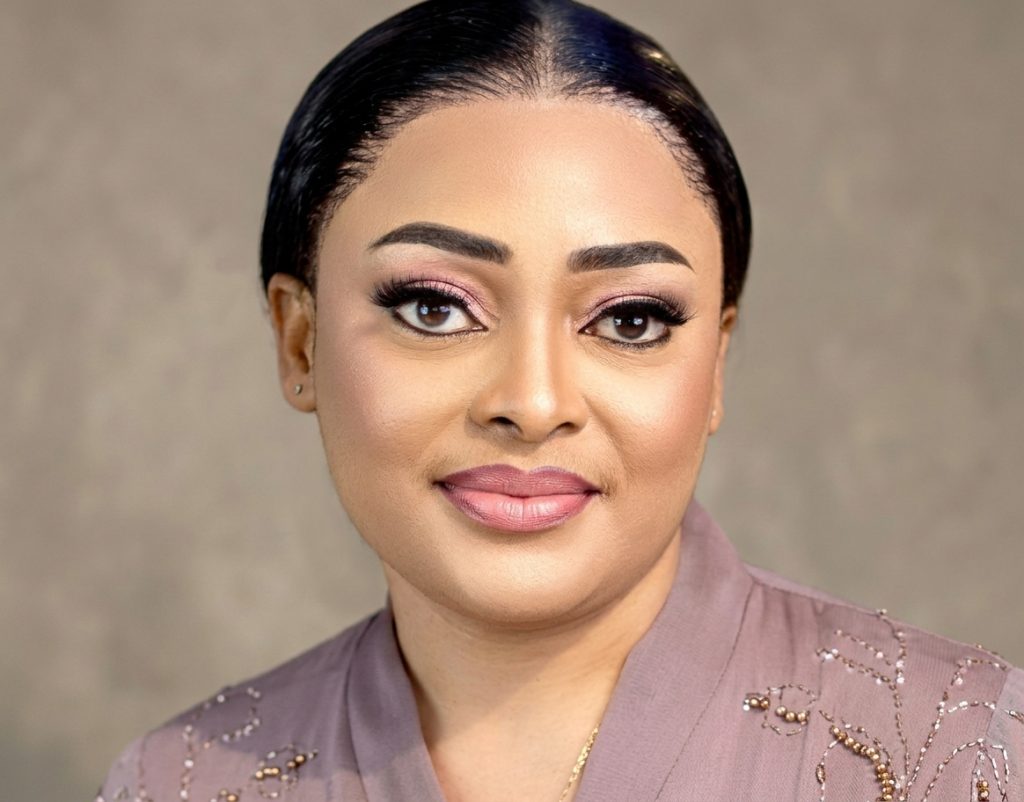
By Dickson Omobola Speaking about Liberia’s democratic evolution without mentioning the late Prince Yormie Johnson, better known as PYJ, would be a disservice to history. In this exclusive interview, the late PYJ’s widow, Mrs Amira Johnson, during a recent visit to Nigeria, shares insights into life without her husband, and struggles for the liberation of his people, describing him as a pan-Africanist.
By Dickson Omobola Speaking about Liberia’s democratic evolution without mentioning the late Prince Yormie Johnson, better known as PYJ, would be a disservice to history. Although Johnson died on November 28, 2024, at the age of 72, he transitioned from being an officer in the Armed Forces of Liberia to becoming a democrat, senator and two-time presidential candidate.
Hailing from Nimba County, the second-most populous county in Liberia, Johnson wielded considerable influence over the county’s politics, operating as a key kingmaker and political deal-broker. His support was instrumental in the emergence of presidents. His political protégé is the current Vice President of Liberia, Jeremiah Kpan Koung Sr. In this exclusive interview, the late PYJ’s widow, Mrs Amira Johnson, during a recent visit to Nigeria, shares insights into life without her husband, and struggles for the liberation of his people, describing him as a pan-Africanist.
She also calls on African leaders to remain united in the interest of the continent. Excerpts: How has your experience been so far, and what has impressed you most about the country since your arrival? Well, Nigeria is like a second home to me and my family. If you could recall, my husband and I settled here briefly during the time of the crisis in Liberia.
My husband was moved here by the Economic Community of West African States, ECOWAS, and we stayed here and nurtured our children for 14 years. When the political atmosphere became stable, we had to go back and my husband contested to be a senator. So, my experience here has been so wonderful. Before now, I had come, but since my husband passed, this is my first time coming.
Also, I came to SCOAN, which is my major reason for coming. I came to meet with the woman of God, Pastor Mrs TB Joshua. She and the late prophet TB Joshua had been our spiritual parents before my husband passed. While we lived in Nigeria for 14 years, that was where we used to fellowship and we went back to Liberia where we used to come from time to time.
But since the prophet passed away and my husband passed on, this is my first experience. It has been wonderful. She received me warmly at the church. She hosted me. She is like a family. She welcomed me and we spent quality time visiting the mountains, doing spiritual work, praying for Liberia, praying for myself, my family and for peace and stability in the world in general.
Prophet TB Joshua died five years ago. Given that you had not visited SCOAN since his passing, did you notice any change about the church? I must admit, I was quite impressed with the church. Nothing has changed. Pastor Mrs Evelyn Joshua, I must give it to her. In Liberia, we say she is a double person. She is two. We call them in my tradition, man-woman.
She is a strong woman. What a woman. She is holding the church together. As a guest, I lodged in the church. The food, the workers, everything is in the same standard. Nothing has dropped beneath the standard they maintained when the prophet was alive. So, the organisation is top-notch. I want to give it to her. God is really using her. The auditorium was filled to capacity, just like when the man of God, Prophet TB Joshua was there.
It was quite impressive. They are still the same, just like Prophet TB Joshua used to. It was quite impressive. Liberia and Nigeria share historical and cultural connections. As a Liberian visiting Nigeria once again, what similarities have you noticed between the two countries, particularly in their cultures, traditions and lifestyles? As I mentioned in my previous response, Nigeria is like a home to me.
I am familiar with most of the Nigerian culture because I lived here with my late husband and children for 14 years. Nigerians are very welcoming people; we share that in common. They are very hospitable. They know how to host strangers. They are kind and generous. Nigerians are business minded. They are driven people. They go after what they want.
So, we share that in common. Liberians too are kind people, very welcoming. If you meet Liberians, they are easy to deal with. So, Nigerians are like that. That is why they call them the giant of Africa, our big brother. Even though Liberia, we had our independence in 1847, Nigeria had its independence in 1960. But we as Liberians, we always look at them as our big brother in this sub-region.
You were married to the late Senator Yormie Johnson, a prominent figure in Liberian politics. What are some of your fondest personal memories of him beyond his public life and political career? My late husband was known as a strong man, a very strong man. However, what many people do not know is that he had a very soft side. He was a family-oriented person.
If he picked you as his person, he wanted the best for you. Sometimes, he might be difficult to access because he was always cautious However, once he took you into his corner, he could turn the world around for you. As his wife, I knew this. And for our children a
- johnson
- liberia
- husband
- time
- nigeria
- joshua
- prophet
- church