Africa’s AI Future Takes Centre Stage at Gates Foundation’s Goalkeepers 2026 in Dakar
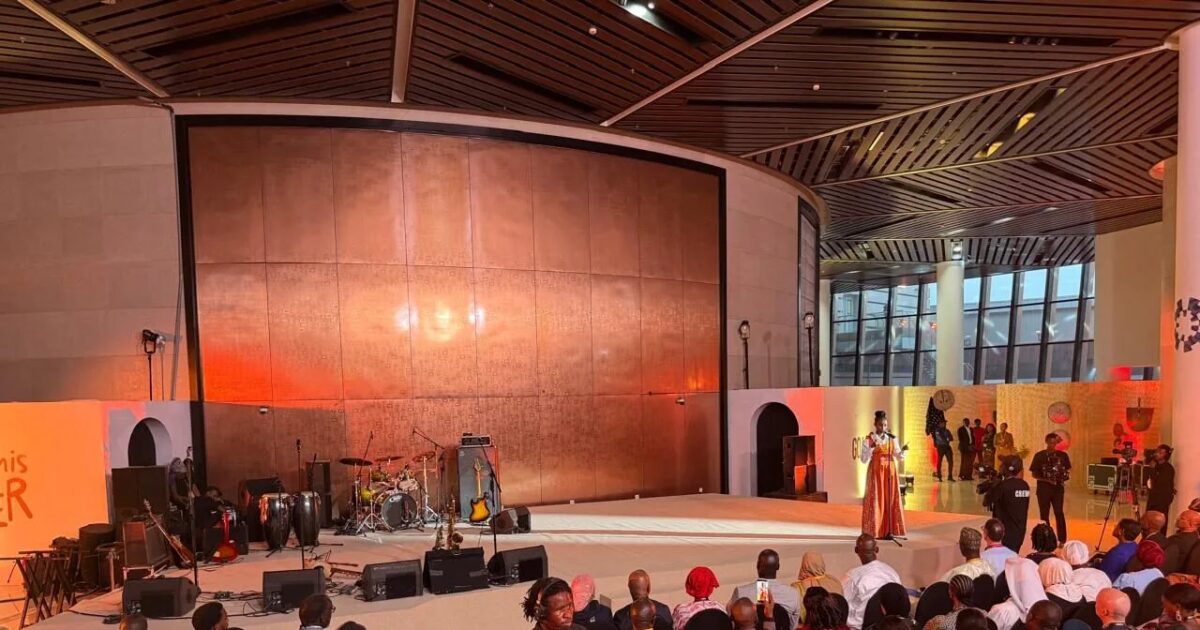
DAKAR, Senegal, Oct 31 – What if a doctor could detect a potentially life-threatening condition before it becomes critical? It was this question that took centre stage at the Gates Foundation’s Goalkeepers 2026 gathering in Dakar, Senegal, where leaders, innovators, development practitioners and technology enthusiasts converged this week to examine how artificial intelligence can be harnessed to improve lives across the continent.
DAKAR, Senegal, Oct 31 – What if a doctor could detect a potentially life-threatening condition before it becomes critical? What if a child could learn in a language they understand, or a farmer could receive timely advice on how to protect crops and conserve water?
These are some of the possibilities artificial intelligence (AI) is beginning to unlock across Africa, where innovators are increasingly turning to technology to tackle challenges that have persisted for generations.
From healthcare facilities and classrooms to farms and rural communities, African innovators are exploring how AI can make essential services more accessible, improve productivity and expand opportunities for millions of people.
But as the technology advances at an unprecedented pace, a fundamental question remains: will Africa benefit from the AI revolution, or risk being left behind as the technology reshapes the global economy?
It was this question that took centre stage at the Gates Foundation’s Goalkeepers 2026 gathering in Dakar, Senegal, where leaders, innovators, development practitioners and technology enthusiasts converged this week to examine how artificial intelligence can be harnessed to improve lives across the continent.
Held on October 29 at the Museum of Black Civilisations, the event marked the first time the foundation’s Goalkeepers gathering was hosted in Dakar.
Under the theme, “Make This Matter: AI, Equity, and the Choice We Can’t Delay,” the gathering brought together people working at the intersection of technology and development to showcase practical applications of AI while challenging governments, businesses and technology companies to ensure its benefits reach those who need them most.
The discussions were anchored on a growing concern that while artificial intelligence has the potential to accelerate development, its benefits could be concentrated among wealthy countries and communities with better access to technology, leaving vulnerable populations further disadvantaged.
For Africa, where gaps in healthcare, education, agricultural productivity and digital infrastructure remain significant, the choices made today could determine whether AI becomes an instrument for reducing inequality or another source of the continent’s development divide.
From healthcare to the classroom, AI is already making a difference
One of the strongest messages emerging from the gathering was that artificial intelligence is no longer simply a futuristic concept. It is already being applied to address practical challenges affecting ordinary people.
In healthcare, for instance, AI is helping frontline workers identify potential clinical oversights and make more informed decisions.
Vyonne Njeri, a clinical officer at Kenya’s Penda Health, shared how an AI-powered tool integrated into digital patient records helped identify a potentially serious medical condition in a four-month-old baby.
The infant had been brought to the clinic with a fever and a runny nose when the system flagged elevated respiratory and heart rates.
The alert prompted further examination and a referral for screening, which revealed a congenital heart defect.
Njeri said the experience changed her perception of artificial intelligence, which she initially feared could eventually replace healthcare workers.
Instead, she now views it as an additional resource that supports clinical judgement and helps medical professionals focus on their patients.
“AI is not perfect, and that is why it must never take over clinical judgement. It will make mistakes; I have seen that first-hand when it was first introduced,” she said.
She emphasised that technology cannot replace trained healthcare professionals, accessible medical facilities and the trust between patients and those providing care.
“I am the primary healthcare provider at the frontline, but AI has my back, and this support helps me focus on what is most important – the people,” she added.
Her experience illustrated how AI could strengthen healthcare delivery, particularly in settings where medical professionals face heavy workloads and limited resources.
The technology could support early detection, improve access to medical information and help health workers identify warning signs that may require further investigation.
However, the discussion also highlighted the importance of human oversight, with healthcare professionals retaining responsibility for clinical decisions.
While healthcare demonstrated the potential of AI to improve patient outcomes, another presentation in Dakar exposed a less obvious but equally important challenge: the language in which technology communicates.
Mamadou Ly, Executive Director of Associates in Research and Education for Development (ARED), shared the difficulties faced by children in Senegal who grow up speaking local languages but encounter French as the language of instruction when they begin formal schooling.
For many children, the transition creates an immediate barrier to learning. They are expected to understand new subjects while simultaneously trying to grasp a language they may not speak fluently.
The result can be poor classroom participation, difficulties following lessons and reduced confidence in their ability to learn.
ARED piloted an initiative that allowed children to receive instruction in Wolof, one of Senegal’s most widely spoken languages.
Ly said the results demonstrated how learning in a familiar language could improve children’s understanding and participation.
The initiative subsequently informed Senegal’s Ministry of Education’s bilingual education strategy.
ARED is now exploring how artificial intelligence can build on this progress by developing tools in local languages to support children’s learning and make teachers more effective.
Ly argued that AI systems that fail to recognise Africa’s linguistic diversity risk excluding millions of people from the opportunities presented by the technology.
“The languages that are going to help children succeed in their education are not present in the AI systems. If we want to have AI that is inclusive, we need to create it through our language, our history, and our local context,” he said.
His concerns point to a wider problem in the global AI industry, where many systems have been developed using data dominated by widely spoken international languages, particularly English.
The Gates Foundation’s 2026 Goalkeepers Report notes that more than 90 per cent of the data used to train early large language models came from English-language sources, leaving many communities poorly represented.
For Africa, with its thousands of languages and diverse cultural contexts, this presents a major obstacle to ensuring that AI applications are relevant to local populations.
Developing tools that understand indigenous languages could help expand access to education, healthcare information and public services, particularly among communities that have traditionally been excluded from digital opportunities.
African innovators are building solutions for Africa
The gathering also offered a glimpse into the growing community of African innovators developing technologies around the continent’s specific development needs.
A highlight was the “Qui Veut Changer Le Monde?” showcase, a Dragons’ Den-style competition in which young innovators pitched their ideas to a panel of judges.
Three initiatives, Mosaan Health, MBOSS and Makeda, demonstrated how technology can be adapted to address challenges in healthcare, agriculture and education.
Mosaan Health presented an AI-powered microscopy technology designed to support faster and more accessible disease diagnosis.
The innovation seeks to improve the capacity to detect diseases through microscopy, with the potential to strengthen diagnostic services, particularly in settings where access to specialised laboratory expertise is limited.
MBOSS showcased a smart irrigation system designed to help farmers conserve water and improve agricultural productivity.
With agriculture remaining central to livelihoods across much of Africa, technologies that help farmers manage water resources and improve yields could make a significant difference, particularly as climate change intensifies pressure on food production.
Makeda, a Senegalese reading application, demonstrated another application of technology in education by helping children learn French through their mother tongues, including Wolof, Sérère and Pulaar.
The three innovators presented their solutions to a panel that included Fatma Samoura, the former FIFA Secretary General.
Mosaan Health emerged as the winner, highlighting the potential of African-developed technologies to address practical challenges in essential sectors.
The competition reinforced an important point running through the event: Africa must not simply become a consumer of technologies developed elsewhere but should play a greater role in designing and developing solutions that reflect its own priorities.
It also highlighted the importance of nurturing young innovators, providing them with investment and creating opportunities to scale solutions beyond individual communities and countries.
The discussions in Dakar came against the backdrop of a major financial commitment by the Gates Foundation to expand equitable access to artificial intelligence.
On September 14, 2026, the foundation announced plans to commit at least $1 billion over two years to support the development and deployment of AI-enabled solutions, particularly in healthcare, education and agriculture.
The announcement accompanied the release of its 2026 Goalkeepers Report, titled Make This Matter: AI, Equity, and the Choice We Can’t Delay.
The investment is structured around four priority areas, with 40 per cent allocated to education, another 40 per cent to healthcare, 10 per cent to agriculture and the remaining 10 per cent to digital foundations, including technologies and datasets supporting underrepresented languages.
In education, the funding is expected to support AI-powered tutoring and tools that help teachers personalise learning and improve classroom experiences.
In healthcare, the focus includes diagnostic technologies, clinical decision-support systems for frontline workers, maternal and newborn care, and research into new medicines and vaccines.
For agriculture, the investment is expected to support technologies that provide smallholder farmers with advice tailored to their soil, weather and crop conditions.
The remaining allocation will support the digital foundations needed to make AI more inclusive, including developing datasets and tools in languages that are currently poorly represented in existing systems.
The foundation’s commitment is also linked to initiatives aimed at demonstrating how AI can be deployed in African healthcare systems.
One of these is Horizon 1000, a $50 million collaboration with OpenAI, beginning in Rwanda, to support the deployment of AI tools across 1,000 primary healthcare clinics.
The initiative is intended to strengthen the capacity of frontline healthcare workers and demonstrate how technology can support the delivery of essential medical services.
For Bill Gates, chair of the Gates Foundation, the challenge is ensuring that the benefits of AI are not determined solely by the purchasing power of those who can afford the most advanced technologies.
He has warned that the development of artificial intelligence could reproduce existing inequalities if investment and innovation are directed primarily towards wealthy populations and profitable markets.
“AI presents the same challenge, only at much greater speed. AI could be used to improve lives and livelihoods on a large scale, but achieving this will require deliberate choices by governments and technology companies,” Gates said.
“We can harness AI for good. But it will not happen by accident.”
The report calls for greater investment in local innovation, digital infrastructure and the development of tools that respond to the needs of communities often overlooked by the global technology industry.
It also emphasises the importance of involving the people who will use AI in shaping how the technology is developed and deployed.
Beyond the individual innovations showcased, the discussions in Dakar raised a broader question about Africa’s place in the global technological transformation.
The continent has a growing pool of young technology talent and entrepreneurs, but many countries continue to grapple with limited digital infrastructure, unequal internet access, insufficient investment and gaps in technical skills.
These challenges could restrict the ability of African innovators to compete in an increasingly AI-driven global economy.
There are also concerns around data protection, privacy, the reliability of AI-generated information and the potential impact of automation on employment.
For governments, the challenge will be to develop policies that encourage innovation while protecting citizens and ensuring that technological advancement does not come at the expense of public interest.
For businesses, the opportunity lies in investing in locally relevant solutions and building partnerships that allow African innovations to reach wider markets.
And for educational institutions, the priority will increasingly be equipping young people with the skills needed to participate in a rapidly changing digital economy.
The voices at the Dakar gathering reflected these different dimensions of the debate, with contributions from former Senegalese Minister of Economy, Planning and Cooperation Oulimata Sarr, Grammy Award-winning musician Youssou N’Dour and United Nations ambassador Fatou Jupiter Touré, who hosted the event.
Their participation, alongside health workers, educators and young innovators, brought together development, culture and technology in a conversation about the continent’s future.
Ultimately, the examples presented at Goalkeepers demonstrated that the value of artificial intelligence should not be measured only by how sophisticated the technology becomes, but by how effectively it addresses real human needs.
A health worker who can identify a medical complication earlier, a child who can learn in a language they understand and a farmer who can make better decisions about water and crop production all represent practical ways in which AI could improve lives.
But achieving that promise will require more than technological breakthroughs. It will demand investment, political commitment, local expertise and a deliberate effort to ensure that the people most in need of innovation are not excluded from its benefits.
As Africa enters an era in which artificial intelligence is expected to reshape economies and societies, the message from Dakar was clear: the continent cannot afford to be a passive observer of the AI revolution. It must help determine how the technology is developed, who it serves and whose lives it transforms.
Bernard Momanyi is the Editorial Director at Capital FM and a journalist with more than two decades of experience in news gathering, editorial leadership and media management. He holds a Bachelor’s degree in Information Sciences from Moi University, a Master’s in Development Communication from the University of Nairobi and an Executive Master’s in Media Leadership and Innovation from Aga Khan University.
- africa
- dakar
- technology
- healthcare
- foundation
- intelligence
- stage
- gates