Christian Council of Ghana questions government’s conflicting stance on galamsey

The Christian Council of Ghana has questioned the government’s approach to fighting illegal mining, saying statements by some public officers appear to contradict efforts to clamp down on the practice. To illustrate his concerns, Rev. Dr Kwakye recounted an incident involving one of his congregations in the Presbyterian Church of Ghana, where some individuals who had reportedly discovered gold on church land asked that the church relocate to make way for mining.
The Christian Council of Ghana has questioned the government’s approach to fighting illegal mining, saying statements by some public officers appear to contradict efforts to clamp down on the practice.
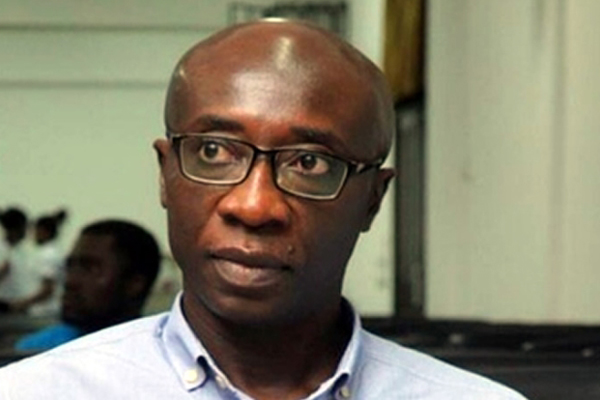
Vice Chairman of the Council, Rt. Rev. Dr Abraham Kwakye, said he was unclear about the direction of the government’s policy on illegal mining, particularly following claims that people without licences could mine in areas outside forest reserves and water bodies.
Speaking on behalf of the Council’s Chairman at its 97th anniversary celebration, he said such a position undermines the fight against galamsey and raises concerns about the consistency of enforcement.
“As I stand here today, I am not too sure what it means when we say illegal mining. So it beats my imagination when public officers will stand and say that apart from mining in forest areas or in river bodies, anybody without a licence can mine just anywhere, even along the side of the road,” he said.
He described the comment as a contradiction in the country’s fight against illegal mining and questioned what he called the permissive nature of the practice.
To illustrate his concerns, Rev. Dr Kwakye recounted an incident involving one of his congregations in the Presbyterian Church of Ghana, where some individuals who had reportedly discovered gold on church land asked that the church relocate to make way for mining.
He said the request had the support of chiefs and local community leaders, prompting the congregation to seek his direction.
“They asked us, my church, to relocate so that they would mine for gold. In keeping with Presbyterian policy, they wrote to me asking for direction. And I told them that nobody should enter the church land,” he said.
He added that he would only permit the relocation if the government itself directed him to do so.
Rev. Dr Kwakye appealed to the Deputy Minister for Local Government, who was present at the event, to convey the Council’s concerns to government.
“I plead with you earnestly to carry our message back to government. We love the message of government, but we don’t love the message of some of your office holders,” he said.
Beyond illegal mining, the Council’s anniversary address focused on the need for a more principled relationship between religious institutions and the state to support national development.
Rev. Dr Kwakye said such partnerships should be built on mutual respect, transparency and accountability, with each institution maintaining its constitutional responsibilities.
He cautioned against relationships that could lead to political patronage or institutional dependence, stressing that the Church must be able to cooperate with government without compromising its independence.
“The aim is not to create a privileged relationship between the State and a particular religious institution. It is to strengthen an inclusive framework through which religious and civic organisations can contribute responsibly to national development,” he said.
He also called on the Church to remain non-partisan while speaking against injustice and holding public institutions accountable. He said its advocacy must be guided by credible evidence, constructive dialogue and a commitment to the common good.
The Vice Chairman said the Council’s Strategic Plan for 2026 to 2030 prioritises ethical leadership, socioeconomic justice, environmental sustainability, human rights, peacebuilding and institutional strengthening.
He identified youth unemployment, women’s economic empowerment and the inclusion of vulnerable communities as areas requiring attention.
He urged churches to contribute through mentoring, vocational preparation, entrepreneurship support, financial literacy and leadership development, while calling on government to create an enabling environment for enterprise and productive employment.
On environmental protection, he said the destruction of rivers, forests and agricultural land threatens public health, livelihoods, food security and the prospects of future generations.
He noted that the Council’s Environmental Care and Cleanliness Programme provides an avenue for churches and communities to support cleaner neighbourhoods, responsible waste management and environmental awareness.
However, he said environmental action must go beyond occasional clean-up exercises and involve sustained cooperation with local authorities, traditional leaders, schools and community groups.
Rev. Dr Kwakye also stressed the need for integrity within religious institutions, arguing that the Church’s credibility in demanding accountability from public officials depends on its own conduct.
He called for sound financial management, transparent decision-making, responsible stewardship of church property, and effective procedures for addressing misconduct.
The Christian Council of Ghana was established on October 30, 1929, by five churches.
Its 97th anniversary was held under the theme, “97 Years of Faith, Witness and National Service: Consolidating Church-State Partnerships for Sustainable National Transformation.”
- government
- council
- church
- mining
- ghana
- christian
- galamsey
- kwakye