Ebola: Saudi Arabia suspends travel to Kenya, halts visa issuance

Saudi Arabia suspends travel to Kenya, halts visa issuance. The Saudi Press Agency (SPA) announced the measures in a statement published on its official X account on Friday, 30 October, saying they followed epidemiological assessments by the country’s health authorities
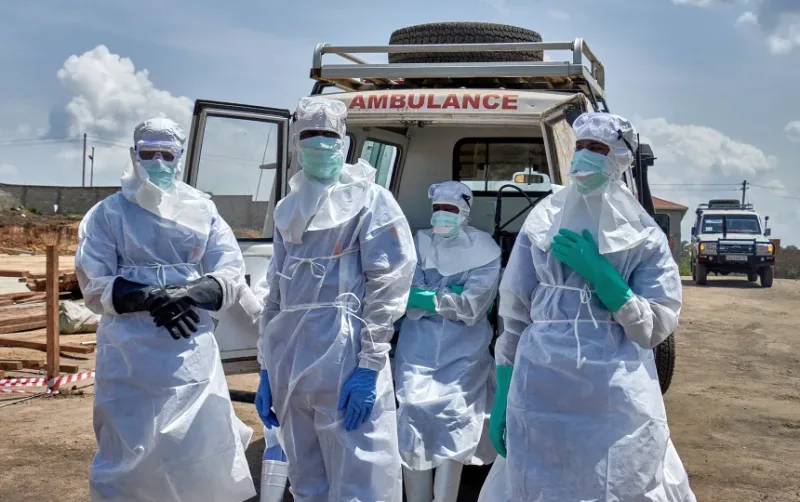
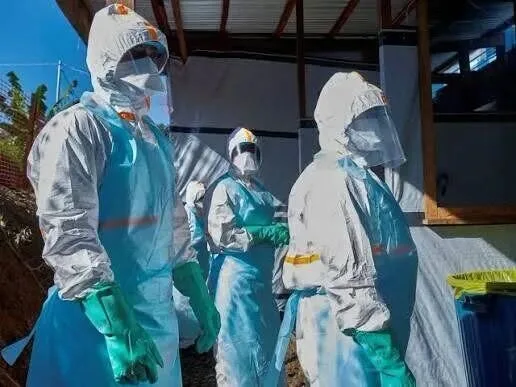
Health workers wearing protective equipment.
Saudi Arabia has suspended travel by its citizens to Kenya and halted the issuance of visas to travellers arriving from the East African country as concerns grow over the spread of the Ebola virus across parts of Africa.
The restrictions also prohibit entry into the Kingdom for travellers arriving directly from Kenya or through third countries if they have stayed in Kenya or any other country experiencing an active Ebola outbreak within the 21 days preceding their arrival.
The Saudi Press Agency (SPA) announced the measures in a statement published on its official X account, saying they followed epidemiological assessments by the country’s health authorities.
According to the agency, the measures are intended to mitigate the risks associated with the Ebola outbreak and protect the health of citizens, residents and visitors.
The restrictions build on preventive protocols introduced by the Kingdom in July 2019 and strengthened in May 2026 for travellers arriving from countries considered at risk of Ebola outbreaks.
In June, Saudi Arabia also suspended travel to and arrivals from the Democratic Republic of the Congo (DRC), Uganda and South Sudan, while strengthening surveillance and screening at its entry points for travellers arriving from neighbouring countries.
The Kingdom’s Public Health Authority, known as Weqaya, said the health situation within Saudi Arabia remained reassuring and under constant surveillance.
It added that it was monitoring regional and international epidemiological developments in coordination with relevant health agencies and would implement additional preventive measures as necessary.
The restrictions come amid the ongoing Ebola outbreak caused by the Bundibugyo virus, which was first declared in the DRC in May 2026.
The outbreak has since spread beyond the DRC, with imported cases reported in Uganda, Kenya and Nigeria, as well as France.
According to the United States Centres for Disease Control and Prevention (CDC), as of 28 October, the DRC had recorded 10,274 confirmed cases and 4,992 deaths.
Kenya had reported nine confirmed cases, including two deaths, while Uganda recorded 20 cases and two deaths. Nigeria had one confirmed case, with no deaths recorded.
The spread of the virus beyond the DRC has heightened concerns among health authorities about cross-border transmission and the need to strengthen surveillance and early detection.
Nigeria’s Ebola response has also entered a new phase following the identification of two suspected cases in the North-east.
On Saturday, the Nigeria Centre for Disease Control and Prevention (NCDC) announced that the two individuals had been isolated, while contact identification and listing were ongoing.
The agency said laboratory tests were being conducted to determine whether they had contracted the virus.
However, it cautioned that being classified as suspected cases does not mean the individuals had tested positive for Ebola, stressing that confirmation would depend on laboratory results.
The NCDC did not disclose the states where the suspected cases were identified.
- saudi
- ebola
- arabia
- travel
- kenya
- visa
- issuance
- press