I am no more your leader, Wike is: Fubara faces uncertain future after surrendering
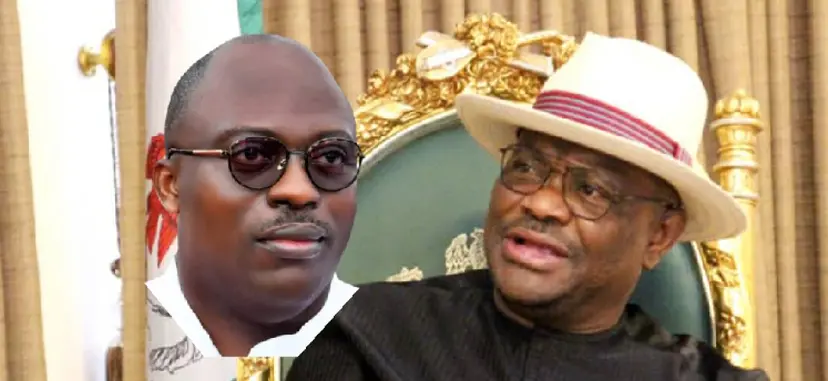
Fubara was tactically chosen to perform the unveiling and handover the flag of the All Progressives Congress, APC, to Hon Ogundu Kingsley Chinda, the anointed governorship candidate of Wike. Also, shortly after Fubara’s defection, APC national leaders—including National Chairman, Prof Nentawe Yilwatda, National Secretary, Ajibola Basiru, and Deputy National Organising Secretary, Duru Eze, officially affirmed the Rivers governor as the leader of the APC in the state.
By Daniel Abia, P/Harcourt With dexterity and some sense of candor, he strode purposefully along the red carpet isle to the podium. His assigned role for the day was unambiguously defined: To unveil the Rainbow Coalition candidates for the 2027 general elections in Rivers State. But unknown to many, Governor Siminalayi Fubara had a special announcement to make.
First, he took a brisk eye scan through the sea of heads at the Yakubu Gowon Stadium, then announced: “I am no more your leader. Stop calling me ‘my leader, my leader’” The day was Tuesday, October 27, 2026, when a political group formed by the Minister of the Federal Capital Territory, FCT, Mr Nyesom Wike, organized a rally which drew participants from the 23 local government areas of the state.
They converged on the Yakubu Gowon Stadium Port Harcourt to display which candidate from the six-member political parties that constitute the Rainbow Coalition for the coming elections. Fubara was tactically chosen to perform the unveiling and handover the flag of the All Progressives Congress, APC, to Hon Ogundu Kingsley Chinda, the anointed governorship candidate of Wike.
Fubara did not only surrender his potential second term as a sitting governor to Chinda but also relinquished his role as the political leader of Rivers to Wike. The governor veered off the track of duty and handed down a stern warning, or so it seemed, to his organic supporters who stood by him in thick and thin during the dark moment of the political crisis in Rivers, telling them unreservedly that he was no more their leader.
“Let me say something here so that it will always help us while we move forward”, he started. “I’m aware there are some issues where some persons who followed me when we had the crisis when you’re in your meeting you say ‘my leader, my leader’. “We are now in one house. And because we have one house, there is no issue about who is the leader. “I might be your oga (governor) but we have a common leader now.
So, please, going forward, this issue of ‘my leader, my leader, my leader’, I want it resolved here and now.” There was a cumulus of silence at first, then a deafening applause. Governors as leaders Way back in January 2025, President Bola Ahmed Tinubu, through his Vice, Kasim Shettima, had declared that all APC governors were political leaders of the party in their states.
The implication is that as the highest political position in the state, a governor is seen as a leader politically. Tinubu made this known during the defection of Governor Agbu Kefas of Taraba State from PDP to APC. That pronouncement also covered Fubara the moment he defected from the same PDP to APC on December 9, 2025 and picked the 001 registration number of the ruling party.
Also, shortly after Fubara’s defection, APC national leaders—including National Chairman, Prof Nentawe Yilwatda, National Secretary, Ajibola Basiru, and Deputy National Organising Secretary, Duru Eze, officially affirmed the Rivers governor as the leader of the APC in the state. They cited the APC Constitution, which designates sitting state governors as party leaders in their respective states.
Rainbow/Fubara reconciliation Reeling in the deep cut injury occasioned by the over three years of political crisis that culminated into the declaration of a state of emergency on March 18, 2025 by President Tinubu, Wike and his political group soon realized the need to bring in Fubara and his structure to form a formidable force for 2027. Between August 16 and October 7, 2026, the Rainbow Coalition led by Wike held a back-to-back peace meeting with the governor in his private residence in Port Harcourt.
The last meeting, expanded to include all the 23 LGA chairmen, had lawmakers from both state and national assemblies and political appointees loyal to Wike in attendance. At the meeting, Fubara accepted to return to the “family”. And the three suspended lawmakers loyal to him were reinstated while members of his political camp were promised juicy positions in the next dispensation.
The peace meeting generated outrage in Rivers with many describing the governor as the “weakest” political leader in the history of Rivers. Fubara was alleged to have told his loyalists to go to the rural areas across the state and preach the gospel of Rainbow Coalition. State capture? Political observers are of the opinion that, having used his structure to propel Fubara to become governor, Wike was making a grand plan to capture the soul of the state.
The internecine crisis witnessed in the past, obviously testified to the fact that the minister “was desperate for a third term by proxy”, said Franklin Uket, a public commentator. Uket noted that from the fight to regain his structure, “Wike never wanted Fubara to be independent minded as a governor. “He never wanted Fubara to draw any of his (Wike) political enemies close to his government”.
Now politically suffocated, Fubara’s decision to throw in the towel of leadership also gives credence to th
- leader
- fubara
- wike
- governor
- state
- apc
- rainbow
- rivers