Minimum Wage: NLC sets agenda for next negotiations
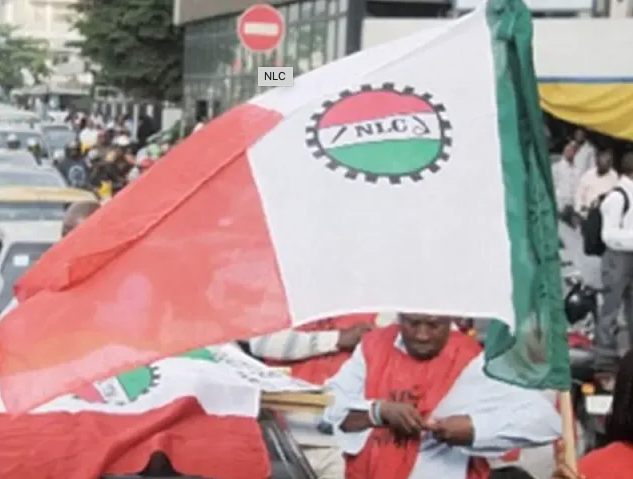
*Decries poor pay, job insecurity, no welfare protection for Nigerian journalists By Victor Ahiuma-Young & Omotola Aremo The Nigeria Labour Congress, NLC, has identified inflation, the cost of living, the value of the naira, transportation, housing and workers’ purchasing power as major issues that must shape the next national minimum wage negotiations. The NLC President of NLC, Joe Ajaero, spoke weekend in Lagos, at the 2026 Labour Writers Association of Nigeria, LAWAN, Annual Conference in Lagos, themed; “Workers at the centre of Nigeria’s Political Transition: Defending rights, advancing…
*Decries poor pay, job insecurity, no welfare protection for Nigerian journalists By Victor Ahiuma-Young & Omotola Aremo The Nigeria Labour Congress, NLC, has identified inflation, the cost of living, the value of the naira, transportation, housing and workers’ purchasing power as major issues that must shape the next national minimum wage negotiations.
While insisting that discussions should commence far before April 2027 implementation, the Congress also expressed concern over the poor welfare conditions of Nigerian journalists. The NLC lamented that Nigerian journalists are faced daunting harsh working conditions including inadequate salaries, job insecurity, weak pension arrangements and the absence of effective social security protection, calling on the Nigeria Union of Journalists (NUJ) to take its trade union responsibilities more seriously.
The NLC President of NLC, Joe Ajaero, spoke weekend in Lagos, at the 2026 Labour Writers Association of Nigeria, LAWAN, Annual Conference in Lagos, themed; “Workers at the centre of Nigeria’s Political Transition: Defending rights, advancing welfare and building economic justice”. He contended that the next minimum wage must reflect prevailing economic realities rather than arbitrary figures that could quickly lose their value to inflation.
Speaking on workers’ welfare and collective bargaining, the NLC President said: “We must examine inflation, the value of the naira and other factors affecting workers’ purchasing power. The new minimum wage should be informed by the cost-of-living index and prevailing inflationary trends.” He maintained that negotiations must take into consideration the cost of accommodation, transportation, food and other basic necessities before an acceptable wage is determined.
According to him, it would be counterproductive to negotiate a new minimum wage without establishing what the proposed amount could actually purchase. He warned that workers should not find themselves receiving an improved salary only for inflation to erode its value within a few months, forcing them to demand another increase. According to him: “We must not approach the next minimum wage negotiation by simply demanding millions or billions without considering other economic factors.
“We must consider inflation, the value of the currency and other issues affecting the economy. The new minimum wage should be determined with reference to the cost-of-living index and inflationary trends. “If the government agrees that wages should be indexed to inflation, then an increase in inflation should lead to an appropriate adjustment in wages.
“Alternatively, we must examine the prices of essential commodities and services. How much does a bag of garri cost? How much is house rent? How much does transportation cost? These are the factors that must inform the negotiations. “We cannot simply announce that we want ₦100,000 or ₦50,000 without establishing how those figures relate to the actual cost of living.
This is important because, over the years, we have repeatedly found ourselves in a situation where workers receive a salary increase, but within a few months, inflation erodes its value and they are already demanding another adjustment. We must avoid that situation. “The government must take a more decisive position on solving the transportation problem.
Giving workers ₦70,000 as a transportation intervention for six months is not enough, although it provides some relief. For somebody earning ₦70,000, receiving another ₦70,000 is certainly meaningful. “But what happens after six months?There are also other policies that must be considered, particularly transportation. We cannot accept a situation where workers receive ₦70,000 as temporary relief and, after six months, the government simply withdraws the intervention without providing an alternative.
“Nobody should assume that because the six-month period has expired, workers must return to their previous state of poverty. We have left Egypt; we cannot go back to Egypt. “As far as the minimum wage negotiations are concerned, the new negotiations must recognise the existing wage structure and the improvements already achieved. You cannot begin negotiating from a position that ignores those gains.
“You cannot expect workers to return to the old minimum wage position of ₦70,000 after receiving the additional intervention. We must consolidate the gains already made. Journalists welfare On the welfare of journalists, the NLC challenged the NUJ to intensify its involvement in collective bargaining and negotiations with media employers to secure better conditions of service for its members.
The labour leader questioned the absence of effective collective bargaining agreements in the media industry, asking: “What is the minimum wage for media workers across the country? What collective bargaining agreements exist between journalists and their employers?” He argued that journalism being a professional occupation does not remove the need
- wage
- minimum
- nlc
- worker
- inflation
- cost
- value
- transportation