‘Some photos imprint upon us’: How our Saturday magazine puts together special issues about world-changing photographs
A great picture can have an immediate and visceral effect on a viewer, as if bypassing thought. Every few months, a team of editors on the Guardian’s Saturday magazine puts together a special photography package in print and digital formats.
A great picture can have an immediate and visceral effect on a viewer, as if bypassing thought. But a huge amount of thinking goes into selecting and sourcing them, and researching their backstories
Can photographs still exert power in an age when millions of pictures are taken and shared every minute, and when a viewer’s first response is to question whether an image is even real?
Every few months, a team of editors on the Guardian’s Saturday magazine puts together a special photography package in print and digital formats. It features photographs that don’t just stop the scroll, they have also prompted the rewriting of history books. They are the kind of images that have changed the world in some way or radically shifted people’s perceptions.
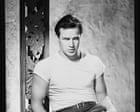
Each issue has a particular theme. Earlier this month, the magazine featured photographs that have changed how we view masculinity – from a 1950 portrait of Marlon Brando in a white T-shirt to a paparazzi shot of David Beckham in a sarong and a bare-chested Vladimir Putin on horseback. Previous issues have focused on photographs that have reshaped sport, forced people to confront the reality of the climate crisis and upended the world of fashion.
Beyond the impact each image had back when it first came out, they still feel powerful and affecting today – reminding us how great photography can command a kind of reverence and stillness in the viewer. “Working on these issues, you realise that there’s something about the power of the images that’s elemental,” says Rebecca Liu, a commissioning editor on the Guardian’s Saturday magazine. “Some photos imprint upon us before we even can think about them. They just immediately hit our bloodstream.”
The first special issue featured protest images that have prompted social or political change. It was initially conceived as a one-off feature in 2022 amid protests in the US that year against the overturning of Roe v Wade and demonstrations against police brutality. But the feature resonated so strongly with readers that it spawned an occasional series.
That regularity means the process of putting the issues together is now fine-tuned, though not without its own drama and headaches. “Sometimes on the day of going to print we’re waiting on two or three final things to be confirmed,” says Rebecca. “It’s a massive act of organisation and coordination and a real collective effort with a lot of moving parts.”
Selecting which pictures to include involves tapping the collective minds of picture editors and journalists on the magazine and across the Guardian. Different colleagues will have different criteria. How to weigh up a photograph’s social or political impact against its technical importance to the medium? Should it be an image that, in itself, has changed the world or a photograph of a world-shifting moment?
“Everyone working on the magazine has a different take on it,” says Louis Siroy, the magazine’s deputy picture editor. “Some editors will ask how a particular photograph shaped society; what does it mean? Whereas I might be asking what are the important photographs or photographers that fit into that theme or category.”
For example, the first special issue about protest photography didn’t just include the famous image of a protestor standing in front of a tank in Tiananmen Square, it also included a less famous but equally powerful photograph of a boy sitting on the shoulders of relatives above the sea of soldiers’ helmets. Taken by the photographer Dario Mitidieri, the image was suggested by Louis. “That to me is a great photograph, and I was trying to bring something that wasn’t necessarily the image people are familiar with,” he says. “Hopefully these selections inspire people to value and appreciate the breadth and power of great photographs.”
By drawing on colleagues’ different perspectives and experience, each special issue sheds unique light on its theme. “So while the selection can’t possibly be comprehensive and definitive, it’s still authoritative,” says Rebecca.
Other images included in the initial protest photography issue include the famous picture of US athletes John Carlos and Tommie Smith raising their fists in a black power salute during a medal ceremony at the 1968 Olympics. There are also several photographs of protesters facing off against riot police or soldiers, including a powerful image of a young girl in Santiago, Chile, during a 2016 demonstration marking the anniversary of the country’s 1973 military coup.
One of the most time-consuming challenges involves obtaining the rights to publish the images. “Some of the greatest challenges involve finding the right copyright holder for some lesser-known photographs,” says Caroline Hunter, the magazine’s picture editor.
Even well-known photographs can present hurdles. “Sometimes you have to get permission from the subject of the photo as well as from the photographer, particularly when it comes to photos of celebrities or fashion,” explains Louis. “It can get really hard to track down the person you need. For instance, the masculinity special featured a famous second world war photo of a US aeroplane gunner that was taken by the photographer Horace Bristol, who is now deceased. It took some time to contact the photographer’s son Henri in California and explain the context in which we wanted to use the photo. And even when dealing with well-known photographers, it still involves negotiating the rights for editorial use rather than commercial use.”
Another challenge that can arise is the quality of the photographs. “We have to ensure the image is large enough or good enough quality to reproduce, especially for very old images that previously existed only as prints,” says Caroline. “Works by famous and art photographers often have specific rules around usage, so it’s important to ensure that we keep within their guidelines. We had a really good response from photographers after our recent photo special marking America at 250. I think this was because there were so many great, iconic images from seminal photographers.”
The team also has to decide the best layout for the print and digital editions – which images to give prominence to, how they might best fit together, and the range of black-and-white and colour images. Maggie Murphy, the magazine’s art director, experiments with different layouts, sometimes on a screen, sometimes with printouts strewn across the desks.
As well as the images, a huge amount of work goes into the words. Each special issue includes a short guest-written essay, and each photograph has an extended caption about that particular picture’s significance or backstory.
The journalists who are commissioned to write these captions undertake extensive research. For example, the masculinity issue includes a famous 1970 advertisement depicting a pregnant man, for which the journalist tracked down the original campaign’s photographer, who is now 98. “I encourage original interviews and research wherever possible,” says Rebecca. “We want the words to illuminate something about the picture and for people to learn things. That’s not something you necessarily have to do for a 150-word caption, but we want to do it because the editorial component is so important to us at the Guardian.”
Researching the captions also reveals something about the nature of photography. “It really shows the importance of not just taking an image at face value,” says Rebecca. “I’m always surprised by what you discover when you look into things. You might find a complicated backstory behind the person who is photographed – perhaps their ambivalence about being pictured, for instance.”
The same applies to the thought that goes into the introductory essays. The novelist Anne Enright wrote perceptively about how women are captured on camera, for better or for worse, in her introduction to an issue that featured photographs that have changed the way society sees women. “As you look at a Kardashian selfie, consider how many rules had to be broken to get her to this moment of self-commodification,” writes Enright.
The masculinity issue contains an accompanying essay by the poet and novelist Luke Kennard, who reflects on how the images seem to capture extremes of masculinity, with little in between: “To judge from our media, one would think we were either waifs or muscle-men… Even the bang average is barely represented.”
Rebecca noticed that gap in representation back when the team was initially selecting which photographs to include in the issue. “I remember thinking, where are the other male bodies? It was difficult to find any – at least with the quality and artistry that we look for in these stories. You’d Google the words ‘dad bod’ and you’d just get screenshots of Seth Rogen and grainy paparazzi shots of celebrities on the beach.”
The team is very mindful of the power of images to subtly reinforce or subvert people’s preconceptions. “Working on these issues makes us reflect on how much we subconsciously absorb images,” says Rebecca. “And how they feed into our imaginations.”
- magazine
- photograph
- world
- picture
- viewer
- image
- photo
- issue