Oye laments rising hardship, poverty despite higher revenue for FG, States

…Calls for Measurable Results for Govt Spending, Says Revenue Gains Must Translate into Better Lives for Nigerians The Chairman of the Alliance for Economic Research and Ethics, Dele Kelvin Oye, has called on the Federal and state governments to ensure that increased public revenues translate into better living conditions for Nigerians, noting that Nigeria’s fiscal positions have improved but yet to produce a level of citizen satisfaction that reflects the gains. The Alliance for Ethics chairman proposed that every state, the Federal Capital Territory and local government publish a 90-day…
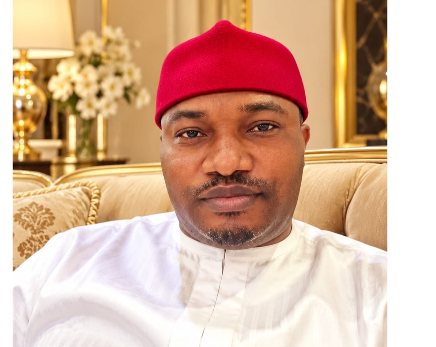
…Calls for Measurable Results for Govt Spending, Says Revenue Gains Must Translate into Better Lives for Nigerians The Chairman of the Alliance for Economic Research and Ethics, Dele Kelvin Oye, has called on the Federal and state governments to ensure that increased public revenues translate into better living conditions for Nigerians, noting that Nigeria’s fiscal positions have improved but yet to produce a level of citizen satisfaction that reflects the gains.
Oye said governments must move beyond revenue generation and focus on delivering measurable improvements in public services, infrastructure and economic opportunities. He made the call while commenting on the revised 2026 State Performance Index (pSPI) by Phillips Consulting, which showed that despite improved fiscal conditions across parts of the federation, citizens’ experience of government performance remained only marginally positive.
The report recorded a national composite citizen satisfaction score of 3.01 out of five, barely above the neutral midpoint of 3.00. Oye said the findings underscored the need for governments to demonstrate how increased revenues were improving the lives of citizens, rather than relying on budget figures and financial performance indicators. He noted that higher revenues should create room for governments to repair roads, improve water systems, equip health facilities, support businesses and strengthen education, adding that revenue was only a resource for development, not development itself.
According to the report, finding employment recorded the lowest citizen rating at 2.31, placing it in the critical category. Clean water scored 2.67, government support for businesses 2.71, security 2.84, while law-enforcement conduct recorded 2.85. Oye said the figures reflected the everyday challenges confronting Nigerians and highlighted the gap between fiscal performance and the quality of public services.
He cautioned that higher revenue could fail to produce meaningful development where funds were poorly allocated, released late, lost through weak procurement or spent on projects that were never completed or maintained. He said government budgets should therefore be assessed not only by the amount allocated or spent, but by the results achieved and the number of citizens who benefited.
Oye called for the inclusion of measurable service-delivery outcomes in the assessment of government performance, including whether projects were completed on time and within budget, whether public facilities were functional and whether citizens experienced improvements after delivery. He also urged governments to publish transparent information on public spending, procurement, project completion and service outcomes to enable citizens to monitor how public funds were being used.
The Alliance for Ethics chairman proposed that every state, the Federal Capital Territory and local government publish a 90-day public delivery plan focused on no more than three of its weakest service areas. He said the plans should contain clear targets, timelines, funding arrangements and publicly accessible monitoring systems, with governments required to explain missed milestones and publish corrective measures.
Oye stressed that the proposed 90-day plans should serve as the first phase of a longer-term delivery programme, rather than promises to resolve complex challenges such as unemployment, insecurity or water access within three months. He said the objective was to ensure that citizens could track public funds from allocation to project completion and determine whether the resulting services were improving their lives.
Oye further called for stronger coordination among the Federal, state and local governments, noting that challenges such as employment, public safety, water, sanitation and primary healthcare required cooperation across the different tiers of government. He said the Federal Government should provide a stable national economic environment and transparent funding arrangements, while state and local governments must ensure that resources within their control were efficiently managed and directed towards the needs of citizens.
Oye maintained that stronger fiscal conditions offered governments an opportunity to improve public welfare, but insisted that the opportunity must be matched by transparency, accountability and effective use of public resources. He said the ultimate test of government performance was not the size of its revenue or budget, but the quality of life that public spending made possible for Nigerians.
According to him, “Nigeria is at a crucial point in its public-finance journey. State governments have recently received and reported higher nominal revenues. That should create room to repair roads, improve water systems, equip health facilities, support enterprise and strengthen education. But revenue is not development; it is only the resource from which development may be built.
“The revised 2026 pcl. State Performance Index
- revenue
- government
- oye
- citizen
- service
- performance
- state
- water