Why food security remains intractable
By DELE SOBOWALE Vanguard’s cartoonist, Oladejo Akande, on the Editorial page of the paper published a brilliant and comical piece about the high food import bill. Israel’s Kibbutz system produces for domestic consumption and export more tomatoes than Nigeria.
By DELE SOBOWALE Vanguard’s cartoonist, Oladejo Akande, on the Editorial page of the paper published a brilliant and comical piece about the high food import bill. A driver with a truck fully loaded with imported food chasing a Nigerian farmer out of the way, mockingly saying: “Stop wasting your time and energy!” It was comical and tragic at the same time.
On October 3, 2026, another report appeared; titled “Import waivers, insecurity end two-year agric trade surplus.” The two reports point to an existential Nigerian problem regarding sustainable food security. Nigeria is far from being food sufficient for various reasons to be addressed shortly. We face a serious national dilemma, import or not, on food production – which is not receiving the attention it deserves.
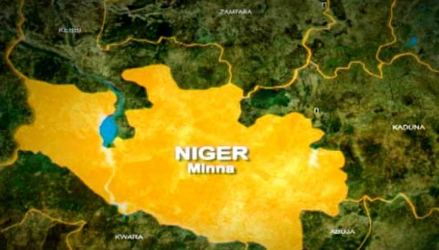
The Ministers in charge of Agriculture are not performing their duties as they should. As a farmer President of America had said: “Farming would be mighty easy; if is carried out in cozy offices and with biros.” Nigeria’s Ministers of Agriculture are desk-bound operators. The fault is not entirely their own. Insecurity takes its toll Taraba’s bloody market day – Daily Trust, October 26, 2026 The report informed Nigeria and the world that another rural and farming community has been emptied of its people in the most tragic way possible.
“An attack launched by gunmen suspected to be bandits on Binnari town in Karim-Lamdo Local Government Area of Taraba State has reportedly claimed the lives of over 50 persons, including women and children.” Possibly, another attack by bandits took place simultaneously elsewhere in Nigeria. Even if Binnari town alone was attacked by the hoodlums, certain repercussions, none good for food self-sufficiency, would inexorably follow.
First, the slain farmers have reduced the number of field hands. Most probably, harvesting, now underway, will grind to a halt on their farms. Food already produced will be left to rot away. Post-harvest food loss statistics would notch up on account of it. Multiply the Binnari loss by thousands of communities now deserted nationwide; then you might begin to have an idea of the implications of the Binnari attack.
Second, every successful attack on any community induces a domino effect. Refugees not only troop out of the affected settlements, but, from the surrounding communities as well. Massive exodus from several places exacerbates the impact of the original damage caused by spreading panic far beyond the place attacked. Third, farmers-turned-refugee, like the rest of us, still have to eat.
Hitherto, they fed themselves, and perhaps others. Henceforth, they have to be fed by a diminishing population of farmers. It is a double loss for the nation. Fourth, even those still persevering, despite the attendant risks to lives, now work under conditions which no other farmer on Earth can imagine; and none should endure. Farming, at its best, and for optimum output, is a painstaking undertaking.
The right things must be done at the right time; inputs must be provided at the right quantities and as specified. Any disruption invariably leads to sub-optimization of results. Compared to global standards, yield per hectare of Nigerian farms is generally low; and that places us at a competitive disadvantage, ab initio. The handicap is multiplied when the farmer is unable to attend to the farm as required by best practices on account of intrusions by herdsmen, kidnappers and other hoodlums.
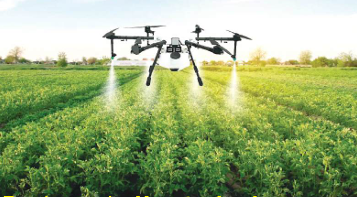
Land for large scale farming exists in insecure places “Land is the basis of farming.” That has been the axiom on which agriculture was based at the dawn of civilisation. But, today, other mediums of farming are producing food items. Israel’s Kibbutz system produces for domestic consumption and export more tomatoes than Nigeria. Landless farming is an idea we have not started to explore in this country.
Yet, it might be one of the solutions to our food shortage problem. Nigeria’s food production still relies largely on subsistence farmers. The large land mass required for large scale farming exists in very rural communities. They are also the most unsafe. Consequently, few investors are willing to venture inland. Meanwhile, the tractors procured by the Federal and state governments are under-utilised.
They are not meant for small farms; and few large scale farms exist anywhere. Most of the 5,000 tractors acquired by the FG last year have not been put into operation; and the 10,000+ promised for over five years will suffer the same fate – tractors without drivers. Nobody wants to die driving a tractor in a rural area. Briefcase farmers collect lion’s share of agric loans “People who pretend to be legitimate farmers claim significant portions of these (agric) loans and obtain government subsidies, subsidized loans and input support without actually running a farm” – Weekend Trust, October 24, 2026.
One of the easiest ways to defraud governments and banks, especially the Central Bank and the Bank of Agriculture, is to
- food
- farmer
- farming
- nigeria
- security
- community
- attack
- place