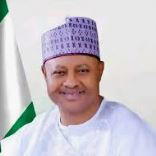
I confronted religious merchants in Kaduna to achieve peace — Uba Sani
By Charles Kumolu For years, Kaduna State was synonymous with ethno-religious violence, communal distrust, and bloodshed, with successive administrations struggling to end the cycle of killings that fractured communities and undermined the state’s economic and social life. It’s about taking development to every part of Kaduna State.
By Charles Kumolu For years, Kaduna State was synonymous with ethno-religious violence, communal distrust, and bloodshed, with successive administrations struggling to end the cycle of killings that fractured communities and undermined the state’s economic and social life. But Governor Uba Sani believes the tide has turned, insisting that the peace being experienced in the state is the product of deliberate efforts to dismantle what he calls the “merchants of ethno-religious crises,” promote inclusive governance, and address the economic conditions that fuel insecurity.
From Southern Kaduna to Birnin Gwari, he says, the emphasis has been on rebuilding trust, taking development to neglected communities, and making citizens see one another as partners rather than adversaries. In this interview with a team of editors from Vanguard Newspapers, the governor explains the thinking behind his Kaduna Model, how his administration secured the release of 222 captives in Birnin Gwari through the reopening of markets, and why he believes economic empowerment is central to sustainable peace.
He also responds to allegations of intolerance toward opposition politicians, speaks on the role of political elites in exploiting ethnic and religious divisions, and outlines his administration’s efforts to reposition Kaduna through agriculture, rural roads, transportation, and sports infrastructure. In Rivers State’s history, it was once known as Rivers of Blood.
About 10 years ago, Kaduna was known as a state of blood, crisis, and bloodshed. How were you able to restore peace, especially in Southern Kaduna? When we came in, the first thing we looked at was recognising the fact that our state is the most diverse state in Nigeria. Of course, I agree with you that the number of lives we lost in Kaduna in the last 20 years, before we came, was more than the number of lives lost because of insurgency, kidnapping, and banditry.
Knowing that, we believed that for us to claim any success as a government, we must bring our people together. The only way we could do that was by ensuring that we created a state where everyone would be carried along in whatever we were doing. Of course, we decided to run a system that would bring everyone together, which is a highly inclusive government.
For us, inclusivity isn’t just about bringing people to sit with us. It’s about taking development to every part of Kaduna State. When we came in, we looked at the deficits in terms of infrastructure, healthcare, and education. We looked at this holistically, and we believed it was the only way we could address injustice and marginalisation. Some people felt they were not treated like citizens of our state.
We believed that doing that really demanded that we relegate politics and elevate governance. Doing that, of course, could sometimes be difficult because when you are elected as a governor, you have people who work with you. The first thing they tell you is to consider people who voted for you and ignore those who did not. But when we came in, it was not about who voted for us and who did not; it wasn’t the issue at all.
It was about carrying everyone along. So, we really tried to put that aside and focus on carrying everyone along, including those who did not vote for us. We took development to every part of Kaduna State, irrespective of party, religious, or ethnic affiliation. Of course, a lot of people have been talking about the Kaduna Model, asking how we did it.
That is because in the last three and a half years in Kaduna, we have not experienced a single ethno-religious crisis, which is highly unprecedented. But for me, the Kaduna Model is nothing difficult. It’s about running a state where you carry everyone along and, as much as possible, be fair to everyone. Of course, human beings want justice. Sometimes you might work with people who are certainly merchants.
When I say merchants, I mean people who only survive whenever there is an ethno-religious crisis. You have to eliminate them within the system. If you don’t eliminate them within the system, the problem will continue. We tried as much as possible to eliminate those merchants, which was actually very difficult. That was because some of them also felt they were part of the system, and they also helped to win the election.
That was the first battle you have to encounter as a leader. Did you say merchants? Yes, ethno-religious merchants. For me, it takes a lot of political will to do that because they also feel they have a stake. Probably some of them contributed significantly to making one win the election. But then, along that line, of course, I had issues with many people who probably misunderstood my ideology.
I tried to explain to some that they need to go back. Happily, I look at my antecedents. I am not just a normal politician. I’m someone who spent many years fighting for justice, equality, democracy, and the rule of law. So, putting my ideology aside is very difficult. I paid my dues.
- kaduna
- state
- peace
- people
- merchant
- uba
- sani
- ethno