Somalia faces test of sustaining state-building gains as UN political mission closes
NAIROBI, Kenya, Nov 2 — Somalia faces a new test of sustaining its political and institutional recovery after the United Nations closed its political mission in the country, ending more than three decades of dedicated engagement in peacebuilding, governance and reconciliation. UNTMIS Officer-in-Charge and UN Deputy Special Representative for Somalia Raisedon Zenenga said the closure marked a new phase in relations between Mogadishu and the United Nations rather than an end to international support.
NAIROBI, Kenya, Nov 2 — Somalia faces a new test of sustaining its political and institutional recovery after the United Nations closed its political mission in the country, ending more than three decades of dedicated engagement in peacebuilding, governance and reconciliation.
The United Nations Transitional Assistance Mission in Somalia (UNTMIS) ceased operations on October 31, following a two-year transition process agreed with the Federal Government of Somalia and endorsed by the UN Security Council.
The closure marks a shift towards greater Somali ownership of political and state-building responsibilities, with functions previously handled by the mission transferred to national institutions, UN agencies and the United Nations Support Office for Somalia (UNSOS).
However, significant political, security and institutional challenges remain, raising questions about the country’s ability to consolidate the progress made since the collapse of central government institutions in the early 1990s.
UNTMIS Officer-in-Charge and UN Deputy Special Representative for Somalia Raisedon Zenenga said the closure marked a new phase in relations between Mogadishu and the United Nations rather than an end to international support.
“Today is not an end to the partnership between the United Nations and Somalia—rather, it marks the conclusion of one chapter and the beginning of another,” Zenenga said.
The transition follows a decision by the UN Security Council in November 2024 to transform the UN Assistance Mission in Somalia (UNSOM) into UNTMIS, following a request by the Somali government to conclude the previous mission’s mandate.
Under Security Council Resolution 2753 (2024), the mission was given a two-year roadmap to progressively transfer its responsibilities to Somali institutions and the UN Country Team.
Resolution 2809 (2025) also formed part of the framework guiding the transition.
The transferred responsibilities cover governance, constitutional review, reconciliation, electoral support, human rights and the rule of law.
The political engagement dates back to 1995, when the UN Political Office for Somalia (UNPOS) was established.
It was succeeded by UNSOM in 2013, which provided political and technical support to Somali-led peacebuilding and state-building initiatives.
Over the years, the UN supported reconciliation efforts, constitutional reforms, electoral processes and the development of governance institutions, working alongside the Federal Government, Federal Member States, civil society and international partners.
Zenenga said Somalia had made considerable progress in rebuilding state institutions, expanding political inclusion and developing governance structures that allow greater national decision-making.
“Somalia today possesses national and federal institutions that did not exist when the UN’s political engagement began,” he said.
However, he acknowledged that outstanding political, security and institutional challenges would require continued national efforts and international support.
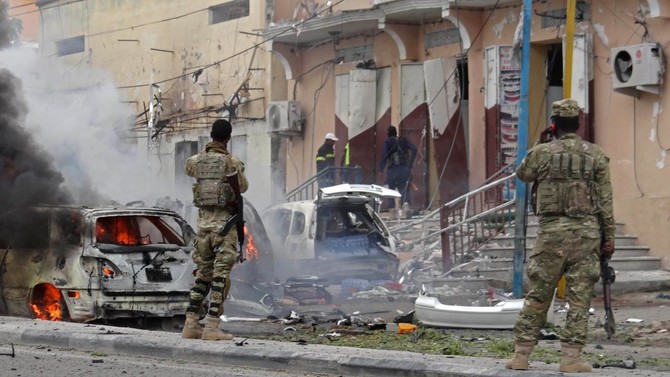
Security remains a major concern, with Al-Shabaab continuing to threaten stability as Somalia advances its security transition.
Successive African Union peace support operations have helped create space for political processes and efforts to extend state authority.
The closure of UNTMIS does not mean the United Nations is withdrawing from Somalia.
UN agencies, funds and programmes will continue supporting the country through humanitarian, development and human rights programmes, working with national and sub-national authorities, civil society and the private sector.
UN Resident Coordinator for Somalia George Conway said the UN would maintain its presence and support Somali-led efforts towards peace, stability and sustainable development. “The United Nations remains a committed partner
Bruhan Makong is a Senior News Reporter for Capital FM in Nairobi, covering diplomacy, foreign policy, national security, climate, and human rights across East Africa and the wider region.
- somalia
- mission
- united
- nations
- security
- institution
- support
- state