N70,000 Transport Allowance Saga: ‘You can’t lead TUC from abroad,’ Ajaero tells Osifo
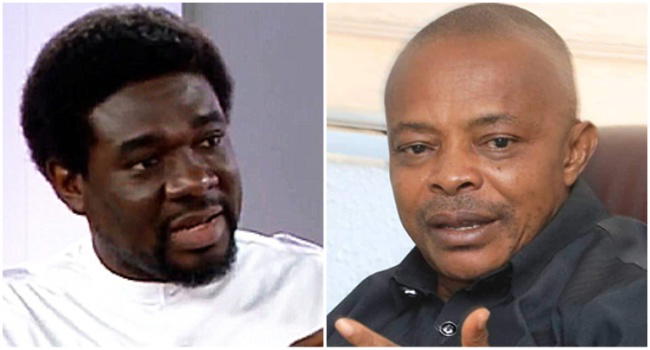
*’Ajaero doesn’t understand Labour negotiations,’ Osifo retorts By Victor Ahiuma-Young & Kafayat Kokumo The rift between the Nigeria Labour Congress, NLC, and the Trade Union Congress of Nigeria, TUC, has deepened following fresh accusations by NLC President, Joe Ajaero, that his TUC counterpart, Festus Osifo, is undermining the collective struggle of Nigerian workers. Usifo reacts In a swift reaction, President of TUC, Festus Osifo, disagreed with the stance of Joe Ajaero, maintaining, among others, that the NLC cannot negotiate the salaries and allowances of TUC members in the public…
*’Ajaero doesn’t understand Labour negotiations,’ Osifo retorts By Victor Ahiuma-Young & Kafayat Kokumo The rift between the Nigeria Labour Congress, NLC, and the Trade Union Congress of Nigeria, TUC, has deepened following fresh accusations by NLC President, Joe Ajaero, that his TUC counterpart, Festus Osifo, is undermining the collective struggle of Nigerian workers.
Read Also: 2027: Obi couldn’t fix Anambra; Atiku will return to Dubai after election — Oshiomhole Ajaero made the remarks on Monday during an interview on Channels TV’s ‘The Morning Brief’. He defended the NLC’s handling of the controversial N70, 000 transport allowance secured from the Federal Government, insisting that the agreement was the product of collective bargaining and not a unilateral arrangement by the NLC.
He also dismissed allegations that he was not a team player, declaring that the disagreements between the two labour centres should be examined based on facts rather than personal sentiments. The NLC President further questioned the TUC leadership’s commitment to workers’ interests, challenging its president over his alleged absence from Nigeria and the whereabouts of buses allocated to the organisation under the government’s compressed natural gas, CNG, transportation initiative.
Usifo reacts In a swift reaction, President of TUC, Festus Osifo, disagreed with the stance of Joe Ajaero, maintaining, among others, that the NLC cannot negotiate the salaries and allowances of TUC members in the public service. However, speaking on the controversy surrounding the N70,000 transport allowance, Ajaero insisted that the agreement was negotiated with the Federal Government following an ultimatum issued by organised labour over the rising cost of living.
He said the meeting that produced the agreement was attended by representatives of the Ministry of Labour, the National Salaries, Incomes and Wages Commission, the Budget Office, the Ministry of Finance and the Office of the Head of the Civil Service of the Federation. According to him, the Joint National Public Service Negotiating Council was also represented at the meeting, with its secretary signing the agreement on behalf of the council.
Ajaero said: “We issued an ultimatum to the government and were preparing to embark on industrial action. The government requested four days to meet with us at the Presidential Villa. “Following that meeting, agreements were reached.Every collective bargaining process produces an agreement. In this instance, the N70,000 transport allowance was included in the agreement.
“I, therefore, do not understand the argument that the government simply gave us the money without any negotiation.” He further argued that the negotiating council had eight unions on its trade union side, seven affiliated with the NLC and one with the TUC, insisting that the presence and participation of the council’s representatives validated the agreement.
Reacting to reports that some TUC-affiliated unions had rejected the allowance, Ajaero said such disagreements should be resolved internally within the affected organisations. He stated that the agreement was a matter of public record, adding that the signatories and organisations represented could be verified. On minimum wage On the allegation that he had promised to submit the NLC’s minimum wage proposals to the TUC but failed to do so, Ajaero described the claim as incorrect.
He maintained that labour organisations were expected to submit their proposals directly to the appropriate minimum wage negotiating committee rather than through the media. According to him, public statements suggesting particular minimum wage figures should not be confused with formal submissions to a negotiating committee. He said: “You cannot present an organisation’s position as a formal submission to a minimum wage committee that has not yet been established.
“It is when the committee resumes its work that each group will submit its proposal, supported by relevant justifications. You do not submit your proposal through the media,” he said. The NLC president also rejected the suggestion that workers should wait until the next minimum wage negotiations before receiving any form of financial relief, arguing that interventions were necessary to cushion the effects of inflation and the rising cost of living.
He explained that salary increases must follow established collective bargaining procedures involving labour, employers and government. “There is a difference between his ideological orientation and mine. He comes from a capitalist perspective, while I come from the tradition of proletarian struggle and trade union leadership,” Ajaero said. He describing the disagreement between the two labour leaders as ideological rather than merely personal.
The NLC President contended that government could not simply increase workers’ salaries without establishing an appropriate negotiating framework involving the Nigeria Employers’ Consultative Association, NECA,
- tuc
- ajaero
- allowance
- agreement
- transport
- nlc
- osifo
- government