Health Review: Ebola case, child malnutrition, medicine security, other developments that shaped October

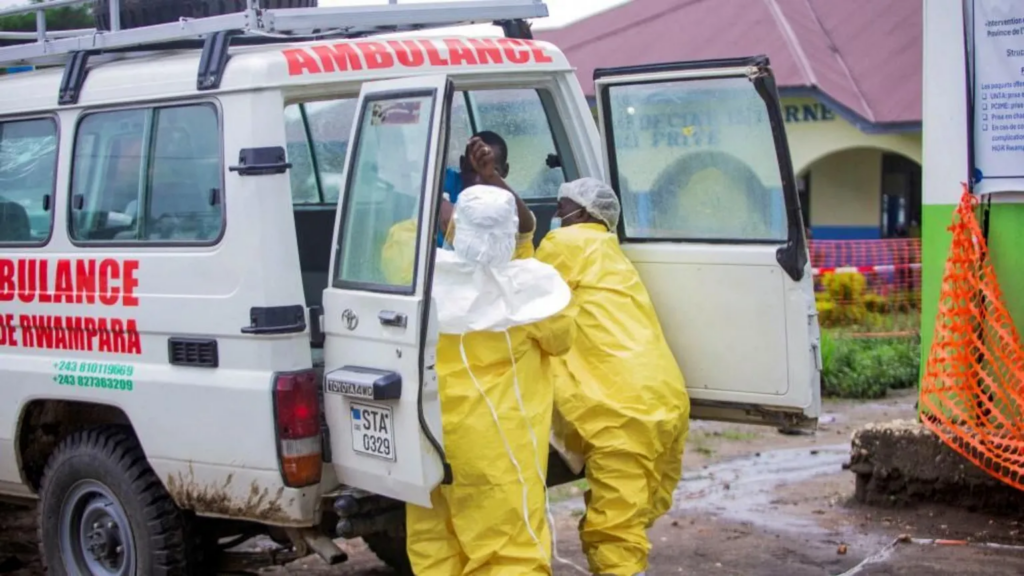
Beyond Nigeria, the Ebola outbreak in the Democratic Republic of the Congo (DRC) continued to raise concerns about regional health security.
Health workers wearing protective equipment.
October brought major developments across Nigeria’s health sector, with the confirmation of an Ebola case in Abuja prompting renewed disease surveillance, contact tracing and emergency response measures.
The month also saw growing concerns over Nigeria’s dependence on imported pharmaceutical ingredients, child malnutrition and challenges affecting maternal and child healthcare.
Beyond Nigeria, the Ebola outbreak in the Democratic Republic of the Congo (DRC) continued to raise concerns about regional health security.
PREMIUM TIMES reviews some of the major health developments that shaped October.
Nigeria confirmed its first Ebola case since 2014 on 20 October, involving a 42-year-old Ugandan-born woman living in Abuja who recently returned from Uganda.
The confirmation prompted contact tracing, heightened surveillance and infection prevention measures across healthcare facilities.
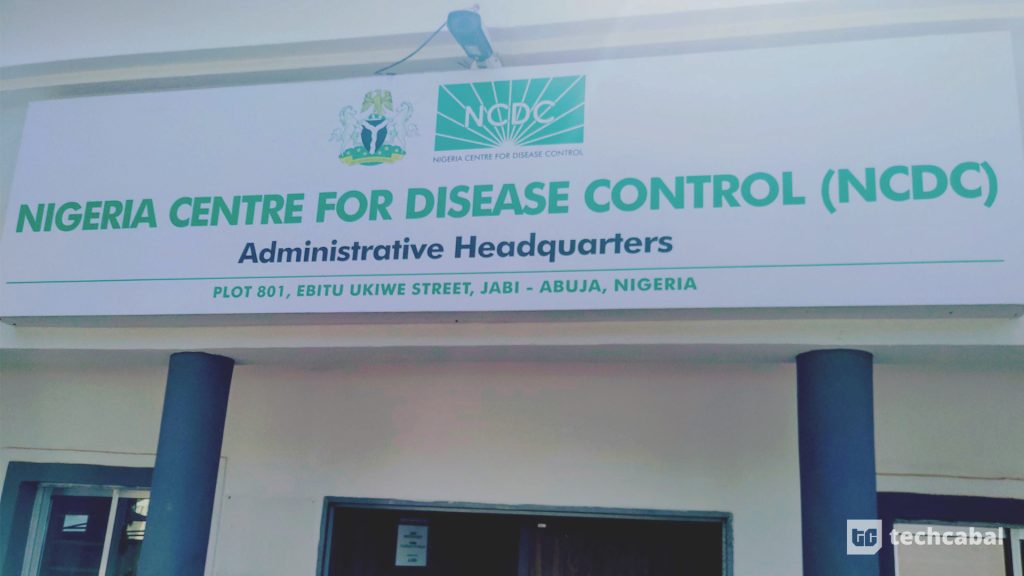
The Nigeria Centre for Disease Control and Prevention (NCDC) initially identified 44 close contacts, with the number increasing as investigations continued.
Nigeria’s confirmed Ebola patient and her husband were medically evacuated to Switzerland on 26 October after the patient received treatment in isolation in Abuja.
The patient was transferred to Geneva University Hospitals, while her husband was placed in isolation at University Hospital Zurich.
Following the evacuation, the World Health Organisation (WHO) said Nigeria had no active confirmed Ebola case, although surveillance and monitoring of exposed contacts continued.
The NCDC expanded the health declaration requirement to all international travellers after confirming Ebola in Abuja.
The agency said the measure was intended to strengthen screening at points of entry and support the early identification of potential infections.
It also urged healthcare facilities to isolate suspected cases promptly and strengthen infection prevention measures.
Two suspected Ebola cases identified in Adamawa State tested negative after two rounds of laboratory testing, the NCDC announced on 31 October.
The suspected cases involved a 34-year-old pilot and his wife, a medical doctor, who were admitted to an isolation facility at the Modibbo Adama University Teaching Hospital in Yola after developing symptoms suggestive of Ebola.
The agency said the Abuja case remained Nigeria’s only laboratory-confirmed Ebola infection during the outbreak.
The NCDC said the N10 billion emergency intervention fund approved by the federal government was intended to strengthen preparedness and response to Ebola, Lassa fever and other emerging infectious diseases.
The agency explained that the funding would support surveillance, laboratory diagnosis, protective equipment, emergency operations and rehabilitation of isolation facilities.
The clarification came amid questions over how the emergency allocation was being utilised following the confirmation of Ebola in Abuja.
The International Committee of the Red Cross (ICRC) reported an 18 per cent increase in malnutrition admissions at 10 supported health facilities in North-east Nigeria.
The facilities recorded nearly 20,000 admissions between January and September 2026, compared with about 17,000 during the same period in 2025.
Children, pregnant women and breastfeeding mothers were among those most affected, highlighting the continuing impact of insecurity and food shortages on vulnerable communities.
The federal government announced a partnership with the US-based Operation End Starvation initiative to mobilise more than $1 billion to address child malnutrition and starvation-related deaths across sub-Saharan Africa.
Nigeria was identified as a priority country under the initiative, which aims to mobilise funding over two years.
The government said the partnership would complement existing interventions addressing hunger and acute malnutrition among children, pregnant women and breastfeeding mothers.
Health and pharmaceutical stakeholders warned that Nigeria’s dependence on imported active pharmaceutical ingredients (APIs) could undermine medicine security and expose the country to global supply disruptions.
At a meeting organised by Nigeria Health Watch in partnership with the World Bank Group, stakeholders called for increased domestic production of essential pharmaceutical ingredients.
They identified inadequate infrastructure, unreliable electricity, financing constraints and regulatory challenges as major barriers to local manufacturing.
The WHO raised concerns over the growing diabetes burden in Africa, warning that about 75 per cent of people living with the condition in the region remain undiagnosed.
The organisation said an estimated 24.6 million adults aged between 20 and 79 were living with diabetes in the African region.
The findings renewed concerns about limited screening, delayed diagnosis and access to treatment for non-communicable diseases.
The Ebola outbreak in the DRC continued to spread during October, with confirmed cases surpassing 10,000 and deaths approaching 5,000.
The WHO reported 10,274 confirmed cases and 4,992 deaths in the country as of 28 October.
The outbreak, which also affected other African countries, intensified concerns about cross-border transmission, surveillance capacity and regional preparedness.
- health
- ebola
- security
- review
- case
- child
- malnutrition
- medicine