VALCO expansion must be backed by Ghana-specific sustainability evidence – Researcher
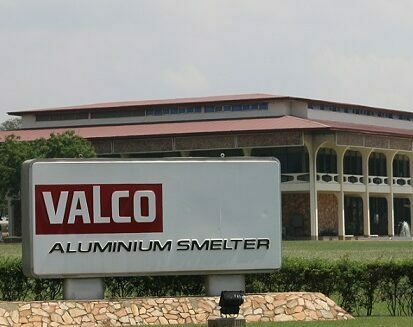
Ghanaian finance professional and researcher, John Akwetey Boafo, has urged the government to back its ambition to increase production at the Volta Aluminium Company Limited (VALCO) to at least 200,000 tonnes annually by the end of 2028 with credible, locally grounded sustainability evidence. Republic of Ghana+1 Finance professional and researcher, John Akwetey Boafo Mr Boafo’s concerns are informed by a systematic review of sustainable banking and Environmental, Social and Governance (ESG) integration research, which he co-authored and published in July 2025 in the Interdisciplinary Journal…
Ghanaian finance professional and researcher, John Akwetey Boafo, has urged the government to back its ambition to increase production at the Volta Aluminium Company Limited (VALCO) to at least 200,000 tonnes annually by the end of 2028 with credible, locally grounded sustainability evidence.
He says Ghana must demonstrate the commercial and environmental advantages of the smelter through verifiable data on its electricity sources, carbon emissions, production efficiency and community impact to strengthen its investment case.
Mr Boafo argues that relying solely on international sustainability benchmarks could overlook Ghana's specific economic, institutional and environmental circumstances, potentially limiting investors' understanding of the project's actual value.
His comments come as the government pursues a strategic partnership to modernise and expand VALCO, with plans to increase annual production from about 40,000 tonnes to at least 200,000 tonnes by the end of 2028.
In January 2026, the Minister for Lands and Natural Resources, Emmanuel Armah-Kofi Buah, urged the selected investor to commence modernisation work immediately, while emphasising the importance of securing the investment needed to revive the smelter. The government subsequently inaugurated a negotiating team on August 21 to agree on the definitive terms of the proposed partnership. Republic of Ghana+1
Mr Boafo's concerns are informed by a systematic review of sustainable banking and Environmental, Social and Governance (ESG) integration research, which he co-authored and published in July 2025 in the Interdisciplinary Journal of Management Sciences.
The study analysed 1,104 Scopus-indexed publications spanning 1933 to 2025 and identified significant gaps in research output from Africa and Latin America.
The review found that Nigeria accounted for 12 publications and South Africa 19, compared with 141 for China and 129 for India within the dataset.
It also identified limitations in the application of sustainability models developed in other markets, particularly where informal economies and state-owned institutions have different operating conditions.
Mr Boafo says these gaps should prompt Ghana to develop its own evidence base as it negotiates the future of one of its strategic industrial assets.
“The counts do not prove a financing penalty by themselves, and they are not a substitute for a Ghana-specific study. They establish something more fundamental: African conditions occupy a small share of the evidence used to refine sustainable-finance practice.
“For a project as distinctive as VALCO, locally grounded evidence is therefore not an academic luxury. It is part of the investment case,” he said.
Mr Boafo identified electricity consumption as one of the critical areas where sustainability evidence could influence the assessment of VALCO's competitiveness and investment potential.
He noted that GIADEC's original vision for VALCO was linked to the use of electricity from the Akosombo Dam to support an integrated aluminium industry.
While hydroelectric power could give the smelter a lower electricity-related carbon footprint compared with facilities relying on coal-generated electricity, he said Ghana would need to establish the actual sources of power supplied to the plant.
According to him, the historical association with hydropower should not be treated as sufficient evidence of the facility's current environmental performance.
He also drew attention to the European Union's Carbon Border Adjustment Mechanism (CBAM), which entered its definitive phase on January 1, 2026, and covers aluminium imports.
Under the current CBAM methodology, the calculation for aluminium includes direct emissions but excludes indirect emissions from electricity consumption, although such emissions are covered in the methodology for certain other sectors, including cement and fertilisers.
Mr Boafo said the distinction was important because a lower electricity-related carbon footprint did not automatically translate into a lower carbon cost under every international regulatory framework.
“Electricity is commonly the largest component of an aluminium producer’s carbon footprint, yet the current CBAM treatment of aluminium does not differentiate imports on the basis of electricity-related indirect emissions.
“That does not erase the commercial value of hydropower. It means Ghana must demonstrate that value through verified carbon data, reliable power economics, buyer commitments and financing terms rather than assume that the border mechanism will recognise it automatically,” he said.
He added that the government should ensure that environmental and sustainability claims made about VALCO are supported by measurable information that investors, lenders and prospective buyers can independently assess.
Mr Boafo also highlighted inconsistencies in Environmental, Social and Governance ratings, noting that different rating agencies may arrive at varying assessments because of differences in their methodologies and the weighting assigned to specific indicators.
He cited research examined in his review which found a highest correlation of 0.61 among the ESG rating agencies assessed, suggesting that their assessments were positively related but not entirely consistent.
He said the differences reinforced the need for project-specific sustainability reporting that provides investors with access to underlying performance data rather than relying exclusively on composite ESG scores.
His review also identified greenwashing as a continuing concern in sustainable finance, emphasising the importance of reliable disclosure and verifiable environmental claims.
For Ghana's aluminium ambitions, Mr Boafo believes the immediate priority should be to assemble a comprehensive evidence base that connects sustainability performance to the smelter's commercial prospects.
He proposed that this should cover traceable electricity sources, verified carbon emissions, production efficiency, environmental performance, workforce outcomes and the impact of operations on surrounding communities.
“For VALCO, the immediate implication is practical. Ghana should build an investable evidence pack around the variables that make the project distinctive: traceable power sources, verified electricity-related emissions, production efficiency, environmental performance, workforce effects and community outcomes.
“That evidence will not replace an investor’s analysis. It will ensure the analysis is built on Ghana’s actual conditions rather than on regional assumptions,” he said.
He further argued that sustainability information should be connected to operating costs, production reliability, buyer requirements and financing assumptions to help investors assess the commercial value of the smelter's potential advantages.
Mr Boafo's recommendations draw on his more than a decade of experience in corporate finance, including mergers and acquisitions advisory and business valuation, with experience supporting transactions across West Africa and the United States.
While his research does not specifically assess VALCO or its proposed investment arrangements, he believes its findings provide a basis for examining the evidence required to finance sustainable industrial development in Ghana.
He said the country's ambition should be to ensure that the modernisation of VALCO is supported not only by the necessary capital and technology but also by independently verifiable evidence of its long-term economic, environmental and social value.
1. Boafo, J. A., Maclean, E. O., Danzerl, N. O. P., & Amoafo-Danquah, K. P. (2025). Sustainable banking and ESG integration: A systematic review of green finance practices in global banking systems. Interdisciplinary Journal of Management Sciences, 2(1), a07. Published 28 July 2025. Table 1 and sections 3.2 and 3.3 report the dataset metrics and country distribution. The discussion sets out the methodological limitations and research recommendations. Full research article (PDF) | DOI: 10.38140/ijms-2025.vol2.1.07
2. Ghana Integrated Aluminium Development Corporation. GIADEC secures strategic investors for the modernization of VALCO and construction of alumina refinery. January 2026. Reports investor selection, the production target of at least 200,000 tonnes a year by the end of 2028, and the five evaluation pillars. GIADEC investor-selection announcement
3. Ghana Integrated Aluminium Development Corporation. Government inaugurates negotiations team for VALCO modernisation. 21 August 2026. Describes the team’s mandate to negotiate definitive terms and the smelter’s historical connection to the Akosombo power project. GIADEC negotiations announcement
4. LME Insight. How carbon costs have evolved to reshape aluminium pricing. 22 May 2026. Reports the industry estimate of 60 to 80 percent for electricity-related indirect emissions, depending on the power source. The estimate is not specific to VALCO. LME Insight article
5. European Commission. Carbon Border Adjustment Mechanism. Confirms that the definitive regime applies from 1 January 2026. European Commission CBAM overview
6. Regulation (EU) 2023/956, Article 7(1) and Annex II, as amended. Provides the legal basis for taking only direct emissions into account for the listed aluminium goods. Consolidated regulation, 20 October 2025
- evidence
- valco
- sustainability
- electricity
- ghana
- researcher
- boafo
- emission