Dustin Hoffman says filming The Graduate was ‘a terrible experience’ due to Mike Nichols’ ‘sadism’
In his new memoir, the actor reveals he was slapped 27 times until he was dizzy for a scene director Nichols ‘didn’t even use’ Almost 60 years after The Graduate was released, Dustin Hoffman has revealed that making the 1967 film that launched his career was “a terrible experience” and he felt “immediately uncomfortable, unworthy” as a Jewish actor playing “the ultimate Wasp”, Ben Braddock. In an essay for the New Yorker, drawn from his upcoming memoir Look at Me, which was co-written with New Yorker staff writer Ariel Levy, the 89-year-old actor wrote: “The Graduate exacerbated all my insecur
In his new memoir, the actor reveals he was slapped 27 times until he was dizzy for a scene director Nichols ‘didn’t even use’
Almost 60 years after The Graduate was released, Dustin Hoffman has revealed that making the 1967 film that launched his career was “a terrible experience” and he felt “immediately uncomfortable, unworthy” as a Jewish actor playing “the ultimate Wasp”, Ben Braddock.
In an essay for the New Yorker, drawn from his upcoming memoir Look at Me, which was co-written with New Yorker staff writer Ariel Levy, the 89-year-old actor wrote: “The Graduate exacerbated all my insecurities from the start.
“Here I was, playing a starring role in a movie by Mike Nichols, who was the director of the moment, but I felt like I had no right to be there. I didn’t even want to try out for the part.”
Hoffman was a successful theatre actor when Nichols expressed interest in him. The director had spent two years casting the lead roles, seeing actors such as Robert Redford before hiring Hoffman as Ben and Katharine Ross as Elaine Robinson.
Hoffman recalls sitting in hair and makeup for hours with Nichols giving instructions to the makeup artists to change his appearance, including removing his monobrow and commenting on the shape of his nose.
“I remember thinking, They’re trying to take the Jew off my face, and it ain’t going to happen. All I wanted to do was go home, to ethnic New York, where I belonged. I knew I was no leading man. I knew my place,” he wrote.
Hoffman said Nichols was “an entirely different person” when it came to shooting the film after weeks of rehearsals: he was difficult to read, his mood was changeable and he was “frequently sour”.
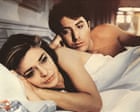
“Mike was irritable with everyone, but with me a certain sadism seemed to creep in,” Hoffman wrote, revealing he was slapped 27 times by Ross for a scene that didn’t even make the final cut. “He made us do 27 takes,” Hoffman wrote.
“The scene has Benjamin run into Elaine’s room, soaking wet from the rain, to tell her that he’s had an affair with an older woman; within seconds, Elaine realises the woman is her mother. Mike just kept telling Katharine to hit me, to hit me harder.
“Katharine worried she would hurt me, and I told her, ‘I’m OK. Just don’t hit my ear.’ Unfortunately, she missed a few times. I was dizzy by the end of that day, and Mike didn’t even use the slap in the film.”
The next day, Hoffman punctured an eardrum while filming an underwater scene where he was wearing a scuba suit in a swimming pool.
“When I came up for air after a few takes, there was blood trickling out of my ear. Between all the slapping during the previous day and all the water pressure at the bottom of the pool, I’d punctured an eardrum,” he wrote.
Hoffman shared that his co-star Anne Bancroft, who played his older lover Mrs Robinson, fainted during a scene on a hot day and “she had to be resuscitated with oxygen”. Hoffman himself was made to repeat a scene in which he ran from his car to the church to declare his love for Elaine until he thought he’d pass out.
“We did it over and over and over again, until I was absolutely trashed from exhaustion and dehydration. I remember lying down in the grass in front of the church because I thought I was going to lose consciousness,” he wrote.
Making The Graduate, which was nominated for seven Oscars and won best director at the 40th Academy Awards, turned out to be “a terrible experience” for a film that “changed my life”, he said.
“The whole time, I felt Mike was angry at me, either because I was doing something wrong or because he had realised what everybody else already knew, that he had miscast the lead in his film.”
Hoffman reflected that six decades on, the film was something of “a self-portrait” for director Nichols, who came to the US from Germany in 1939 as a young Jewish boy.
“He was looking for an alter ego – that’s why Benjamin had taken years to cast, and maybe that’s why he was so hard on me. I was a stand-in, there to absorb Mike’s own self-loathing.”
Hoffman’s memoir Look at Me will be published on 10 November.
- graduate
- dustin
- hoffman
- experience
- nichols
- actor
- mike
- sadism