lifestyle

Housing deficit falls to 1.8 million, but service gaps remain — GSS

Housing deficit falls to 1.8 million, but service gaps remain — GSS

The Ghana Statistical Service (GSS) says the improvement in the housing shortfall has not eliminated the challenges associated with the availability and distribution of homes and basic services, particularly as the country’s urban population continues to grow. The Ghana in Numbers, 2025 publication and related district data are available through the GSS website, StatsBank, the Ghana in Numbers web portal and the GSS Stats App.

Ghana’s estimated housing deficit declined from 2.8 million units in 2010 to 1.8 million in 2021, but persistent gaps in access to electricity, sanitation and decent settlement conditions continue to affect households across the country. The Ghana Statistical Service (GSS) says the improvement in the housing shortfall has not eliminated the challenges associated with the availability and distribution of homes and basic services, particularly as the country’s urban population continues to grow.

The figures are contained in the Ghana in Numbers, 2025, a flagship publication released by the Service on November 2, which brings together population, housing and basic-service indicators to guide development planning. According to the report, the 2021 Population and Housing Census counted about 10 million dwelling units, while the estimated housing deficit stood at approximately 1.8 million units.

The GSS, however, cautioned that the deficit was an estimate based on the number of homes required and available. It did not, on its own, measure housing quality, affordability or the number of vacant homes. Basic-service gaps persist Despite improvements in access to essential services over the years, the report identifies significant gaps in household access to electricity and improved sanitation.

The proportion of households with electricity increased from 43.8 per cent in 2000 to 86.3 per cent in 2021. Access to improved drinking water also rose from 60.7 per cent to 92 per cent over the same period, while improved sanitation increased from 44.8 per cent in 2010 to 69 per cent in 2022. Nevertheless, about one in seven households still has no electricity, while almost one in three lacks an improved toilet.

The report further indicates that 30.8 per cent of Ghana’s urban population lives in slums or informal settlements, underscoring the uneven conditions in which many urban residents live. Smaller households, rising housing needs The GSS also reported that the average household size had fallen to 3.6 people, the lowest recorded level. It explained that the decline in household size could increase the number of homes required, even when population growth slows, as more households would need separate accommodation.

The trend has implications for housing demand and urban planning, particularly as the country’s urban population expands. About 19.8 million people, representing 58.7 per cent of Ghana’s population, lived in urban areas in 2025, according to the report. Ghana became more urban than rural in 2010, when 12.55 million people lived in urban areas, compared with 12.11 million in rural communities.

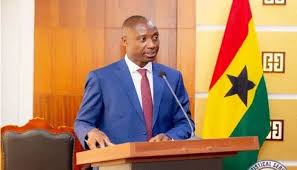
By 2021, the urban population had risen to 17.47 million, against 13.36 million in rural areas. GSS urges localised planning Government Statistician, Dr Alhassan Iddrisu, said the statistics should guide decisions on the provision of housing and essential services at the community level. “Use local figures, not national averages, to decide where the next cedi goes, because averages hide differences,” he said.

He said population data should help determine “where schools, clinics and homes must go”, stressing the importance of using local evidence to identify communities with the greatest needs. The Service said district-level figures could help policymakers identify areas where gaps in housing, water, sanitation, electricity and other services were most pronounced.

The Ghana in Numbers, 2025 publication and related district data are available through the GSS website, StatsBank, the Ghana in Numbers web portal and the GSS Stats App.

  • housing
  • service
  • gss
  • population
  • deficit
  • ghana
  • household
  • cent

Summaries and tags are generated automatically. Stay informed with VidiaNews.

Related news

Capital per worker in Ghana slows to 1.0% per year, job quality lags – GSS
business

Capital per worker in Ghana slows to 1.0% per year, job quality lags – GSS

Capital per worker in Ghana slows to 1.0% per year, job quality lags – GSS The Ghana Statistical Service has revealed in its 2026 Productivity, Employment and Growth Report that the growth in capital per worker has slowed to 1.0% per year since 2020. The second edition of the Productivity, Employment and Growth Report answered both questions for Ghana over 35 years, from 1991 to 2025.

Read →
From national service to future leadership: Why mentorship matters more than ever
technology

From national service to future leadership: Why mentorship matters more than ever

In 2026, Ghana’s National Service Authority (NSA) and UNFPA Work Readiness and Leadership Training Programme were reported as targeting approximately 150,000 graduates annually, with training covering personal leadership, digital agility, civic education, health and rights, and global awareness. Ghana’s National Service system itself occupies an important position between tertiary education and employment, providing graduates with exposure to professional environments and practical experience.

Read →
Ghana Prisons Service seeks reforms to strengthen inmate rehabilitation and reintegration
crime

Ghana Prisons Service seeks reforms to strengthen inmate rehabilitation and reintegration

The Ghana Prisons Service has called for comprehensive reforms to strengthen its correctional system, improve inmate rehabilitation and reposition the institution as a key part of the country’s national security architecture. The panel comprised retired Supreme Court Justice Jones V.M. Dotse; Dean of the University of Ghana School of Law, Prof. Raymond Atuguba; retired Deputy Director-General of Prisons in charge of Operations, DDGP (Rtd) Sylvester K.B. Rabbles; Democracy and Development Fellow at CDD-Ghana, Dr John Osae-Kwapong; Pro-Vice-Chancellor of the Ghana Communication Technology…

Read →
GISPA moves to strengthen industry collaboration and advocacy across Ghana’s digital sector
technology

GISPA moves to strengthen industry collaboration and advocacy across Ghana’s digital sector

The Ghana Internet Service Providers Association (GISPA) is stepping up efforts to strengthen collaboration, policy engagement and collective advocacy across Ghana’s digital infrastructure ecosystem, as it seeks to build a more coordinated industry voice on issues shaping the country’s digital future. The event also reinforced the importance of stronger relationships between industry players and public-sector stakeholders, including the Ministry of Communication, Digital Technology and Innovations, the National Communications Authority (NCA), the Ghana Chamber of Telecommunications and other…

Read →
Payroll without pipettes: Why you cannot build a first-world economy on 0.09% R&D
business

Payroll without pipettes: Why you cannot build a first-world economy on 0.09% R&D

Nowhere in the fiscal tables is there a dedicated line item for the Ghana National Research Fund (created under Act 1056 to move our research funding toward the African Union’s 1 per cent of GDP benchmark). Across all 13 research institutes of the Council for Scientific and Industrial Research (CSIR), the Ghana Atomic Energy Commission (GAEC), the Nuclear Power Institute, the Ghana Space Science and Technology Institute, and Ministry headquarters combined, the Treasury allocates just GH¢10.00 million in domestic capital expenditure and GH¢16.57 million in Goods and Services for the whole of…

Read →
Video: ‘We love you’ – Fountain of Life Church members give Jimmy Odukoya rousing welcome
lifestyle

Video: ‘We love you’ – Fountain of Life Church members give Jimmy Odukoya rousing welcome

Members of the Fountain of Life Church have welcomed their senior pastor, Jimmy Odukoya, with cheers and chants of affection during Sunday service, days after a dispute over his leadership of the church became a subject of litigation. 'We love you' — Fountain of Life Church members chant as Jimmy Odukoya takes the stage pic.twitter.com/YXNZljrfMv— TheCable (@thecableng) November 22, 2026 Responding to the reception, he said, “Fountain, I love you.”

Read →