Assemblies hold the key to cleaner air in Greater Accra – Clean Air Fund, Ghana

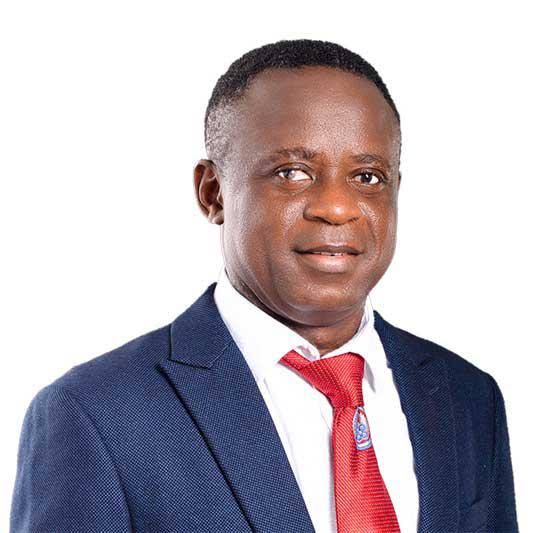
Metropolitan, municipal and district assemblies must lead the fight against air pollution, because that is where national laws and commitments are put into practice, the Clean Air Fund has said. Desmond Appiah, Country Lead for Ghana at the Clean Air Fund, said national policies on air pollution often stall at the local level.
Metropolitan, municipal and district assemblies must lead the fight against air pollution, because that is where national laws and commitments are put into practice, the Clean Air Fund has said.
The call came at the Clean Air Leadership Bootcamp for Chief Executives, Coordinating Directors and selected Presiding Members of the 29 assemblies in Greater Accra. The training, held on October 30 at the Heartland Hotel in Ada-Foah, aimed to equip local leaders to factor air quality into planning, waste management, transport and budgeting.
Desmond Appiah, Country Lead for Ghana at the Clean Air Fund, said national policies on air pollution often stall at the local level.
“That is where the rubber hits the road. That is where the real action happens,” he said. “Even when government makes national and international commitments, the implementation of those commitments are done at the assembly level.”
He said Ghana has strong national rules, including air quality regulations recently passed by Parliament, but they will only work if assemblies understand them and have clear ways to enforce them. “If we have the best of national policies, the best of national regulations, but at the assembly level the understanding and the implementation mechanisms are not clearly defined, it becomes difficult,” he said.
The stakes are high. A UNDP investment case presented at the bootcamp by Belynda Amankwa, Programme Specialist for Health, found that outdoor air pollution contributed to more than 12,000 deaths in Ghana in 2024, about 64 percent of them before the age of 70. It cost the country about US$2 billion, equivalent to 2.3 percent of GDP. Stroke, lower respiratory infections and heart disease were among the leading causes.
Under the new regulations, every district assembly is required to develop its own air quality management plan. Mrs Selina Amoah, Head of the Environmental Quality Unit at the Environmental Protection Authority, said assemblies must consider air pollution when approving projects, enforce zoning rules and manage waste properly.
She urged them not to rely on donors alone. “We expect the assemblies to dedicate resources to implement actions identified in the plan and provide periodic reports,” she said.
The EPA’s monitoring data show why. Mrs Amoah said annual PM2.5 levels at roadside stations, including Tetteh Quarshie, have exceeded Ghana’s standard of 35 micrograms per cubic metre, with readings at Tetteh Quarshie topping 600 micrograms in 2023.
For some assemblies, the problem is clear, but their power to fix it is limited. The Municipal Chief Executive for Ga Central, Emmanuel Allotey, said much of the pollution in his municipality comes from poorly coordinated lorry stations, markets and badly maintained commercial vehicles. But the assembly cannot decide which vehicles stay on the road.
“Assembly cannot determine which cars are roadworthy. We rely on DVLA to certify those cars for us,” he said. “But you can see most of our commercial cars, the emissions are too much. Maintenance is very poor.”
Research presented at the bootcamp backs his concern. Prof. Williams Ackaah, Deputy Director of the CSIR’s Building and Road Research Institute, led a study of more than 1,400 vehicles across the 25 assemblies in the Greater Accra Metropolitan Area.
“Majority of the vehicles were going above the recommended standard,” he said. “So we are going above our standard, and this is disturbing.”
He said motorbikes were particularly high in hydrocarbons, a sign they are not burning fuel properly. He also questioned how vehicles are tested. “What DVLA has been doing is the idling state emissions,” he said. “We should be looking at testing the vehicles when they are accelerating, when they are carrying loads.”
He said enforcement is the bigger problem. “So many vehicles are on the road. They get their roadworthy certificate without even visiting these garages who are supposed to do it.”
Where assemblies do have control, they are acting. Mr Allotey said his assembly, which serves about 350,000 residents, has a sanitation task force tackling open burning of waste. “We first of all educate the public why they should not burn their waste, and for those who are not listening, we take them to court for sanction,” he said.
That focus matters. Dr Elvis Kyere-Gyeabour Breathe Cities Accra portfolio manager said waste burning accounts for about 35 percent of Accra’s air pollution, compared with 18 percent from traffic. He said assemblies that tackle solid waste and biomass burning alone could cut pollution levels by more than 40 percent. He added that a model air pollution bylaw developed with the Greater Accra Regional Coordinating Council is awaiting gazetting, and any assembly can adopt it.
Mr Allotey said the training had changed how he sees his role. “I have been empowered today because I have been exposed to the laws that are in our books that we can use to sanction those who do not follow the laid down rules,” he said.
He said the data on deaths from air pollution had convinced him to take the message home. “Air pollution is actually a silent killer,” he said. “It tells me that I need to go back and engage my stakeholders and let them know the dangers.”
- air
- assembly
- ghana
- clean
- vehicle
- greater
- accra
- fund