What US midterm elections mean for Ukraine, Iran and elsewhere
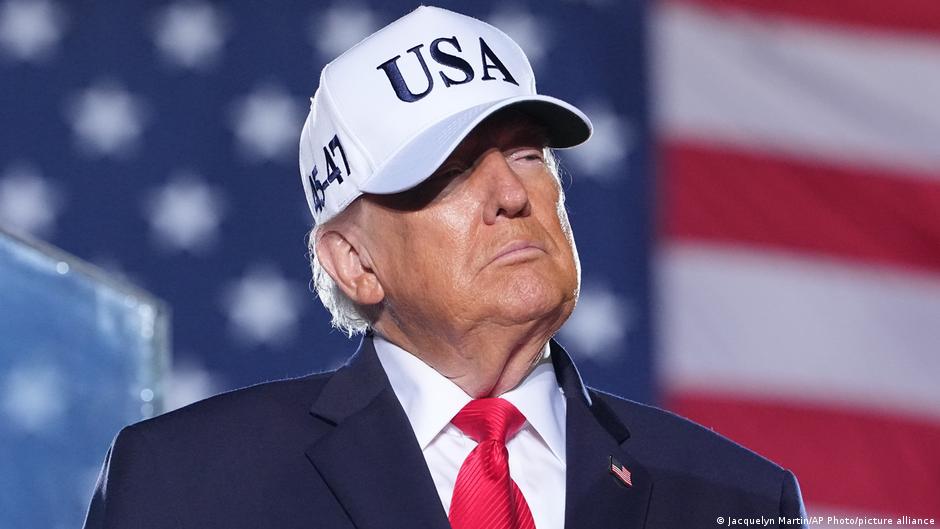
Donald Trump's Republicans control the US Congress, but that could change after the midterm elections. The outcome of the ballot will not only impact domestic policy but also conflicts in Europe and the Middle East.
The outcome of the midterm elections will shape US policy for years — and have repercussions around the globe. Decisions made in Washington affect both US adversaries such as Iran and countries such as Ukraine, which is seeking more support from the United States.
President Donald Trump does not have the final say when it comes to deciding where the United States goes to war or which countries get financial or military aid. While the president wields more power in the US than in parliamentary democracies such as Germany, he does not govern alone — even in the land of opportunity.
The House of Representatives and the Senate, the two chambers of Congress whose composition voters will decide this Tuesday, wield considerable influence. They decide on legislation and government spending and also serve as a check on the president and the intelligence agencies.
The president can veto legislation passed by Congress. Congress can override that veto with a two-thirds majority in both chambers. The legislature also handles impeachment proceedings. In addition, the president can only appoint Cabinet members, US ambassadors and federal judges from a list of nominees the Senate approves.
Trump’s Republicans currently hold majorities in both chambers of Congress, making it easier for the president to govern. But recent polls suggest the Democrats could take control of at least the House of Representatives and possibly even the Senate. This could shift the direction of major foreign policy issues.
Joe Biden, a Democrat, was in the White House when Russia launched its invasion of Ukraine. Alongside Europe, the US stood out as a reliable partner, supporting Ukraine with financial aid, military expertise and, above all, large-scale weapons deliveries.
The situation changed abruptly under Trump. Ukrainian President Volodymyr Zelenskyy famously received a notably frosty welcome during his 2025 visit to the White House. Trump now openly admits that he gets along better with Russian President Vladimir Putin than with Zelenskyy.
The US has suspended sanctions against Russia and reduced financial and military aid to Ukraine. If Democrats win majorities in both chambers of Congress, they could put increased support for Ukraine on the agenda.
"Democrats criticize the Trump administration for not doing enough for Ukraine," Brandon Conradis, a former DW journalist and now an editor at Bloomberg Government, told DW. "They can push legislation that would provide more aid to Ukraine."
If Trump vetoed such legislation, the outcome would depend on the balance of power in Congress. But a two-thirds majority could override his veto with support from some Republicans.
Trump launched the war against Iran alongside Israel on February 28 without consulting Congress. Under the US Constitution, Congress must approve a formal declaration of war against another country. Democrats have repeatedly voted against the war and even passed a resolution, together with some Republicans, calling for an end to the hostilities. The Trump administration has ignored it.
"I don't think Congress will have huge powers here," said Michael O'Hanlon, director of research for foreign policy at the US think tank Brookings Institution, told DW, but added that Congress could perhaps prevent a major escalation by refusing to fund it.
US support for aid projects around the world that help fight Ebola, AIDS and hunger was sharply cut back by President Trump shortly after he began his second term. Among other measures, he shut down USAID, the US agency responsible for foreign development assistance.
Whether a Democratic-controlled Congress could "reactivate" the agency against the president's wishes is questionable. But Congress could push for increased aid spending and investigate the controversial closure of USAID.
"Democrats would have oversight power and use it to scrutinize the closing of USAID," Conradis said. "There will be hearings, and they will drag officials they view as responsible in front of Congress."
Ultimately, the US remains a country with a Republican president. There will be no complete reversal of course. "It's not like if Democrats win control of Congress, everything is going to change. But some things will change because the power dynamics will be different."
- midterm
- election
- ukraine
- iran
- donald
- trump
- republicans
- congress