China and India achieved diplomatic thaw. Now the border is flaring up
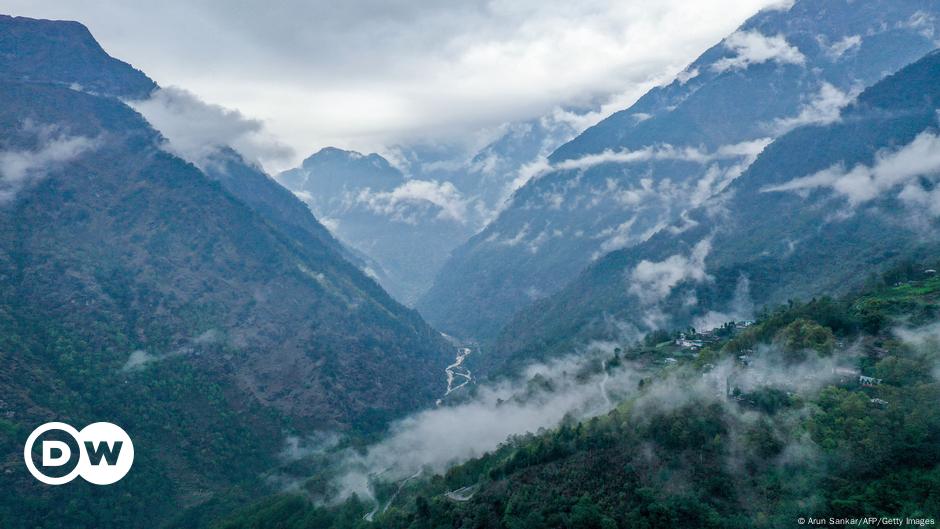
China and India achieved diplomatic thaw. Indian authorities have confirmed a new border "face-off" between Indian and Chinese troops in Arunachal Pradesh, raising questions about the still fragile thaw in relations between New Delhi and Beijing.
Indo-Tibetan Border Police (ITBP) Director General Shatrujeet Kapur sounded alarm bells across India by confirming that Indian and Chinese troops had confronted each other at several locations along the de facto border in Arunachal Pradesh state, in India's northeast.
"In the past few days, a situation arose where a face-off happened (with Chinese troops) at various locations in Arunachal and it still continues," he told reporters last month.
"It may be difficult to counter China by conventional means because their PLA and BDR (Border Defense Regiment) have gone way ahead with investment and modernization," he said.
The disputed China-India border runs through a remote mountainous region.
Throughout the decades, clashes along the Line of Actual Control (LAC), the de facto border, have repeatedly triggered security crises between the world's two most populous nations.
Ties between Beijing and New Delhi are still affected by the deadly violence in 2020, when both countries accused each other of trying to seize territory.
In June that year, a clash in the Galwan River valley in eastern Ladakh killed 20 Indian soldiers and four Chinese troops, according to Indian sources. China later confirmed four of its soldiers died.
Kapur's remarks have brought renewed attention to the Himalayan frontier. Arunachal Pradesh Chief Minister Pema Khandu has acknowledged but also downplayed the border transgressions, saying such incidents were not new and the situation along the border was normal.
Khandu acknowledged that the border was not properly demarcated and that China did not recognize the McMahon Line, drawn by the British Empire in 1914, which separates Arunachal Pradesh from Tibet.
It was also not clear if the latest confrontations between the Chinese and Indian troops involved physical violence.
The opposition Congress party criticized Khandu's remarks, and accused the ruling BJP, led by India's Prime Minister Narendra Modi, of "rationalizing" Chinese actions instead of asserting India's position.
"On this there has been a deafening silence from the PM and his establishment," Congress general secretary Jairam Ramesh said in a post on X, referring to the face-offs confirmed by the border police chief.
Meanwhile, External Affairs Ministry spokesperson Randhir Jaiswal attributed the incidents to Chinese forces changing up their patrol routes.
"As we have noted in the past, the situation in the India-China border areas gets disturbed from time to time when Chinese forces diverge from established patrolling patterns," he said.
Chinese Foreign Ministry spokesperson Guo Jiakun rejected the allegations, saying Chinese troops were conducting "normal patrols" and strictly abiding by bilateral agreements.
The LAC largely separates Indian- and Chinese-controlled territory. However, as forces from both nations patrol territory they regard as their own, they sometimes venture into disputed areas.
"There is a very simple reason — because there is no agreed line between the two," Gautam Bambawale, a former Indian ambassador to China, told DW.
The de-facto border stretches for 3,488 kilometres (2,167 miles) according to India, but China claims it is shorter. The two countries have held 25 rounds of talks between their Special Representatives since 2003, but have yet to reach a boundary settlement.
The dispute is particularly sensitive in Arunachal Pradesh, which China claims as part of southern Tibet.
Aravind Yelery, a China expert at Jawaharlal Nehru University, said the region has become more strategically important to Beijing.
"Both sides patrol a contested LAC, so friction is built into the arrangement," Yelery told DW.
"What is new is China's intensified focus on the eastern sector. Since announcing the 60,000-megawatt Medog hydropower project in Tibet, Beijing has poured infrastructure, troops, engineers and machinery into the area."
He described the LAC as "not a thin line but a deep zone of overlapping claims where patrols inevitably meet." Face-offs will continue, he argued, until diplomacy produces concrete arrangements on the ground.
According to Yelery, the diplomatic pledges made by Indian and Chinese leaders will take time to implement.
"A wide gap separates the leaders' promises from the measures that would prevent a repeat of 2020, namely disengagement and mutual restraint," he added.
For India, the immediate concern is whether the recent encounters reflect familiar patrol disputes or a more significant change in Chinese activity along the frontier.
Ashok Kantha, another former Indian ambassador to China, said Chinese transgressions in the eastern sector were not new, but that their location and extent mattered.
"If the Chinese have now made deeper intrusions on our side of the LAC, or established a presence in new areas, or expanded their existing presence, that would be a serious development," he added.
He also pointed to agreements signed by the two countries to maintain peace along the border.
"Any such transgression would be in complete violation of several border-related agreements India and China have signed (1993, 1996, 2005, 2012 and 2013). In these, both sides committed to respect and strictly observe the LAC, and not to alter the status quo."
The Indian government has not publicly provided details of the locations or circumstances of the latest face-offs, making it unclear whether they have changed the situation on the ground.
The renewed encounters come as India and China try to stabilize relations and move past the 2020 clashes. Both Beijing and New Delhi made reconciliatory moves, including restoring some direct flights and easing restrictions on travel and economic exchanges.
The diplomatic reset gathered pace after Narendra Modi and Xi Jinping met at the BRICS summit in Kazan, Russia, in October 2024. They met again at the SCO summit in Tianjin in August 2025 and at the BRICS summit in New Delhi this year.
The boundary dispute, however, remains unresolved.
Alka Acharya, director of the Institute of Chinese Studies in New Delhi, cautioned against drawing conclusions about the latest encounters without more information.
The government has described the incidents as face-offs, she said, but has not indicated that Chinese troops have taken control of Indian territory.
"The question is what is the nature of the so-called 'clashes' … not why the clashes are happening again? Any opinion on this latest kerfuffle would at best be conjecture without any definitive evidence," Acharya told DW.
Border incidents have occurred regularly over the past decade and a half, despite political and diplomatic negotiations. The unresolved dispute, she added, will continue to sustain distrust and constrain the broader relationship.
Whether the latest encounters signal a more serious escalation will depend on details that New Delhi has yet to make public.
- thaw
- border
- china
- india
- authority
- face
- troop
- arunachal