2026 Ballon D’Or: Too close to call

For the first time in its history, the brainchild of French journalists Gabriel Hanot and Jacques Ferran at France Football magazine, the event moves from Paris to the London Palladium in England. The 30-man shortlist is drawn up by France Football, L’Equipe, one previous juror and UEFA ambassadors Luis Figo, Fabio Capello for the men and Nadine Kessler for the women.
By Douglas Baye-Osagie *dbayeosagie@yahoo.com Football’s Grammy night is here again. It’s the red-carpet night where the best players, coaches, legends, celebrities gathers in one theatre, and one man is called up to take the biggest individual prize in the sport. The 70th Ballon d’Or ceremony will take place on Monday, October 26, 2026. For the first time in its history, the brainchild of French journalists Gabriel Hanot and Jacques Ferran at France Football magazine, the event moves from Paris to the London Palladium in England.
This is football’s Grammy night. The Ballon d’Or is arguably the biggest individual prize in sports, given to the best footballer in a calendar year. In its early decades, the award was strictly European – only players from European clubs and European nations could win it. That changed in 1995 when eligibility expanded to include any player at a European club regardless of nationality.
By 2007, the award went fully global, allowing players from any club or country to compete. How is that hard choice made? For 2026, France Football kept it journalists only – no fan vote, no players, no coaches. The 30-man shortlist is drawn up by France Football, L’Equipe, one previous juror and UEFA ambassadors Luis Figo, Fabio Capello for the men and Nadine Kessler for the women.
The final say goes to 100 specialist journalists, one from each of the top 100 FIFA-ranked nations for the men’s award, and 50 for the women’s award as of September 8, 2026. Each juror names his Top 10 in order. This year the competition is different. Never in recent memory has the queue been this long, this loud. Not two. Not three. Five, six, seven men with a legitimate shout, a season to point to, a trophy to hold up.
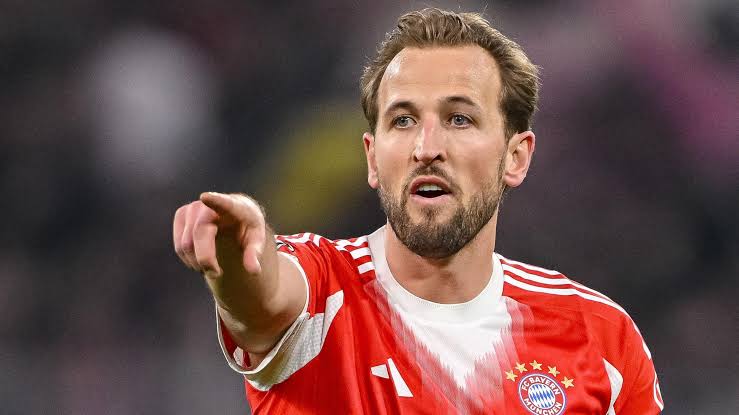
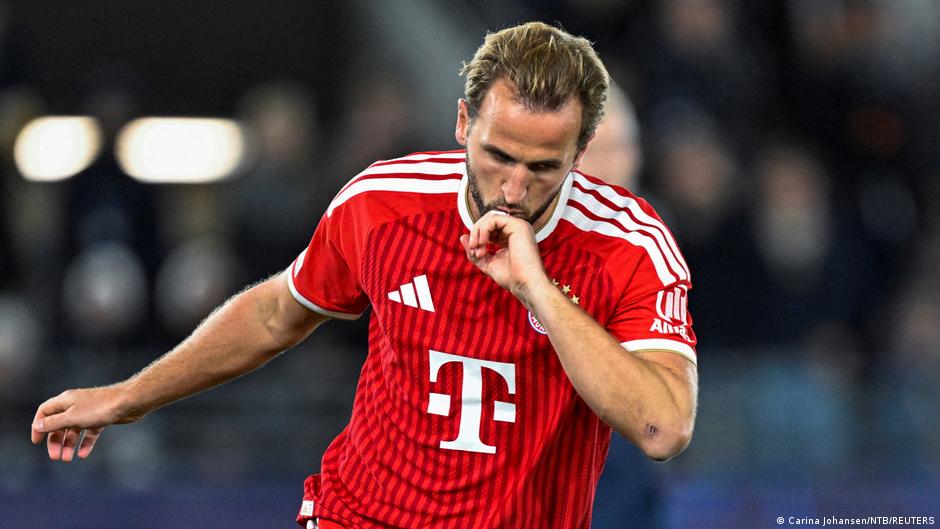
No one has blown the field away. No one can say, “It is mine.” And yet, with days to go, one must go home wearing the most prestigious hat in football. Start with the favourite, Harry Kane. No footballer in the world scored more in 2025/26 than Kane – 61 goals for Bayern Munich, 36 in the Bundesliga to win his third straight Torjägerkanone and a second European Golden Shoe.
He delivered a domestic treble – Bundesliga, DFB-Pokal and the Franz Beckenbauer Supercup. If I was voting, I will vote for Harry Kane. His moment? April was brutal and beautiful. 100 Bundesliga goals in record time, then that semi-final vs PSG where he scored twice but Bayern went out 6-5 on aggregate. At the World Cup he led England to bronze with 6 goals, including a 6-4 thriller against France in the third-place playoff.
Could he be the first English winner since Michael Owen in 2001? Then Kylian Mbappe – football’s ultimate World Cup man. 38 goals in 33 games for Real Madrid before the tournament, winning the Pichichi. Then in America, 10 goals to become the World Cup’s all-time top scorer at just 27. He is now the first player in history to win the Golden Boot in the Champions League, La Liga and the World Cup in the same calendar year – a treble of scoring crowns that may never be broken.
His moment was not lifting the trophy – France finished fourth – but the way he left it all on the pitch. A breathtaking opener against Senegal to get his World Cup account going, a hat-trick vs Norway in the group stage, and four assists on top of the 10 goals. 22 goals in 22 games across three World Cups is the story of greatness. He did not win the World Cup, but he won history.
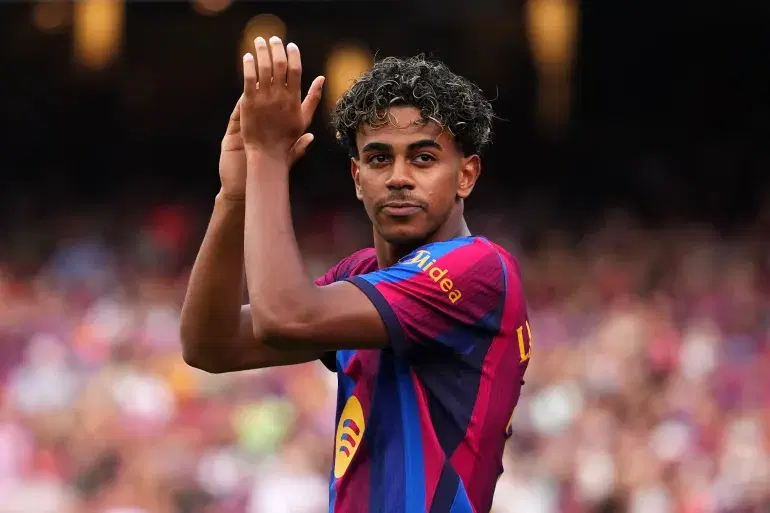
Lamine Yamal is so many people’s favourite. He and Olise at the highest level are the most entertaining footballers in the game at the moment and he already has an archive of breathtaking goals. At 19, he could become the youngest Ballon d’Or winner ever, a record held by the great Ronaldo Nazario who won it at 21 years and 96 days in 1997. Yamal’s story writes itself: La Liga champion, La Liga Player of the Year, and then World Champion with Spain.
His tournament was quiet by his standards, but he contributed to Spain’s victory which was largely a team performance. He completed 27 dribbles from 51 attempts – the highest total at the World Cup. He was Man of the Match twice, against Austria and Belgium in the semi-final – a game in which Spain were underdogs – and he won the crucial penalty that gave Spain the opening goal.
For Barcelona this past season: 24 goals and 17 assists, averaging a goal contribution every 85 minutes. He is no longer the future. He is the present. If Yamal is the present, Michael Olise is pure magic. Bundesliga Player of the Season with numbers that read like a video game – 15 goals, 19 assists in the league, 22 goals and 31 assists in 52 games across all competitions.
Two moments define him. First, the Freiburg game: Bayern down 0-2, Olise scores two and assists three in a 6-2 comeback. Then the quarter-final vs Real Madrid – 90+3, 4-3 on the night, that left-foot curler past Lunin to send Bayern through. At the World Cup he broke Pelé’s record with 7 assists in one tournament for France. As Thomas Müller said, “He has that dance-like, art
- world
- ballon
- goal
- football
- player
- man
- cup
- france