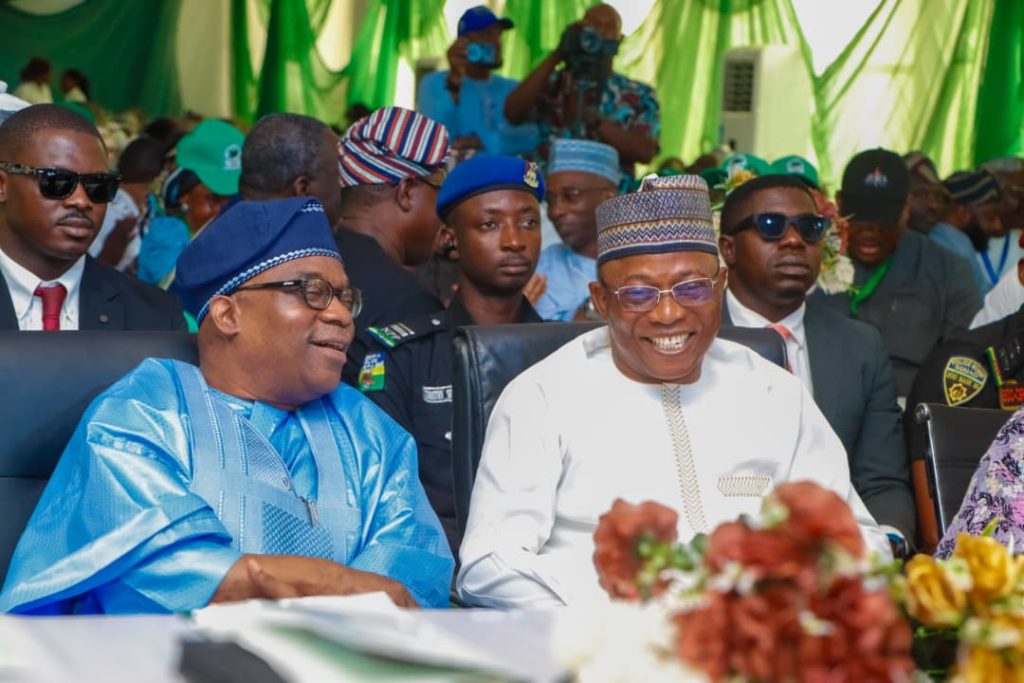
The Church as a builder: Loveworld Kingdom brought a different economic proposition to Accra

Loveworld Kingdom came to Accra, Ghana with an economic proposition: the Church should not only raise businesspeople. Highly Esteemed Pastor Biodun Lawal, Executive Minister of the Ministry of Discipleship, Loveworld Kingdom, Zonal Pastor of the Accra Ghana Zone and Chief Host of LTIF, linked the wider economic mandate to the need to finance businesses capable of growth.
Loveworld Kingdom came to Accra, Ghana with an economic proposition: the Church should not only raise businesspeople. It should help build businesses, organise capital, create institutions and develop the commercial systems its people need to prosper.
The idea ran through the Loveworld Trade & Investment Forum (LTIF) 2026, held in October, where commerce was treated less as an activity separate from faith and more as one of the ways a community can create value, solve problems, and extend its influence.
The proposition sits at the heart of Loveworld’s Kingdom economy mandate. Loveworld Kingdom is seeking to connect entrepreneurs, professionals, capital holders, and businesses already spread across its global network, then move more of those businesses from subsistence to scale, from local markets into regional ones, and from ideas into productive enterprises.
Highly Esteemed Pastor Yemisi Kudehinbu, Prime Minister of Loveworld Kingdom, located much of that responsibility with the individual. Her message in Accra asked members to consider where they fit inside the Loveworld economy, with believers expected to become producers, innovators, solution providers, and nation builders rather than merely consumers of economic opportunity.
Highly Esteemed Pastor Bolaji Akinboro, Special Adviser on the Economy to Loveworld Kingdom, approached the question through development and enterprise. Drawing on the economic transformation of countries such as China, he argued that Africa’s resources mean little without the capacity to convert them into sustained production and rising prosperity.
His own business background gives the argument a practical edge. Highly Esteemed Pastor Bolaji Akinboro co-founded fintech company Cellulant, which grew into a pan-African payments business, and has also built businesses in agriculture and technology. His wider point is difficult to escape: resources create possibility, but builders create economies.
Highly Esteemed Pastor Lanre Alabi, Executive Minister of the Ministry of Human Resource Transformation, Loveworld Kingdom, pushed the conversation towards institution-building. According to him, the Church already understands something many businesses spend decades trying to master: how to build structures, cultures, and systems capable of surviving generations.
Entrepreneurs can borrow from the same discipline. A company built around purpose, people, standards, and functioning systems stands a better chance of outliving the personality that founded it.
Highly Esteemed Pastor T.T. Temisan, Executive Minister of the Ministry of Information, Loveworld Kingdom, placed the Church more directly inside economic life. His position rejects the idea that production, enterprise, and institution-building should be left solely to governments, corporations, or development organisations. Christians, in Loveworld’s economic mandate, should be present where systems are being built, bringing capital, ideas, technology, and enterprise with them.
Highly Esteemed Pastor Chidi Ezimako, Executive Minister of Hinterlands Ministries, Loveworld Kingdom, brought the proposition down to the discipline required of the businesses themselves.
Shared faith cannot substitute for execution. Companies still have to fulfil orders, maintain standards, preserve quality, and earn the confidence of customers and counterparties. Commercial trust is built when businesses repeatedly do what they said they would do.
Capital provides another part of the architecture.
Highly Esteemed Pastor Biodun Lawal, Executive Minister of the Ministry of Discipleship, Loveworld Kingdom, Zonal Pastor of the Accra Ghana Zone and Chief Host of LTIF, linked the wider economic mandate to the need to finance businesses capable of growth.
During the forum, the Ministry of Commerce secured a $1 million boost for a new investment fund to back strategic businesses and entrepreneurs within the Loveworld network. The capital is intended to support production, expansion, and enterprises seeking greater scale and competitiveness.
Together, Loveworld Kingdom’s proposition is more demanding than simply asking Christians to own businesses. It is attempting to build an economic network in which capital can find productive enterprise, businesses can find markets, entrepreneurs can learn from established builders, and companies born inside the community can compete well beyond it.
Accra gave that proposition a wider stage. The Church, in Loveworld Kingdom’s economic vision, is not standing at the edge of the market asking for a place in it. It is being asked to build.
- loveworld
- kingdom
- business
- church
- proposition
- accra
- pastor
- esteemed