business

Ramping up solar option to close energy gap
Ramping up solar option to close energy gap

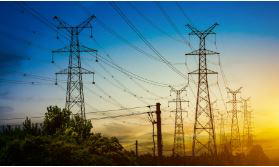
Nigeria’s electricity crisis indicts decades of failed planning. The World Bank’s access series put electricity access at 62.5 per cent in 2024; the Nigerian Investment Promotion Commission (NIPC) says more than 85 million people remain without grid power.

Nigeria’s electricity crisis indicts decades of failed planning. For a population approaching 240 million, the national grid remains unreliable, while millions lack access altogether. The World Bank’s access series put electricity access at 62.5 per cent in 2024; the Nigerian Investment Promotion Commission (NIPC) says more than 85 million people remain without grid power.

Installed capacity guarantees nothing when gas shortages, transmission bottlenecks and distribution failures keep power from consumers. Successive administrations have promised relief through independent power projects, yet spending has delivered too little amid corruption allegations and poor accountability. Mambilla is the glaring cautionary tale.

Conceived decades ago as a 3,050-megawatt hydroelectric project, it remains stalled by contractual disputes and litigation. In September 2026, an international tribunal rejected Sunrise Power’s claims against Nigeria and found settlement arrangements tainted by corruption. That ruling only removed a legal obstacle without switching on a single megawatt.

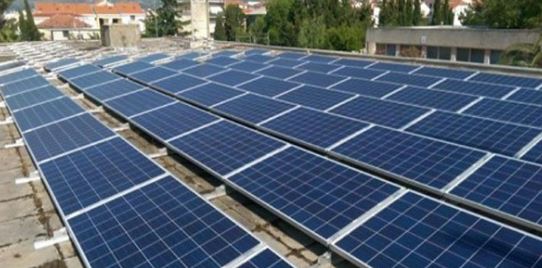
Solar offers a practical route to closing the gap. Nigeria receives average solar irradiation of about 5.5 kilowatt-hours per square metre daily and has a theoretical potential of 427 gigawatts, yet uses less than two per cent of it. Rooftop systems, mini-grids and solar home systems can reach off-grid communities, power clinics and schools, and help businesses escape costly generators.

Solar with batteries cannot meet every round-the-clock industrial need, but it can complement hydro, gas and a reformed national grid. President Bola Tinubu’s N10 billion solar project at Aso Rock, completed for testing in late 2025, is expected to reduce the Villa’s dependence on the grid. It demonstrates solar energy’s value and also the privilege gap: the Presidency is shielding itself from outages endured by ordinary Nigerians.

The same determination must reach homes, markets, farms and public institutions. Government should scale up the $750 million World Bank-backed DARES programme, provide affordable credit and pay-for-service plans, and prioritise solar mini-grids in underserved communities. States can use the Electricity Act 2023 to license intrastate markets, attract private developers and solarise hospitals, schools, water systems and industrial clusters.

Federal agencies should set transparent targets, stable incentives and guarantees that attract investment. India’s rooftop and agricultural solar programmes, alongside domestic panel manufacturing, show how finance, public procurement and clear standards can build markets. Nigeria should expand local panel assembly, then develop batteries, inverters, mounting structures and recycling through joint ventures and technology transfer.

The Standards Organisation of Nigeria (SON) must enforce certification, traceability and installer competence, excluding counterfeits without using protectionism to inflate prices. We need a national target for millions of new solar connections, an increase in local content and the publication of annual progress and audit spending. Solar must not become another slogan or procurement scandal.

Properly financed, regulated and deployed, it can turn Nigeria’s sunshine into productive power—and make electricity access a common public amenity, not a presidential privilege.

  • grid
  • gap
  • nigeria
  • power
  • energy
  • electricity
  • access
  • solar

Summaries and tags are generated automatically. Stay informed with VidiaNews.

Related news

Experts advocate renewables, microgrids to tackle power crisis
business

Experts advocate renewables, microgrids to tackle power crisis

They made the call in separate interviews with Vanguard on the sidelines of the recently concluded Nigeria Energy Summit at Landmark, Lagos. Product Manager, DEIF, Anshul Alankar, said Nigeria needed to accelerate the adoption of renewable energy, particularly solar power, noting that the national grid could not meet the country’s growing electricity demand.

Read →
FG policies raise Nigeria’s exports by 25% – Dantsoho
business

FG policies raise Nigeria’s exports by 25% – Dantsoho

Dr Abubakar Dantsoho, Managing Director of the Nigerian Ports Authority (NPA), says Federal Government policies and reforms have increased Nigeria’s exports by 25 per cent in the last two years. Dantsoho also attributed Nigeria’s improved global port ranking to the reforms, noting that two Nigerian ports featured among the top 20 in the latest World Bank global ports ranking.

Read →
MAN convenes energy efficiency summit to boost manufacturing
business

MAN convenes energy efficiency summit to boost manufacturing

By Yinka Kolawole The Manufacturers Association of Nigeria (MAN) is set to convene a two-day energy efficiency summit in Lagos to address high energy costs, improve industrial competitiveness and promote investment in alternative power solutions. The summit, scheduled for November 3 to 4, organised through MAN’s power and energy subsidiary, Manufacturers Power Development Company Ltd (MPDCL), in partnership with the German Development Agency (GIZ) and Nigerian Energy Support Programme (NESP), will hold at Legend Hotel Lagos Airport, Ikeja, Lagos.

Read →
JP Morgan’s Nigeria expansion to boost foreign investment — IMPI
business

JP Morgan’s Nigeria expansion to boost foreign investment — IMPI

By Joseph Erunke, Abuja The Independent Media and Policy Initiative (IMPI) has said the planned expansion of global financial giant JP Morgan Chase into Nigeria’s merchant banking sector could attract fresh foreign investments, improve corporate financing and strengthen the country’s access to international capital markets. “JP Morgan Chase’s move to secure a national merchant banking licence in Nigeria marks a significant shift in West Africa’s corporate finance landscape,” IMPI said.

Read →
Procurement knowledge gap shuts small businesses out of FG contracts — Minister
business

Procurement knowledge gap shuts small businesses out of FG contracts — Minister

By Yinka Kolawole Many small businesses in Nigeria are missing out on Federal Government contracts due to inadequate knowledge of public procurement procedures, Minister of State for Industry, Senator John Enoh, has said. Enoh stated this in Abuja at the launch of the Micro, Small and Medium Enterprises (MSMEs) Public Procurement Training Programme and digital learning portal organised by the Bureau of Public Procurement (BPP), adding that limited knowledge, weak internal processes and inadequate capacity were hindering small businesses from competing effectively for government contracts.

Read →
GRIDCo to construct 5th feeder in Kumasi for improved power reliability
business

GRIDCo to construct 5th feeder in Kumasi for improved power reliability

Kumasi is set for a major boost in electricity supply as the Ghana Grid Company (GRIDCo) moves to complete the construction of a fifth feeder by the end of the year. A high-level delegation from the Ghana Grid Company and the Electricity Company of Ghana, together with the Ashanti regional minister, inspected ongoing power upgrade projects in the Ashanti Region.

Read →