A Life in Fragments by Marina Litvinenko review – intimate testimony of Putin’s poisonous regime
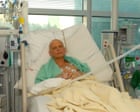
The wife of murdered Russian dissident Alexander Litvinenko rages against Putin’s state, in a moving memoir of life in exile, love and loss Among the many images of violence that might be used to define Putin’s chilly reign, one stands out. The photo of the Russian dissident Alexander Litvinenko – gaze defiant, lying in intensive care – taken in November 2006.
The wife of murdered Russian dissident Alexander Litvinenko rages against Putin’s state, in a moving memoir of life in exile, love and loss
Among the many images of violence that might be used to define Putin’s chilly reign, one stands out. The photo of the Russian dissident Alexander Litvinenko – gaze defiant, lying in intensive care – taken in November 2006. Litvinenko had met with visitors from Moscow: they poisoned his tea with radioactive polonium. A public inquiry concluded that Putin had “probably” approved the hit, sending two clownish assassins to carry it out.
The London deathbed picture featured in newspapers across the world. It was a powerful symbol of what post-millennial Russia had become: a cruel and vindictive place, ruled by a paranoid KGB tsar. Litvinenko was its ill-fated prophet. He was the target, he told British detectives, of a vengeful mafia state. If unchecked, Putin would start a war in which millions would die, he warned presciently.
Twenty years after these lurid events, Litvinenko’s wife Marina has told her own story in a memoir. Her book, co-written with Emily Fairbairn, is a moving act of reclamation. In it, she brings her dead husband back to life – not as a tragic figure, hurtling towards a grisly public doom, but as a real and vibrant person. Instead of Litvinenko we get Sasha: a loving partner, softie dad and incorrigible optimist, who always saw the best in people.
Throughout, she rejects the label of widow. She describes the word as reductive, saying: “I never felt comfortable with it.” Instead of embracing her victim status, Marina decided to continue her husband’s battles. Her chief opponent was the Kremlin, which covered up its crime and shamelessly celebrated Litvinenko’s killers. One of them, Andrey Lugovoy, became a parliamentary deputy and fixture on state television.
A more surprising adversary was David Cameron’s coalition government. The justice secretary at the time of the murder, Chris Grayling, refused her legal aid, while home secretary Theresa May turned down her request for a public inquiry. May said this might harm international relations – in other words, annoy Moscow. The policy was grubby and short-sighted. May only relented after a Russian missile downed Malaysia Airways flight MH17 over eastern Ukraine, killing all on board.
Giving evidence at the 2015 inquiry, held in the high court, Marina described her husband’s awful cancer-like decline. Her book contains new poignant details. The evening after meeting Lugovoy and his accomplice Dmitry Kovtun at the Millennium hotel, Litvinenko fell violently ill. “Marina, I don’t feel good. Maybe I’ve been poisoned,” he told her. Admitted to hospital, his condition was wrongly diagnosed as a stomach bug.
It took three more agonising weeks before the British establishment realised Litvinenko had ingested a small nuclear bomb. Belatedly, an MI6 contact, “Martin”, rushed to his bedside. Marina opposed the deathbed snap and an accompanying statement accusing Putin of Litvinenko’s murder. Later she acknowledged the photo was effective. “Sasha’s hard gaze seemed to say, I will never be silenced,” she writes.
After his death doctors allowed her to touch his body. “I was able to kiss him and touch his skin with my bare hand. Despite all the medicine, he smelt like Sasha,” she records. Amid her grief, there were bureaucratic episodes. An “officious woman” rang up demanding payment of council tax. “My house is radioactive and the subject of an ongoing police inquiry,” Marina said. “I’m afraid the bill is still overdue,” the official replied.
There was little in Marina’s background that suggested she would become a campaigner for justice and scourge of craven politicians. She grew up in Moscow, the daughter of factory workers. One clue was her childhood habit of questioning her teachers and authority. Her mother, Zinaida, pleaded with her to toe the line, a necessary survival tactic in the USSR. “I had a childish belief in truth and fairness,” Marina recalls.
A talented dancer, she took lessons at a KGB club. There she was allowed to watch Disney and Charlie Chaplin movies prohibited for ordinary citizens. Her first marriage to a fellow ballroom dancer ended in divorce. She met Sasha at her 31st birthday party. He was “boyishly handsome”, she writes, with high cheekbones and “full, almost feminine lips”.
Sasha, she discovered, slotted easily into social situations. His remarks were sharp and funny. He told her he was an “oper”: an operative detective investigating the dark world of organised crime, and about to be divorced. They fell in love and Marina became pregnant. Soon afterwards they married, spending idyllic summers with their little son Anatoly at a dacha near the Russian capital.
Litvinenko was working for the FSB, the KGB’s domestic successor. The moment of crisis arrived in 1997 when he was told to kill the influential oligarch Boris Berezovsky. Sasha refused, tipped off his victim and held a press conference with other officers, denouncing their illegal order. As Marina notes: “Doing the right thing was his driving force.” It was a brave act. And, he understood, one that would bring awful retribution.
Putin, the FSB’s new boss, singled out Litvinenko for exemplary punishment. He was suspended and then incarcerated in Lefortovo, the FSB’s gloomy prison. Marina and Sasha wrote each other daily letters, maintaining the “invisible thread” that connected them. He was freed, rearrested and bailed. In 2000 Litvinenko slipped out of Russia and told Marina to go on holiday to Spain. Reunited in Turkey, they escaped to London.
Initially homesick, Marina adapted to her new British life. From here, her tale proceeds with grim irony. After the family received political asylum, Sasha “bounced off the walls of our flat”, exclaiming “we’re safe”, she writes. Of course, they weren’t. Former colleagues rang Litvinenko from Moscow, and warned: “Remember what happened to Trotsky.” Russian diplomats buzzed their front door, which was later hit with a petrol bomb.
Putin’s apparent pursuit of his enemies continued even after Litvinenko’s death. In 2013 Berezovsky was found hanged at his ex-wife’s Berkshire mansion. Marina does not believe he killed himself, the finding of British police. The same evening, there was a break-in at her apartment. The thief stole Sasha’s old laptop, hidden at the back of a cupboard, and Marina’s computer containing files relating to the polonium investigation.
There were further personal blows. Marina found a new companion, Alexei, a brilliant Russian chemist based in Berlin. It was, she writes, the coming together of two adults, with few expectations beyond a desire to enjoy each other’s company. They talked often of Sasha. Their romance was cut short when Alexei was diagnosed in 2018 with terminal cancer, dying shortly afterwards.
During the same bitter period, Marina’s mother was gravely ill. She urged her daughter to ask Putin for forgiveness and to return home. This was impossible: most likely the regime would prevent her from leaving Russia, and use her as a propaganda pawn. She was unable to attend her parents’ funerals. A friend retrieved childhood photos from her mother’s untouched flat, which were seemingly left as “bait”.
A Life in Fragments is the testimony of an extraordinary woman. Marina emerges from its pages as plucky and dogged, as well as kind and empathic, with an unerring sense of right and wrong. She was in western Ukraine in 2022 when Russia sent in its army. She believes Putin is a “tyrant on a par with Stalin” and that his habit of silencing critics will ultimately fail. “Sasha might be gone but his voice lives on in me. His fight is my fight,” she writes.
- litvinenko
- putin
- life
- fragments
- marina
- review
- testimony
- regime