The Politics Of Togetherness And The Trouble With Unity

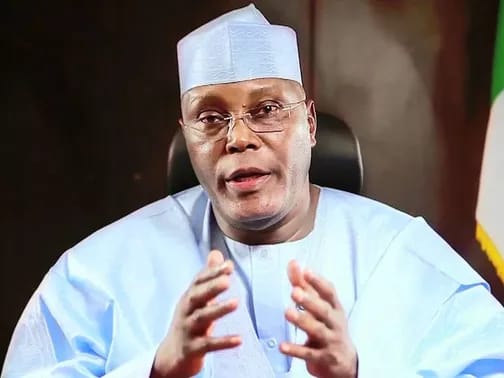
Atiku Abubakar is campaigning under the African Democratic Congress, while Peter Obi and Rabiu Kwankwaso are on the Nigeria Democratic Congress ticket. Over the weekend, Kwankwaso called on Atiku to step aside for Obi, invoking the argument that southern Nigeria should complete its turn in the informal rotation of the presidency.
As Nigeria’s presidential campaigns gather momentum, political alliances are becoming increasingly difficult to explain. Opponents are finding common ground, party boundaries are becoming less predictable, and the opposition’s search for unity is colliding with the ambitions of its leading figures.
But beneath the manoeuvring lies a more consequential question: what exactly are these alliances being formed to achieve?
There is something rather fascinating about Nigerian politics. Two politicians can spend the morning attacking each other’s parties, meet for lunch to discuss a common political interest, and appear at an evening gathering celebrating their newfound understanding.
By the following morning, both may be insisting that nothing has changed. Welcome to the politics of 2027.
This week, the contradictions have become particularly striking. In one corner, politicians from different parties are celebrating their cooperation. In another, opposition figures who profess a common purpose are struggling to agree on how to pursue it. And somewhere between these competing arrangements sits the Nigerian voter, trying to work out who stands for what. That, perhaps, is where today’s Signal begins.
Federal Capital Territory Minister Nyesom Wike has never been particularly troubled by political contradictions. A prominent figure in the Peoples Democratic Party, he serves in an administration led by the All Progressives Congress. He has repeatedly defended his political choices, arguing that cooperation across party lines is not necessarily inconsistent with his political identity. Now, he is drawing attention to what he describes as the unity of APC and PDP leaders, while dismissing criticism of his political relationships. His latest remarks, reported today, come as political alignments continue to shift across several states.
The interesting question is not whether Wike is entitled to cooperate with politicians outside his party. Of course he is. The more important question concerns what such cooperation means for the parties themselves. If leading members of rival parties work together to advance shared electoral interests, what becomes of the distinctions between their political organisations? Are these arrangements built around policies, principles and programmes? Or are they primarily agreements between influential individuals?
Cross-party cooperation can serve legitimate democratic purposes. Governments frequently need support beyond their own parties, and political compromise is not inherently objectionable. But cooperation becomes harder for voters to interpret when the political objectives and responsibilities of the participants are left unexplained.
Wike’s political relationships therefore raise a wider question about the changing character of Nigerian party politics. Are political parties becoming vehicles for competing programmes of government, or increasingly flexible platforms for negotiating power? The answer matters far beyond the personalities involved.
Now consider the other side of the political divide. For months, opposition leaders have spoken about cooperation, common purpose and the need to offer Nigerians an alternative to the incumbent administration. Yet the practical arrangements remain complicated.
Atiku Abubakar is campaigning under the African Democratic Congress, while Peter Obi and Rabiu Kwankwaso are on the Nigeria Democratic Congress ticket. Over the weekend, Kwankwaso called on Atiku to step aside for Obi, invoking the argument that southern Nigeria should complete its turn in the informal rotation of the presidency. The ADC has not agreed to that proposal.
There is a fundamental distinction between agreeing that parties should cooperate and agreeing on who should lead that cooperation. The first requires a declaration of shared interests. The second demands negotiation, compromise and acceptance of decisions that may disappoint influential supporters.
Six opposition parties participated in discussions intended to establish a framework for cooperation. Five documents were proposed, covering democratic principles, a possible transitional arrangement, policy priorities, opposition unity and a procedure for selecting a common presidential candidate. But by late October, the status of those documents remained unclear, and no binding agreement on a common ticket had been announced. This does not mean that opposition cooperation has failed. It means that the difference between political consultation and an enforceable electoral agreement remains substantial.
There is also a practical point that is easily overlooked. Even if opposition leaders reach an understanding at the national level, that understanding must be translated into arrangements in the states, local government areas, wards and polling units. Who coordinates the campaigns? Who supplies the polling agents? Who resolves disputes between party officials? And how will cooperation work where the parties are competing against one another for governorship and legislative seats? These are not glamorous questions. They rarely produce exciting political headlines. But they are the questions that determine whether a political agreement can function beyond the conference room.
Atiku’s campaign is already confronting some of these issues. Reports of dissatisfaction among established ADC officials in the South-West have raised questions about their involvement in campaign preparations. Some officials complained that the campaign was relying too heavily on personal associates rather than established party structures. The campaign has disputed suggestions of a regional crisis. South-West party leaders have reaffirmed their support for Atiku, while campaign representatives acknowledge that the six state campaign councils have yet to be formally inaugurated. Separately, a faction associated with Nafiu Gombe has announced its own North-West campaign council, although its authority remains disputed.
These developments do not establish that Atiku’s campaign is in disarray. They do, however, identify organisational questions that require resolution.
A presidential campaign must accommodate both the candidate’s political network and the party’s established institutions. Where those relationships are unclear, disputes over appointments, responsibilities and resources can follow. The test will be whether the ADC establishes a coherent structure in which national, state and local officials understand their responsibilities.
And that test is becoming increasingly urgent.
President Bola Tinubu has a different political argument to make. His campaign, launched in Kaduna on October 24, is asking Nigerians to judge his administration’s economic reforms alongside its plans for a second term. The government points to improvements in public finances, foreign reserves and investor confidence. Critics question whether these gains have sufficiently improved household welfare. Both sides of that debate will increasingly be tested against measurable outcomes.
Last week’s agreement to provide federal government workers with a monthly transport allowance of ₦70,000 for six months illustrates the policy choices facing the administration. The arrangement followed negotiations with organised labour and is intended to ease pressure from rising living costs. It also invites scrutiny. How many workers will benefit? How will the programme be funded? What happens after six months? And what measures are available to Nigerians outside the federal workforce? These questions should not be reduced to campaign slogans.
For the government, the responsibility is to demonstrate how economic policy is translating into sustainable improvements in living standards. For opposition candidates, the responsibility is to explain what they would do differently, how their proposals would be financed and what trade-offs Nigerians should expect.
An interesting example emerged over the weekend when Atiku challenged the administration’s electricity record and proposed replacing the existing tariff-band system. That is the kind of disagreement that can produce a more substantive electoral debate, provided both sides explain the costs, benefits and practical implications of their proposals. After all, electricity is not an abstract campaign issue. It determines the cost of manufacturing, the viability of small businesses, the operation of hospitals and the quality of life in millions of homes.
The same is true of food prices, security, transportation and employment. These are areas where voters can demand specific commitments and assess performance against evidence.
There is another development today that deserves attention. In Edo State, the ADC and NDC have jointly accused the ruling APC of political intimidation and violence against opposition members. At a press conference in Benin City, representatives of both parties alleged attacks on supporters, damage to campaign materials and threats against individuals associated with their organisations. They called for impartial investigations and protection for political participants. The allegations have not been independently established, and responsibility for the reported incidents remains to be determined.
What is notable is that two opposition parties pursuing separate presidential campaigns have found common ground on the need for electoral security. That is a legitimate area for cross-party cooperation. All political parties, including the governing party, have an interest in ensuring that candidates can campaign lawfully, supporters can assemble peacefully, and voters can participate without intimidation.
The appropriate response to allegations of violence is a credible investigation, followed by accountability wherever wrongdoing is established. Political competition cannot function properly where participants fear for their safety. And as the campaigns intensify, the conduct of security agencies will be as important to public confidence as the declarations of political leaders.
The coming weeks will provide several practical tests of the political arrangements now taking shape. Atiku’s scheduled campaign launch in Sokoto on Wednesday will offer an opportunity to observe the ADC’s mobilisation and organisational coordination. The NDC will need to demonstrate how its national campaign council translates into effective state and local structures.
The G100 initiative still faces questions about its proposed unity documents and whether participating parties can reach formal agreements. Meanwhile, INEC’s December 10 deadline for the submission of presidential polling-agent nominations gives all parties a concrete administrative obligation. That deadline matters because a political party’s presence at polling units is one of the practical elements of election organisation. The campaign season may be dominated by presidential rallies, endorsements and television appearances. But the administrative work of elections is considerably less visible. It requires trained personnel, accurate records, coordination and compliance with electoral procedures. These are measurable matters, and they deserve as much attention as the rhetoric of the campaign trail.
Perhaps the most revealing feature of today’s political landscape is that the word unity means different things to different politicians.
For Wike and his associates, it describes cooperation between politicians who retain different party identities. For the opposition’s G100 initiative, it describes an effort to negotiate common principles and potentially a common electoral arrangement. For some candidates, unity means asking others to withdraw. For others, it means finding ways to cooperate without surrendering their nominations.
None of these arrangements should be judged merely by the language used to describe them. Their substance matters. What has been agreed? Who is accountable? What public interest is being served? And can voters understand the choices being presented to them? These questions are especially important in a political system where alliances can change faster than party manifestos.
Nigeria’s 2027 election should provide an opportunity to debate competing approaches to economic management, security, federalism, education and national development. Political cooperation can contribute to that debate when it produces clearer policies, stronger institutions and more accountable leadership. But when alliances revolve almost entirely around personalities and access to power, voters may struggle to identify the policy differences between those seeking to govern them.
The real test of political unity is not how many politicians can be persuaded to stand together for a photograph. It is whether they can explain what they intend to do together, why it matters, and how the public will hold them accountable.
And that is The Signal for Tuesday, November 3, 2026.
Political Signals is an independent weekly political analysis produced for Channels Television. It examines political developments, personalities and electoral trends without endorsement of any political party or candidate. Its assessments are based on publicly available evidence and may change as events and evidence develop.
- party
- unity
- cooperation
- opposition
- question
- wike
- nigeria
- figure