You built the road, you paid the contractor; now pay to walk on it

Under L.I. 2523, which amends L.I. 2111 (2012), identity verification is now strictly biometric by force of criminal law. Citing land transactions directly, the NIA warned this week that an individual buying or leasing land can no longer visually inspect or photocopy the seller’s Ghana Card.
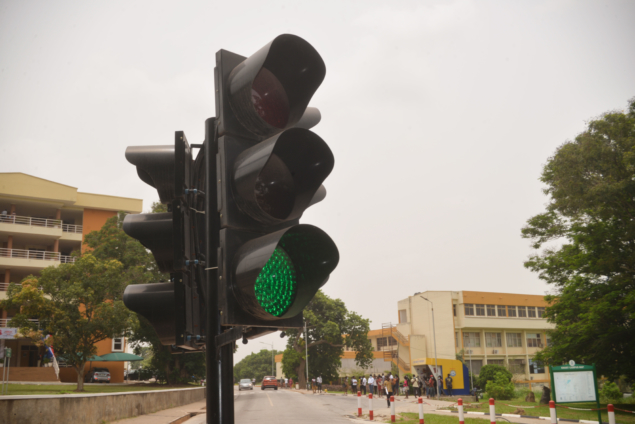
On Sunday, 1 November, the state switched on its cameras above the asphalt. Within hours, TraffiTech-GH dominated every radio phone-in show and trotro station argument in Accra. Drivers debated automated speed tickets and DVLA text alerts.
Forty-eight hours later, a far bigger shift in our Digital Public Infrastructure went live with barely a whisper on the street.
While motorists looked up at the gantries for speed cameras, the National Identification Authority (NIA) walked into banking halls, hospital receptions, and public registries to outlaw the photocopier.
The three-month grace period under the National Identity Register (Amendment) Regulations, 2026 (L.I. 2523) expired on Monday, 2 November. By Tuesday, 3 November, the NIA's enforcement taskforce hit the streets.
Under L.I. 2523, which amends L.I. 2111 (2012), identity verification is now strictly biometric by force of criminal law. You can no longer hand over your Ghana Card to be photocopied, scanned into a folder, or visually inspected for any regulated transaction.
If a front-desk clerk holds your card up to the light, checks your face, and nods you through, he has not verified you. He has committed a summary offence. Corporate offenders face fines between 500 and 2,000 penalty units (GH¢6,000 to GH¢24,000). Individual offenders under the new Regulation 9B risk fines between 50 and 500 penalty units (GH¢600 to GH¢6,000).
Every regulated identity check must now run as a live fingerprint or facial scan against the NIA's Identity Verification System Platform (IVSP) or via an approved match-on-card reader.
Then came the second hammer. Effective 3 November, the NIA banned all third-party intermediaries, aggregators, and resellers from the platform. Every single business must now apply directly to the NIA head office and build its own standalone link. Any parent institution caught letting a small business piggyback on its verification pipe faces prosecution, permanent disconnection, and a 20 per cent surcharge on its annual verification fees.
Right now, the street is quiet because the pain sits inside the back office. That quiet will not last.
As enforcement bites, Ghanaians will confront three glaring contradictions at the heart of L.I. 2523. Why has the state criminalised citizens before launching the app they need to obey the law? What happens at the state's own unfunded counters? And why is the taxpayer being billed three times for the same piece of plastic?
Criminalising the Citizen Before Launching the App
Start with the most astonishing admission from this week's enforcement briefings.
L.I. 2523 does not merely police banks and telcos. Under Regulations 9A and 9B, the law binds private individuals and small businesses in everyday transactions. Citing land transactions directly, the NIA warned this week that an individual buying or leasing land can no longer visually inspect or photocopy the seller's Ghana Card. Doing so is now a crime carrying a fine of up to GH¢6,000.
Pause and look at where fraud actually lives in Ghana.
Identity theft and impersonation do not happen solely at the marble counters of Tier-1 commercial banks. They happen in the unstructured, person-to-person economy.
They happen when a family in Tema or East Legon buys land from a man claiming to be the head of family on an indenture. They happen when a landlord in Adenta hands house keys to a new tenant holding a doctored card. They happen when a shop owner hires a driver, a domestic worker, or a clearing agent.
Give ordinary citizens a fast, free way to verify each other's biometrics in those daily deals, and you wipe out seventy per cent of street impersonation overnight.
To its credit, the NIA acknowledged this gap on Monday. Because individuals and small shops cannot build corporate API pipes into the national database, the Authority announced it has developed a mobile app. The app will give ordinary users a simple "yes-or-no" verification response without exposing private records.
Then came the admission that should make every MP sit up. The NIA has no launch date for the mobile app, stating only that it "will be launched very soon."
The grace period expired on 2 November. The criminal penalties under Regulations 9A and 9B are live today. The taskforce is on the street, and compliance hotlines (030-2999-309) are open. Yet the mobile app that ordinary citizens and small shops must use to obey the law has not even been released.
You cannot outlaw the bridge on Monday when the ferry is still in the shipyard on Tuesday. If two citizens sign a land lease or a tenancy agreement in Accra this afternoon, how do they obey Regulation 9B without breaking the law?
Now walk into the Charge Office of a district police station at ten o'clock at night. Or visit the registry of a District Court on a working morning.
Under Regulation 7(1)(m) of L.I. 2111, mandatory verification applies to all "applications for public or government services, facilities, approvals, permissions or benefits". Under the new L.I. 2523 rules, every public agency "shall, before providing the relevant service to the individual, verify the identity of the individual concerned through biometric verification".
Look at the wooden counter in front of the desk sergeant at the police station. A detained citizen has been granted bail. His uncle has arrived at midnight with his Ghana Card and a land deed to stand as surety.
Look at the court registry counter, the rural CHPS compound, or the district assembly window. There is no optical fingerprint scanner on that desk. There is no live fibre link into the NIA database. There is only a ledger book, a blue pen, and a stapler.
Before Tuesday, the police officer or court clerk inspected the surety's card, attached a photocopy to the bail bond, and released the detainee.
Today, that public officer sits in a statutory trap. If he takes a photocopy or relies on visual inspection, he breaks L.I. 2523. If he refuses to process the bail because the state has not given his station a biometric reader, a citizen sleeps in a cell behind an unfunded digital mandate.
We have written a twenty-first-century criminal law on top of a nineteenth-century public counter.
The NIA's ban on third-party aggregators makes this bottleneck worse for small businesses. The Authority rightly wants to stop unvetted middlemen from hoarding sovereign data. That aligns with sound directives from the Minister of Communications, Digital Technology and Innovation on securing domestic data infrastructure.
But banning middleware altogether confuses illegal data brokers with regulated pass-through pipes.
In banking and payment systems, licensed aggregators route encrypted packets from small merchants straight to the central server under strict zero-storage rules. By outlawing encrypted pass-through aggregators under the Data Protection Act, 2012 (Act 843), the NIA forces every rural clinic, micro-lender, and private school to queue individually at idverification@nia.gov.gh. Clearing that queue one contract at a time will take years.
The Triple Bill: Why Pay to Prove Who We Are?
Why is our verification rail built as a heavily policed commercial monopoly rather than an open public utility? Follow the money, and you meet the most uncomfortable question of all.
Who paid for the National Identity Register?
We did. The Ghanaian citizen paid for it three times over.
First, we paid with our data and our time. We stood in the sun for hours to surrender our ten fingerprints, our irises, our facial geometry, and our family histories because the law compelled us to populate the state's register.
Second, we paid with our taxes, sovereign debt, and counter fees. Before the current smartcard rollout even began in 2017, the state had already sunk over US$60 million into the stalled Sagem Morpho registration phase. Then came the 15-year Public-Private Partnership (PPP) between the NIA and Identity Management Systems II (IMS II, a subsidiary of the Margins ID Group), valued at US$1.22 billion over its lifecycle.
On paper, the private partner committed US$169 million upfront (and US$678 million over 15 years) in blank cards and technical infrastructure, while the state committed US$124 million upfront and US$531 million over the contract life.
In reality, the taxpayer underwrote the foundation and absorbed the credit risk. The state backed the mass registration offtake, granted millions in import tax waivers, borrowed another US$50 million under the World Bank e-Transform sovereign loan to support the ID ecosystem, and continues to fund hundreds of millions of cedis annually from the national budget to pay NIA staff salaries and run 276 district offices.
Whenever government payments lagged—as in 2022 and 2023, when millions of printed cards were locked in bonded warehouses over arrears—it was the taxpayer's consolidated fund that bailed out the ledger.
On top of those sunk billions, we still pay at the counter. Under the revised fee schedule effective 2 February 2026, whenever you update a record with a new card at a Premium Centre for GH¢410, replace a lost card there for GH¢520, or replace a card at a district office for GH¢200, you pay again at the window.
Under the PPP revenue-recovery model, the verification platform is not run as a free civic lighthouse funded by the taxes we already paid. It is run as a commercial tollbooth. Every time a bank, a telco, a pension trust, or a clinic pings the database to confirm that your thumbprint belongs to your own hand, the platform meters the query and bills the institution.
Who pays that bill? Anyone who thinks commercial banks, insurers, or private clinics will absorb per-query biometric fees out of their shareholders' dividends is kidding themselves.
Every mandatory statutory toll gets passed straight to the customer. Worse, barring aggregators stops small businesses from pooling volume to get bulk wholesale rates. You will never see a line item called "L.I. 2523 Tax" on your hospital receipt or bank statement. Yet you will pay for it inside every revised account maintenance fee, loan processing charge, and clinic tariff.
The logic becomes even harder to defend at a government counter under Regulation 7(1)(m). Why should a Ghanaian citizen—who already funded the NIA through taxes and surrendered his biometrics by law—be charged, directly or indirectly, simply to prove to the Passport Office, the DVLA, the Lands Commission, or a public hospital that he is the same citizen the state registered yesterday?
Charging a citizen to verify his own identity for a public service is like taxing a homeowner to read his own electricity meter.
We did not build a sovereign register to make trust a public good. We built a statutory monopoly to turn every handshake into an invoice.
If L.I. 2523 is to serve the republic rather than merely feed a concession ledger, Parliament of Ghana's Subsidiary Legislation Committee and the Ministry of the Interior, Ghana must enforce four immediate fixes:
1. Suspend Regulation 9A and 9B Penalties Against Individuals and SMEs Until the Public App is Live and Free. You cannot fine citizens up to GH¢6,000 for failing to use a mobile app that has not been launched. When that "Yes/No" app goes live, citizen-to-citizen checks must be 100 per cent free at the point of use. Ordinary Ghanaians should not pay per-scan tolls to stop land and tenancy fraud.
2. Zero-Rate All Public-Sector and Civic Verifications. State agencies—including the Police Service, the Judicial Service, the NHIS, the Lands Commission, and public schools—should never pay per-query tolls to verify a citizen, nor pass verification fees onto applicants. When the state verifies a citizen to deliver a statutory service, the ping must be free.
3. Equip the State's Own Frontline Counters First. Before sending task forces to prosecute small shops, the state must put its own house in order. Place offline-capable match-on-card and biometric readers on the desks of police charge offices, court bail registries, and regional public counters so civil servants are not forced to break L.I. 2523 to do their jobs.
4. License Zero-Storage Technical Aggregators for SMEs. Reverse the blanket ban on regulated middleware. License vetted fintechs and software providers under strict Data Protection Act, 2012 (Act 843) zero-storage cryptographic rules. Let small businesses plug in safely at fractional wholesale rates instead of forcing ten thousand shops to build individual pipes to Shiashie.
Digitalising traffic rules on Sunday and identity checks on Tuesday proves our regulators know how to write code into law. Now they must answer a harder civic question. Is Digital Public Infrastructure built to lower the cost of trust for the citizen who paid for it, or is the citizen merely the raw material in a tollbooth he is forbidden by law to bypass?
The author is a Solutionist and Technology Associate with IMANI Africa, specialising in Digital Public Infrastructure, data-driven governance, Tech Policy, and Critical Infrastructure.
- nia
- identity
- card
- november
- street
- verification
- app
- state