Kemi Badenoch says Africans should apologise for slavery. She should read a history book
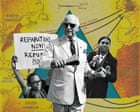
Kemi Badenoch says Africans should apologise for slavery. When discussing slavery, we should be “honest about the whole history”, Kemi Badenoch wrote in a recent post on X. Her statement comes after months of mounting pressure on Britain’s monarchy and politicians to formally apologise for its role in the transatlantic slave trade, and offer reparations to affected Caribbean nations.
Enslavement’s devastating impact on Caribbean and African nations means that cross-diasporic solidarity has become central in addressing its legacy
Don’t get The Long Wave delivered to your inbox? Sign up here
Despite reports that the UK attempted to keep reparations off the formal agenda for the Commonwealth summit attended by King Charles and the UK prime minister, they are in the air. British Conservative party leader Kemi Badenoch is among those detractors who have argued that it is African nations who should apologise for the transatlantic slave trade. It may seem like a spectacular case of whataboutery (it is) but it also touches on an enduring tension in some Black communities surrounding African involvement in capturing and enslaving people. This week, I speak to two historians to sort fact from fiction.
When discussing slavery, we should be “honest about the whole history”, Kemi Badenoch wrote in a recent post on X. Her statement comes after months of mounting pressure on Britain’s monarchy and politicians to formally apologise for its role in the transatlantic slave trade, and offer reparations to affected Caribbean nations. Badenoch continued: “If Caribbean countries are asking Britain for a formal apology for Britain’s role in the transatlantic slave trade, will they also be asking the same of the descendants of African kingdoms, rulers and merchants who captured, sold and profited from the trade?”
While the question was asked in bad faith, many within Black communities are unable to confidently answer it. In conversations with African and Caribbean colleagues at the Guardian, plenty of us experience division within our communities around the subject of African people’s participation in enslavement. The topic can be incredibly sensitive and difficult to tackle without a firm grounding in the history and political economy of the transatlantic slave trade. Yet, the experts I spoke to made it clear why African nations should not be held to the same standard as European countries and the US when atoning for their historical crimes.
Slavery was a system created by Europe and the US
Writer and historian Panashe Chigumadzi says that in understanding enslavement and who should be held to account, it is crucial that we see it as a system. Chigumadzi – who was the architect of the continental African Union’s landmark reparations framework – tells me that the trade was a structure that legally positioned all Black people as enslaveable property. No one was safe from this, whether on the continent or in the diaspora, king or commoner. She says: “[Badenoch] assumes Africans are ‘co-defendants’ and not ‘co-plaintiffs’ in prosecuting the case for a crime that fundamentally restructured the world as we know it, and created what we now know as the modern world racial capitalist system.”
Bayo Holsey, an associate professor of African American studies who specialises in west Africa at Emory University, agrees. She emphasises the overarching system that created a slave economy: the colonisation of the Caribbean and the Americas. “Europeans created the demand for enslaved labour,” the academic tells me. “The Atlantic slave trade would not have existed without this demand.”
In the latter part of the 17th century, demand for African captives on plantations had grown so much that capturing enslaved people was only possible through raiding and warfare. Given this, UK reparations would not only help repair the harm that the descendants of enslaved people have inherited, but would redress what Holsey describes as “the ill-gotten wealth of western nations”.
African people were victims of enslavement, too
We must also look at present day wealth – the economic growth of many European nations and the US was facilitated by enslavement. “The slave trade shaped the economic advantages that these countries enjoy today,” Holsey tells me. The case is fundamentally not the same in Africa. “Much of the wealth that select African individuals gained from the slave trade evaporated with the onset of colonial rule,” she says.
Africa was victimised by the slave trade too. Holsey tells me that while a small number of African people engaged in slave trading and accrued wealth, many more were victims of the trade. “They experienced fear, social instability, and the loss of loved ones as a result,” she says. Estimates based on the Slave Voyages database suggest that approximately 12.5 million enslaved Africans were forced aboard ships bound for the Americas, of whom 10.7 million survived the crossing. These figures exclude those who died before embarkation.
This depopulation destabilised the west and west-central coasts of the continent, devastating entire societies. Chigumadzi argues that the “scramble for Africa” in the late 19th and early 20th centuries, when the continent was invaded, divided and colonised, was a “structural continuation of the original crime of racialised chattel enslavement”.
Holsey tells me: “Today, most African nations face economic precarity as a result of historical and present-day inequities within the global economic order”. “So, unlike European nations and the US, African nations do not enjoy ongoing benefits from past participation in the slave trade. Therefore, they should not be targeted to repair the harm done by this vile system.”
Many African nations have made efforts towards repair
“Britain has already paid reparations for racialised chattel enslavement,” Chigumadzi says. “It paid them to the enslavers.” After the Slavery Abolition Act of 1833, the British government agreed to pay 40% of the national budget in compensation to 46,000 enslavers, a sum that wasn’t paid off until 2015.
Passing the buck to African nations ignores the fact that many have attempted to meaningfully address their role in slavery and its ongoing legacy. In recent decades, leaders from Libya, Nigeria, Benin, Ghana, Cameroon and Uganda have apologised for enslavement – and a number of countries offer citizenship to diasporans. But these gestures are still either symbolic or individual, and fail to make a dent in the ongoing economic impacts of enslavement. “Addressing this issue is a much more difficult task,” Holsey tells me.
It also requires genuine unity across the diaspora. This shouldn’t revolve around a story of winners and losers, but rather an understanding of the slave trade’s devastating impact on African and Caribbean nations. March’s historic UN resolution, which declared the trade as the “gravest crime against humanity” and called for reparations, was tabled by Ghana and coordinated by the African Union – representing this kind of cross-diaspora solidarity.
“The question we should ask is not, ‘What do African nations owe to the African diaspora?’” Holsey says. “Instead, we should ask: ‘How can African nations and the African diaspora work together toward the creation of a more just world?’”
Have you seen division in your own communities around Africa’s role in enslavement? How do you think the diaspora should move forward? Tell us by replying to this or emailing thelongwave@theguardian.com and we may include your response in a future issue.
- badenoch
- kemi
- slavery
- history
- trade
- nation
- slave
- britain