The Road To 2027 Runs Through Kaduna, But The North Is Not A Number

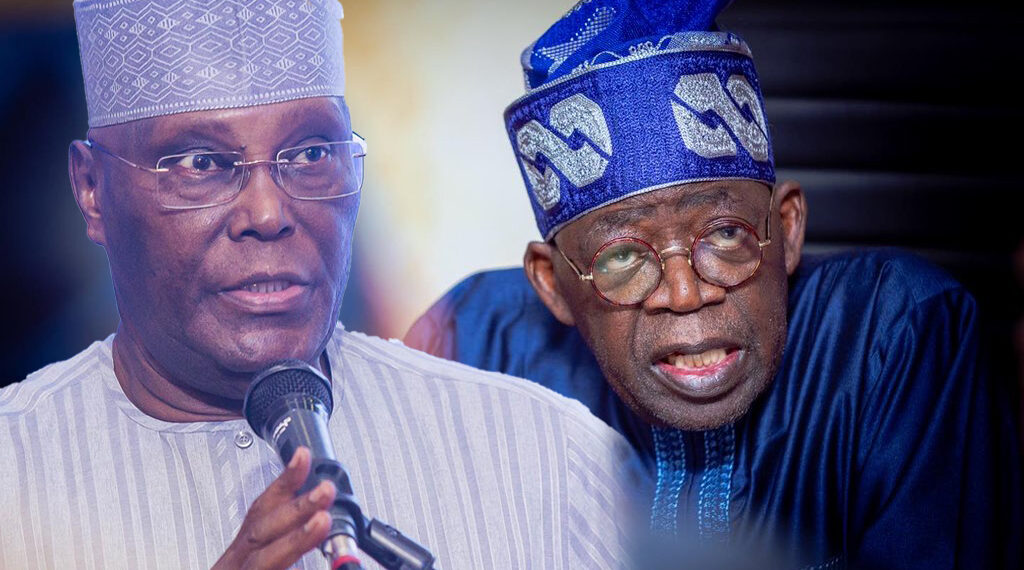
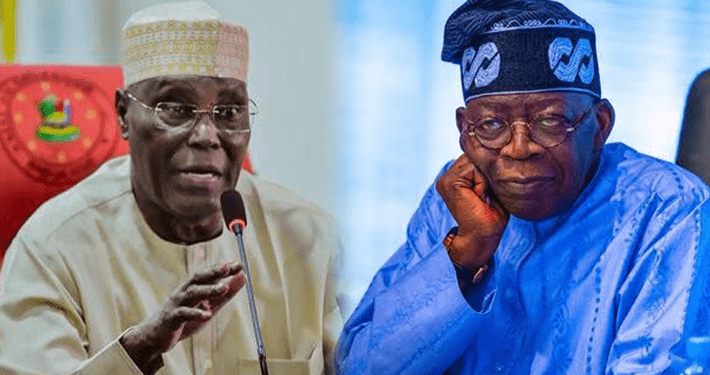
President Bola Tinubu will formally open his re-election campaign in Kaduna on Saturday. Tinubu lost Kaduna to Atiku Abubakar in 2023.
President Bola Tinubu will formally open his re-election campaign in Kaduna on Saturday. The location is deliberate, the arithmetic is formidable, and the message is unmistakable: the All Progressives Congress intends to win the 2027 election by rebuilding a northern coalition around the President.
The three northern geopolitical zones contain 56.01 million of Nigeria’s 103.43 million registered voters; 54.2 per cent of the national register. The North-West alone has 25.08 million, making it the country’s largest electoral bloc. APC campaign officials are consequently talking about northern consensus and setting a national target of approximately 40 million votes.
But registered voters are not actual votes, political endorsements are not public opinion, and the North is not a single electoral personality.
Kaduna is an appropriate starting point because it captures both the opportunity and the danger confronting Tinubu.
It is a major political centre in the North-West, but it is not naturally secure territory for the President. Tinubu lost Kaduna to Atiku Abubakar in 2023. The state also embodies several issues that could determine northern voting behaviour: insecurity, rural poverty, food prices, religious sensitivity and the relationship between elite political agreements and popular sentiment.
By beginning there, the APC is signalling that it will not concede the region to Atiku merely because he is a northern Muslim. It is relying on Vice-President Kashim Shettima, governors, ministers, traditional relationships and a greatly expanded party structure to offset Atiku’s regional appeal.
That structure matters. The APC now enjoys an extraordinary advantage in the number of governors, lawmakers and local political networks under its control. Governors influence campaign financing, mobilisation and the organisation required to convert public sympathy into votes.
The party’s challenge is that political machinery can mobilise supporters, but it cannot permanently insulate an incumbent from lived economic experience.
The APC’s campaign argument will be that the most painful period of reform has passed.
Inflation has moderated, foreign reserves have improved, economic growth has strengthened, and the Central Bank has begun adjusting interest rates. The administration will argue that removing the petrol subsidy and reforming the foreign-exchange market prevented a deeper fiscal crisis.
The opposition’s reply is more immediate: food, transport, energy and business costs remain painfully high.
That explains the political significance of the National Economic Council’s newly approved 90-day action plan. It prioritises food affordability, tax harmonisation, completion of high-impact projects, removal of investment bottlenecks and regulated household support. It also proposes a national dashboard to track projects and the use of savings from subsidy removal.
On paper, these are reasonable interventions. The problem is timing.
The presidential election is 86 days away, while the relief plan is designed to run for 90 days. Atiku’s campaign has therefore called it “election bait,” arguing that Nigerians are being asked to vote before the promised relief can be fully assessed. That is a partisan allegation, not proof that the programme is improper. But the calendar gives the criticism political force.
The government can answer it only through early, measurable delivery. What food has become cheaper? Which households have received support? What projects have been completed? How much has been spent, by whom and under what criteria?
Announcements will not be sufficient. The electorate needs receipts.
While the APC prepares a major campaign launch, opposition parties are again discussing a consensus candidate.
Representatives of the ADC, NDC, PRP, SDP, APM and PDP have inaugurated legal and media committees to develop a framework for cooperation. Atiku, Peter Obi, Donald Duke and Adewale Adebayo are among the names mentioned in the talks. Coalition organisers say negotiations are progressing towards a single candidate.
That claim should be treated cautiously.
The Independent National Electoral Commission has already published 18 presidential candidates, including Atiku for the ADC and Obi for the NDC. Agreeing that the opposition should unite is therefore much easier than determining who withdraws, who leads, what happens to the running mates and how supporters are transferred between parties.
There is also no guarantee that voters will follow elite instructions. An Atiku endorsement of Obi would not automatically deliver Atiku’s northern vote. An Obi endorsement of Atiku would not automatically transfer younger urban voters or the South-East. Nigerian politicians often mistake negotiations among leaders for consolidation among electorates.
The opposition nevertheless understands the arithmetic. Tinubu won in 2023 with 36.61 per cent of the valid votes; 8.79 million votes. Atiku and Obi together received more than 13 million. That does not mean a joint ticket would have automatically defeated Tinubu, because elections are shaped by turnout, geography and the constitutional requirement for national spread. But it shows why fragmentation remains the APC’s quiet ally.
Unless the coalition produces a credible agreement quickly, it risks becoming a committee for managing defeat.
The emphasis on 103.43 million voters has also reopened an important transparency dispute.
INEC says the total follows the addition of approximately 10.77 million new registrants. Atiku has demanded that the preliminary register be made available for public inspection, alleging that an online page intended for that purpose was empty.
The allegation does not establish manipulation. Technical delays or publication problems are not evidence of a compromised register. But INEC should resolve the issue immediately.
A national figure cannot substitute for a register that citizens and parties can scrutinise. The public must be able to identify duplicate entries, deceased persons, omissions and questionable registrations before the final roll is certified.
If parties are already building campaign strategies around precise regional totals, voters deserve access to the underlying data.
First, watch the language and attendance at Saturday’s Kaduna rally. A large gathering will demonstrate organisational capacity, but the more important question is whether influential northern leaders offer genuine commitments or merely perform ceremonial loyalty.
Second, watch whether the 90-day economic plan produces identifiable benefits before election day. Its political credibility will depend on outcomes, not intentions.
Third, watch the opposition negotiations. A consensus announced after ballots and campaign loyalties have hardened may be largely symbolic.
Finally, watch INEC. Publication and scrutiny of the voter register will be an early test of whether the Commission intends to manage doubts proactively or react only after they become political crises.
Tinubu enters the northern campaign with the strongest political machine, an expanding network of governors and a divided opposition. Those advantages are substantial.
But the North’s 56 million registrations are not a blank cheque. Its voters are living with insecurity, expensive food, high transport costs and the uneven consequences of economic reform.
The APC is campaigning on structure and patience. The opposition is campaigning on hardship and change, but without yet agreeing on whose change.
The election may ultimately turn on which side solves its greater weakness first: whether Tinubu can convert improving economic indicators into household relief, or whether the opposition can convert popular discontent into one coherent electoral force.
Political Signals is an independent weekly political analysis produced for Channels Television. It examines political developments, personalities and electoral trends without endorsement of any political party or candidate. Its assessments are based on publicly available evidence and may change as events and evidence develop.
- kaduna
- north
- campaign
- apc
- number
- president
- election
- atiku