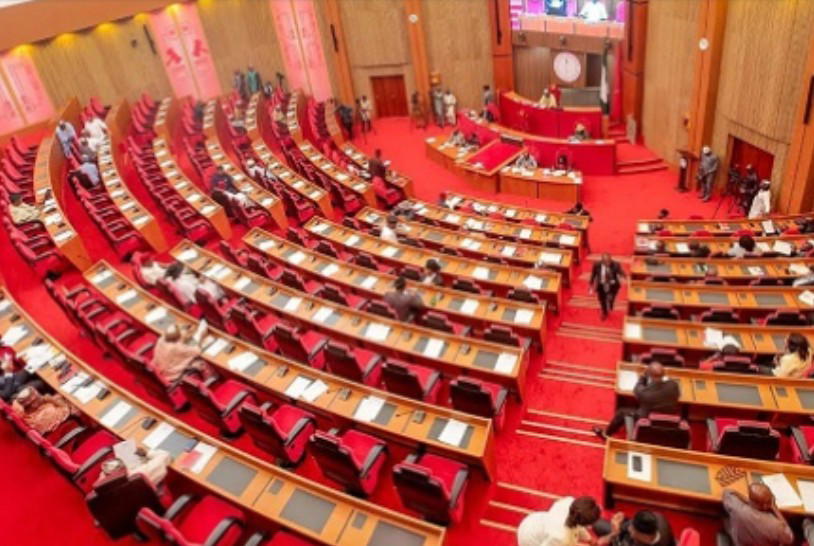
Senate proposes six-month jail term for hospitals denying emergency care
By Henry Umoru ABUJA — The Senate has passed for second reading a bill seeking to make it compulsory for public and private hospitals across Nigeria to provide emergency medical treatment, prescribing up to six months’ imprisonment for facilities and individuals who violate its provisions. The bill, sponsored by Senator Abdulaziz Musa Yar’Adua (APC, Katsina Central), seeks to amend the National Health Act, 2014, to establish mandatory emergency medical treatment standards and referral protocols in healthcare facilities.
By Henry Umoru ABUJA — The Senate has passed for second reading a bill seeking to make it compulsory for public and private hospitals across Nigeria to provide emergency medical treatment, prescribing up to six months’ imprisonment for facilities and individuals who violate its provisions. The proposed legislation also prescribes a fine of up to ₦300,000, imprisonment for six months, or both, for anyone convicted of denying emergency medical treatment.
The bill, sponsored by Senator Abdulaziz Musa Yar’Adua (APC, Katsina Central), seeks to amend the National Health Act, 2014, to establish mandatory emergency medical treatment standards and referral protocols in healthcare facilities. Titled, “A Bill for an Act to Amend the National Health Act, 2014 to Provide for Emergency Medical Treatment Standards and Referral Protocols in Healthcare Facilities; and for Related Matters, 2026” (SB. 759), it was referred to the Senate Committee on Health (Secondary and Tertiary) for further legislative action, with a directive to report back in four weeks.
Under the proposed amendment, no healthcare provider, health worker or medical establishment would be allowed to deny anyone emergency medical treatment for any reason. It also requires healthcare professionals to commence life-saving interventions, including cardiopulmonary resuscitation, airway management and bleeding control, immediately after identifying a life-threatening condition.
The bill proposes that hospitals conduct triage and initial assessments within 15 minutes of a patient’s arrival, while basic stabilisation measures, including oxygen administration, intravenous fluids, pain management and initial diagnostic procedures, must begin within 30 minutes. For patients requiring admission, hospital beds are to be assigned within two hours, subject to availability.
Where beds are unavailable, healthcare facilities would be required to commence immediate stabilisation and arrange the patient’s transfer to another hospital. The proposed legislation further requires hospitals to initiate referral arrangements within two hours and complete the transfer process within three hours of a patient’s arrival, except where circumstances beyond their control prevent compliance.
It also mandates hospitals to dispatch an ambulance or arrange alternative transportation within 30 minutes of communicating a referral decision. Beyond emergency response timelines, the bill seeks to introduce mandatory emergency care training and certification for healthcare workers, with recertification intervals not exceeding 18 months. It also mandates the Medical and Dental Council of Nigeria and the Nursing and Midwifery Council of Nigeria to jointly develop a standardised national emergency care curriculum.
However, healthcare practitioners would be protected from penalties where resource constraints prevent compliance, provided the challenges are properly documented and prescribed referral procedures are followed. Leading debate on the bill, Yar’Adua said the proposed amendment would address critical gaps in Nigeria’s healthcare system by establishing enforceable standards for emergency treatment and referral procedures.
He said it would guarantee timely and life-saving medical attention to Nigerians during emergencies, irrespective of their social status, wealth, influence or location. According to him, preventable deaths persist because many healthcare facilities lack clearly defined and enforceable timelines for patient assessment, stabilisation and treatment. He cited Nigeria’s contribution to approximately 10 per cent of global maternal deaths, attributing part of the problem to delays in accessing emergency obstetric care.
Yar’Adua said the proposed legislation would strengthen coordination among primary, secondary and tertiary healthcare facilities, while ensuring that patients are stabilised before being referred to other hospitals. He added that the bill would protect healthcare workers acting in good faith within documented resource limitations while ensuring accountability for wilful negligence.
The senator said the proposed amendment was consistent with international practices, citing Ghana, South Africa, Kenya, the United Kingdom and the United States. Supporting the bill, the Senate Whip, Senator Mohammed Monguno (APC, Borno North), said it would address deaths arising from road accidents and maternal emergencies. He lamented that some healthcare providers neglected emergency patients, resulting in avoidable deaths, and said the proposed amendment would introduce criminal liability for such negligence.
Monguno said the legislation would address gaps in the existing National Health Act and reinforce government’s responsibility to protect the welfare of citizens. Similarly, Senator Diket Plang (Plateau Central) said the bill would improve emergency admissions and establish appropriate referral procedures across different levels of healthcare delivery.
He noted that rural communitie
- emergency
- healthcare
- hospital
- care
- treatment
- senate
- bill
- nigeria