Nigeria-Korea trade hits $1.1bn as both countries seek diversification
By Favour Ulebor, Abuja The Republic of Korea has expressed its readiness to deepen trade and investment ties with Nigeria, targeting sectors such as manufacturing, agriculture, digital technology and maritime services beyond the traditional oil and gas trade. He said trade between Nigeria and Korea reached approximately $1.1bn last year, making Nigeria one of Korea’s largest trading partners in Africa.
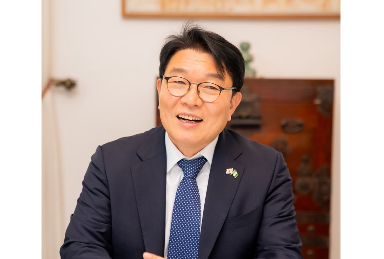
By Favour Ulebor, Abuja The Republic of Korea has expressed its readiness to deepen trade and investment ties with Nigeria, targeting sectors such as manufacturing, agriculture, digital technology and maritime services beyond the traditional oil and gas trade. The Korean Ambassador to Nigeria, Jeong Yo-an, disclosed this on Wednesday at a meeting with journalists in Abuja, saying expanding economic cooperation would boost bilateral trade, encourage local production and create employment opportunities in both countries.
He said trade between Nigeria and Korea reached approximately $1.1bn last year, making Nigeria one of Korea’s largest trading partners in Africa. However, the ambassador noted that the existing trade structure, largely dominated by Nigerian oil and gas exports and Korean exports of automobiles, electronics and machinery, needed to become more diversified.
“Last year, our trade reached about 1.1 billion dollars. Nigeria remains one of Korea’s largest trading partners in Africa. But the shape of our trade must change. Today, Nigeria sells us mostly oil and gas. Korea sells mostly cars, electronics and machinery. We can do much more than that,” he said. Jeong said the next phase of bilateral cooperation would focus on strengthening local production, including vehicle assembly, agricultural machinery for rice farmers, digital skills development and maritime services.
He added that Korea was interested in encouraging more Nigerian businesses to participate in bilateral trade while attracting Korean companies to invest in local manufacturing and other productive sectors. The ambassador identified the beauty and cosmetics industry as another area offering significant opportunities, citing growing Nigerian interest in Korean skincare and cosmetic products.
According to him, Nigeria’s large youth population presents a considerable market for Korean beauty products and could position the country as a major destination for such products in Africa. He said the Korea Trade-Investment Promotion Agency (KOTRA), through its Lagos office, was available to connect Korean manufacturers with Nigerian importers and help local businesses identify potential buyers in Korea.
Jeong also disclosed that Nigerian buyers would have the opportunity to engage with Korean companies at the Korean pavilion during the Beauty West Africa exhibition scheduled for November 13. On diplomatic relations, he said both countries were working to strengthen political and economic cooperation following the Korea-Africa Summit in 2024 and the first Korea-Africa Foreign Ministers’ Meeting held in June this year.
He added that Nigeria had offered to host the seventh session of the Nigeria-Korea Joint Commission in Abuja as part of efforts to advance bilateral engagement. On development cooperation, the ambassador disclosed that approximately 2,000 Nigerian public officials had received training in Korea through the Korea International Cooperation Agency (KOICA).
He said KOICA’s Smart School project had also reached 8,000 pupils and trained more than 300 teachers and school leaders. According to him, KOICA, the Small and Medium Enterprises Development Agency of Nigeria (SMEDAN) and the United Nations Development Programme (UNDP) had commenced work on the Abuja Centre for Entrepreneurship to support young Nigerians in developing business ideas and creating jobs.
He said Korea was equally supporting initiatives aimed at promoting green jobs, agricultural development, digital education and skills acquisition. The ambassador further disclosed that Korea was working towards increasing its Official Development Assistance to $10bn by 2030, alongside plans to provide $14bn in export financing to support Korean companies investing in Africa.
On cultural exchanges, Jeong said the Korean Cultural Centre Nigeria had reached more than 300,000 people through its programmes, while this year’s Korean Film Festival attracted approximately 1,000 participants. He pledged to extend cultural activities to more Nigerian cities and promote collaborations between young creatives in both countries.
- trade
- korea
- nigeria
- africa
- development
- ambassador
- cooperation
- country