2027: Makinde unveils presidential manifesto, faults leaders over failures

Makinde unveils presidential manifesto, faults leaders over failures. The APM candidate and Oyo governor also proposed a government of national unity and an electoral threshold to encourage political alliances across ethnic, religious and political divides.
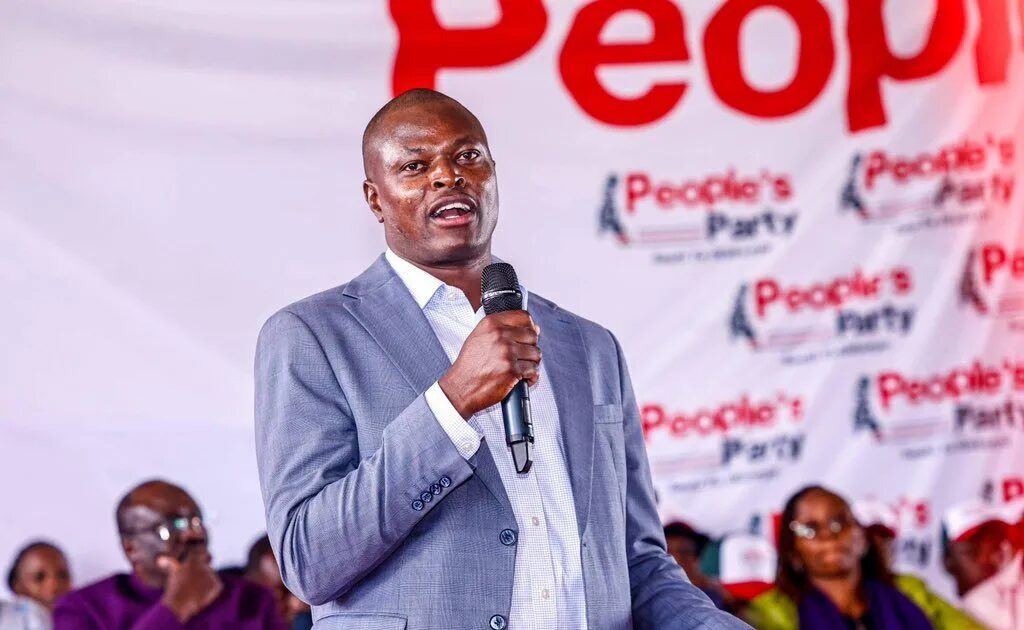
APM Presidential Candidate, Governor Seyi Makinde unveils manifesto in Abuja
The Governor of Oyo State and presidential candidate of the Allied Peoples Movement (APM), Seyi Makinde, has criticised Nigeria’s political leadership, saying the country’s development challenges stem largely from a lack of ideas rather than a shortage of resources.
Mr Makinde made the remarks on Wednesday in Abuja during the unveiling of his presidential manifesto, where he outlined proposals to address the country’s economic difficulties, institutional weaknesses, insecurity and political challenges.
He argued that Nigeria had sufficient natural and human resources to become a prosperous nation but lacked leaders who could translate its potential into improved living conditions for citizens.
“Nigeria has the resources and the capacity to achieve greatness. Nigeria is rich in natural resources and human resources, but our leaders are poor in ideas,” he said.
The presidential hopeful said his manifesto was developed through consultations with Nigerians across the six geopolitical zones, including town hall meetings aimed at understanding citizens’ expectations of government.
Recounting one of the engagements in the North-east, Mr Makinde said a participant had asked whether he could provide the country with leadership comparable to that of former Prime Minister Tafawa Balewa and nationalist leaders Obafemi Awolowo and Nnamdi Azikiwe.
He said the question reinforced his sense of responsibility and the need for a leadership approach that could restore public confidence in government.
“Our simple proposition is that government must make life easier for the people. That is all,” he said.
Mr Makinde identified four major concerns that informed his presidential ambition, including the disconnect between macroeconomic reforms and citizens’ welfare, weak public institutions and widespread poverty.
He said economic stability should be assessed by its impact on ordinary Nigerians, particularly through affordable food, employment opportunities, improved earnings and reduced living costs, rather than economic indicators alone.
The APM candidate also called for stronger accountability mechanisms, arguing that political promises should be linked to specific government institutions, implementation plans and measurable targets that citizens can independently assess.
On the economy, he said his administration would focus on reducing the structural cost of living by lowering production expenses and creating a more favourable environment for businesses.
He identified the high cost of electricity and energy as major obstacles to industrial growth, noting that manufacturers who depend on diesel-powered generators face higher operating costs than businesses in countries with more reliable and affordable power supplies.
According to him, some Nigerian businesses have relocated to neighbouring countries, including the Republic of Benin, because of the unfavourable operating environment at home.
Mr Makinde also questioned the impact of rising international crude oil prices on Nigerians, arguing that citizens should not continue to bear higher petroleum costs without receiving corresponding economic benefits.
He further criticised the federal government’s handling of electricity supply, saying it should take responsibility for its commitments rather than shifting the blame to state governments.
The governor recalled President Bola Tinubu’s promise to improve electricity supply and said Nigerians should hold the administration accountable for delivering on its pledge.
On political reforms, Mr Makinde said the current electoral arrangement could produce presidents without broad support across the country, creating room for political compromises that weaken democratic institutions.
He proposed an electoral threshold that would compel presidential candidates to build wider alliances across ethnic, religious and political divisions.
He also advocated a transitional government of national unity, which would bring together representatives of different sections of the country to deliberate on Nigeria’s political and constitutional future.
Mr Makinde, however, said he would not seek personal advantage from any constitutional or political arrangements that might emerge from the proposed process.
He pledged that an APM-led federal administration would establish measurable performance targets within its first 100 days and make its achievements available for public scrutiny.
Also speaking at the event, Lawal Daura, the APM vice-presidential candidate, said Nigeria needed peace, security, political stability, economic prosperity and respect for democratic rights to sustain its democracy.
Mr Daura warned against attempts to “suppress opposition parties,” arguing that a functional opposition was necessary to reduce political tensions and strengthen democratic governance.
He said opposition parties should be viewed as partners in the democratic process rather than enemies of the government.
The former official said he and Mr Makinde believed Nigeria’s challenges required a broad national conversation involving different sections of society.
He proposed a national conference involving government representatives, political parties and other stakeholders to deliberate on the country’s problems and agree on a common direction.
Sadiq Gombe, the national chairman of the Social Democratic Party (SDP), who attended the manifesto unveiling, described Mr Makinde as a prominent opposition figure.
Mr Gombe also praised Bala Mohammed, the governor of Bauchi State and national leader of the APM, for his contributions to sustaining democratic governance and strengthening opposition politics.
In his remarks, Yusuf Dantalle, the APM national chairman, urged Nigerians to resist attempts to deploy state institutions against democratic interests.
Mr Dantalle said the manifesto unveiling was about Nigeria’s future and not merely the interests of a political party, arguing that political platforms should serve as instruments for national development.
He also raised concerns about the country’s worsening security situation, saying insecurity had reached a point where Nigerians could no longer carry out their daily activities without fear of kidnapping, including within the Federal Capital Territory (FCT).
- makinde
- manifesto
- leader
- failure
- candidate
- oyo
- governor
- government