EFCC, Australian police sign MoU to tackle cybercrime

EFCC chairman, Mr Olukoyede, noted that international cooperation had become necessary because financial crimes increasingly crossed national borders.
The Economic and Financial Crimes Commission (EFCC) and the Australian Federal Police (AFP) have signed a memorandum of understanding (MoU)
The Economic and Financial Crimes Commission (EFCC) and the Australian Federal Police (AFP) have signed a memorandum of understanding (MoU) to strengthen cooperation against cybercrime and other financial offences involving multiple countries.
According to a statement on Wednesday by the EFCC spokesperson Dele Oyewale, the agreement was signed at the EFCC headquarters in Jabi, Abuja.
The Australian High Commissioner to Nigeria, Leilani Bin-Juda, commended the EFCC Chairman, Ola Olukoyede, and officers of the commission for their longstanding cooperation with the Australian police.
“Chairman, I want to say a big thank you to you, your leadership, your agency and your amazing officers who have worked closely with the Australian Federal Police,” she said.
Ms Bin-Juda stated that the partnership had involved the exchange of technology, intelligence and professional advice, which had strengthened relations between the two countries.
She described cybercrime as a global concern and said Nigeria played a leading role in efforts to tackle it in Africa.
“Cyber matters are affecting many countries, and Nigeria is one of those leading countries in the region. Other African countries look to Nigeria for leadership in this aspect. I commend you for your efforts,” she noted.
The Assistant Commissioner of the Australian Federal Police, Sandra Booth, explained that the partnership between the two agencies dated back to 2004 and had supported investigations into cyber-enabled crimes, business email compromise, financial offences and scams.
She stated that the new agreement would create further opportunities for joint investigations, professional development and the exchange of expertise.
“We are very grateful for this relationship that we have with you. I look forward to the new MoU providing new opportunities for us to work together, open new horizons, strengthen our relationship and promote professional development between our organisations,” she said.
Ms Booth described the signing as an important step in the relationship between the agencies, saying she was pleased to formalise their plans for future cooperation.
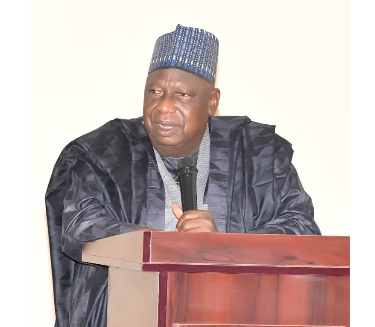
EFCC chairman, Mr Olukoyede, noted that international cooperation had become necessary because financial crimes increasingly crossed national borders.
“We have discovered that financial crimes take a transnational dimension. What affects Nigeria inevitably affects Australia. That is why countries have to come together because criminals always work together,” he said.
He explained that the agreement would provide a framework for cooperation in training, manpower development, mutual support and the exchange of information and intelligence, subject to the domestic laws of both countries.
“There is a network of criminals, and for us to fight this network, we must also network as countries that are serious about the fight against such crimes,” he said.
He added that the partnership would benefit both countries regardless of where the suspects operated.
The EFCC and the Australian Federal Police signed an earlier MoU in April 2012 to strengthen cooperation against transnational crimes.
In a related development, the International Criminal Police Organisation (INTERPOL) announced in August 2016 the arrest in Nigeria of a suspected leader of an international online fraud network linked to scams worth more than $60 million.
The network allegedly targeted businesses in several countries, including Australia, through business email compromise and other online fraud schemes. The operation involved INTERPOL and the EFCC.
At Wednesday’s ceremony, the Australian Federal Police also presented awards to four EFCC officers for their investigative skills, professionalism and dedication during a complex and lengthy investigation.
The recipients were Assistant Commander of the EFCC II Abba Sambo Usman; Assistant Commander of the EFCC II Olufemi Olukinni; Assistant Commander of the EFCC II Omewa Pius Nnaemeka and Inspector of the EFCC I Owolabi Jude Oyarekhua.
- efcc
- police
- mou
- chairman
- olukoyede
- cooperation
- crime
- border