Reps propose fines, licence withdrawal for hospitals that delay emergency treatment

The bill seeks to amend the National Health Act, 2014, to strengthen emergency medical services and establish enforceable standards for triage, stabilisation and referral across healthcare institutions.
House of Representatives, Federal Republic of Nigeria
The House of Representatives has passed a bill for second reading that seeks to impose financial penalties, suspend licences, and shut down healthcare facilities that refuse or delay emergency medical treatment.
The proposed legislation also seeks to introduce criminal penalties for health workers who wilfully refuse to attend to emergency patients or abandon them.
Sponsored by Akin Rotimi (APC, Ekiti), the bill seeks to amend the National Health Act, 2014, to strengthen emergency medical services and establish enforceable standards for triage, stabilisation and referral across healthcare institutions.
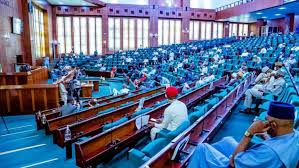
The bill passed second reading during Wednesday’s plenary after lawmakers considered its general principles.
Presenting the bill, Mr Rotimi, the House spokesperson, said. However, ugh the National Health Act prohibits hospitals from refusing emergency treatment, “Nigerians continue to lose their lives or suffer preventable complications because of delays arising from administrative bottlenecks, demands for payment before treatment, unavailable hospital beds and poorly coordinated referrals.”
He argued that the existing legal provisions needed to be reinforced with clear operational standards and consequences for non-compliance.
According to Mr Rotimi, the proposed amendment provides for financial penalties, suspension of operating licences and possible closure or withdrawal of licences for healthcare establishments that refuse, delay or obstruct emergency medical treatment.
He said it also provides for criminal sanctions and professional disciplinary proceedings against health workers who deliberately refuse to attend to emergency patients or abandon them.
The bill, he said, further proposes civil compensation against healthcare facilities where a violation of the emergency treatment provisions results in injury, disability or death.
However, it seeks to protect healthcare workers from liability where they act in good faith, properly document resource limitations and comply with established referral procedures.
Beyond sanctions, the proposed legislation introduces mandatory timelines for healthcare facilities attending to emergency patients.
It requires hospitals to commence triage within 15 minutes of a patient’s arrival and begin basic stabilisation within 30 minutes.
Life-saving interventions must commence immediately once a life-threatening condition is identified. Where a medical practitioner is unavailable, trained and certified nurses may conduct triage.
The bill also requires that patients needing admission be assigned an available hospital bed within two hours.
Where a facility has no available bed, it must commence stabilisation and initiate a referral within two hours of the patient’s arrival or immediately after clinical stabilisation.
It further requires hospitals to arrange transportation within 30 minutes of a referral decision and complete the transfer within three hours, except where circumstances beyond their control prevent this.
The proposed amendment also mandates healthcare workers involved in emergency medical services to undergo training and certification at intervals not exceeding 18 months.
It assigns the Medical and Dental Council of Nigeria and the Nursing and Midwifery Council of Nigeria the responsibility of jointly developing and maintaining a standardised national emergency care curriculum.
Mr Rotimi said the provisions were intended to ensure the right to emergency treatment is reflected in actual healthcare delivery rather than remaining a declaration in law.
“In a medical emergency, time is the difference between life and death,” he said.
He added that the bill would distinguish genuine resource limitations from negligence and deliberate abandonment while strengthening institutional accountability.
Contributing to the debate, Chinedu Ogah (APC, Ebonyi) supported the bill but called for provisions linking emergency medical treatment to health insurance coverage.
He said emergency patients should not be required to make deposits or wait for payment arrangements before receiving medical attention.
Mr Ogah suggested the bill should require emergency patients to be covered under the National Health Insurance Scheme to ensure financial constraints do not delay treatment.
“They should liaise with health insurance, so that all those emergency people must be insured by the National Health Insurance Scheme, so that every moment they have sucan h emergency, they will not wait for any deposit for them to be treated,” he said.
His contribution was seconded by Makki Yalleman (APC, Jigawa).
Following the debate, Benjamin Kalu, the Deputy Speaker, who presided over the plenary, referred the bill to the House Committee on Health Services for further legislative action.
- emergency
- licence
- withdrawal
- treatment
- rep
- fine
- hospital
- bill