96% of world's coral reefs face critical risk of collapse, IUCN warns
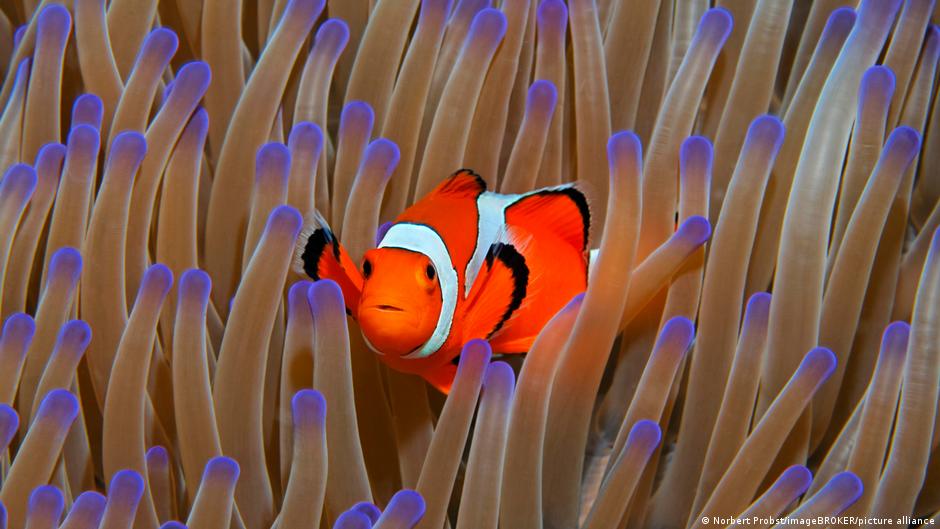
Almost all of the world’s shallow-water coral reefs are at risk of collapse by 2075, with climate change the biggest threat. A new study found that 96% of reef systems are critically endangered.
Nearly all of the world's shallow-water coral reefs face an extremely high risk of collapse by 2075, with climate change being the greatest threat, the International Union for Conservation of Nature (IUCN) warned on Thursday.
In the first systematic survey of the world's 127 tropical and subtropical coral reef systems, the IUCN said 96% were critically endangered, which is its highest risk category.
Shallow-water reefs are colorful coral ecosystems found at depths of up to around 40 meters (131 feet), and are home to a high level of biodiversity.
Among the reefs affected are Australia's Great Barrier Reef, the Coral Triangle in the western Pacific and Southeast Asia, the Mesoamerican Reef System and the reefs in the Red Sea.
"Heat stress from climate change is the single most consistent threat driving coral reef decline worldwide," the IUCN said when it presented the study at the United Nations' COP17 biodiversity summit in Yerevan, Armenia.
Worldwide, shallow-water reefs cover around 188,000 square kilometers(73,000 square miles).
Their corals are highly sensitive to temperature changes. This means when the water gets too warm, the corals expel the tiny algae living in their tissues, which provide much of their nourishment.
This then leads to coral bleaching and can ultimately lead to their death.
Overfishing is another major threat. In particular, the overfishing of parrotfish and groupers affects reef ecosystems since these fish help maintain ecological balance.
Coastal development, pollution, tourism and increasingly severe storms also contribute to reef degradation.
When hard corals disappear, their structures are often replaced by algae, rubble and sponges, leaving less diverse ecosystems that do not sustain as many species. Affected animals include reef fish, mussels, sea turtles, and sharks.
"The future threat of climate change is looming and severe, and that poses a very high risk to the survival of these ecosystems," according to Mishal Gudka, scientific lead of the IUCN Red List of Coral Reef Ecosystems assessment.
The study uses a climate scenario developed by the UN's Intergovernmental Panel on Climate Change, which expects global warming of around 2.7 degrees Celsius (4.86 degrees Fahrenheit) above pre-industrial levels by 2100.
Despite the bleak outlook, the IUCN said most reefs had not yet been lost. Without projections of future climate change and based on the changes over the past 50 years, only 24% would qualify as critically endangered.
"This gives us a critical window for action for us to scale up conservation efforts and climate action to prevent the worst outcomes from occurring," Gudka explained.
"The actions we take over the next few years will determine what these ecosystems look like at the end of the century, whether they persist as we have known them, or whether they transform into a different ecosystem, which is worth less to both nature and people," he added.
IUCN Director General Grethel Aguilar said it was "not too late to give coral reefs a chance to recover."
"We know what is needed: ambitious emissions reductions, stronger protection and restoration efforts, and sustained investment in resilient coastal ecosystems and the communities that depend on them," she said.
- risk
- collapse
- reef
- world
- iucn
- water
- climate
- threat