NASA Swift telescope plummets to Earth near Indonesia
NASA's Swift telescope has re-entered Earth's atmosphere near Indonesia following a failed rescue attempt earlier this year.
One of NASA's premier space telescopes has re-entered Earth's atmosphere after spending 22 years in orbit.
NASA tracked the 1.5-tonne telescope's re-entry near Indonesia after a failed rescue attempt earlier this year.
NASA has yet to confirm how much of the telescope burned up in the atmosphere.
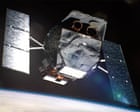
One of NASA's premier space telescopes has plunged to Earth, ending its 22-year investigation of the universe's biggest explosions.
The Swift Observatory's demise came less than three months after a long-shot mission to rescue it failed.
The US Space Force confirmed Swift's re-entry near Indonesia after tracking its descending orbit, which had deteriorated because of intense solar activity over the past few years.
NASA hired a private company to carry out an orbit-boosting effort, but Katalyst Space's three-armed robotic craft ran into trouble during its July launch and came crashing down in September.
It was not immediately known how much of the 1.5-tonne Swift burned up in the atmosphere. NASA anticipated that some of its denser pieces would survive.
The telescope, about the size of a minibus, rocketed into orbit in 2004 on what was expected to be a two-year study of gamma-ray bursts and exploding stars.
It observed thousands of them over a mission that lasted 11 times longer than planned, serving as a first responder for other telescopes that could probe deeper.
NASA is now gauging industry interest in mounting a rescue mission for another observatory whose orbit is being chipped away by solar storms: the Hubble Space Telescope.
Launched in 1990, Hubble's re-entry is expected by the mid-2030s, according to recent analyses.
The space agency wants input from private companies on whether and how to boost Hubble's orbit, upgrade its systems, guide it to a controlled re-entry, or all three.
Any such mission would need to happen by 2032.
Unlike the rush job with Swift, the space agency has more time to explore options for Hubble, said Nicky Fox, NASA's science mission chief.
"Hubble still has important science ahead of it," NASA administrator Jared Isaacman said in a statement, "and we should be looking at every reasonable opportunity to keep it delivering for as long as possible".
- nasa
- swift
- telescope
- earth
- indonesia
- plummet
- atmosphere
- rescue