NASA's Swift space telescope plunges back to Earth in fiery demise
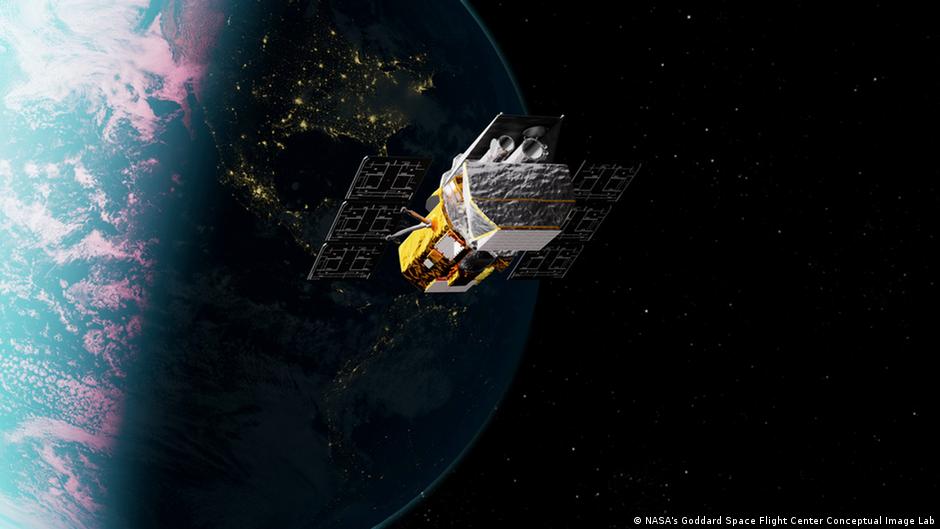
NASA's Swift orbital observatory fell back to Earth after running its mission for more than two decades. A rescue attempt to raise its sinking orbit had earlier failed.
A premier NASA space telescope met a fiery end as it crashed back to Earth — two decades after its launch — following the failure of a rescue mission.
The unmanned Neil Gehrels Swift Observatory re-entered the Earth's atmosphere over the North Sumatra region of Indonesia on Wednesday at 7.39 am EST (12.39 pm UTC), the US space agency said.
Most of the spacecraft was expected to have burnt up as it traveled through the atmosphere, NASAsaid, adding that some components may have survived re-entry.
NASA's prized Swift observatory — equipped with three telescopes — was launched into orbit in 2004.
The observatory was tasked with studying gamma ray bursts, the biggest energy blasts in universe for two years. But its mission spanned 11 times longer than planned, lasting just a few days short of 22 years.
The $500 million (€444 million) Swift satellite weighed roughly 1,452 kilograms (3,200 pounds).
It studied hundreds of supernova explosions, star-shredding black holes, stellar X-ray flares, asteroids and comets.
Swift also contributed to nearly 7,000 published scientific papers.
The satellite, which was in a good condition, fell out of orbit partly due to powerful geomagnetic storms set off by solar eruptions.
In July, NASA roped in private company Katalyst Space and launched a mission to raise the altitude of the Swift observatory.
But Katalyst Space's three-armed robotic servicing spacecraft — called LINK — faced issues with attitude control soon after reaching space, causing it to spin uncontrollably.
The rescue vehicle plunged back to Earth in September, while Swift ceased operations on October 20.
There were no immediate reports of damage on ground as the Swift observatory fell back to its home planet.
- earth
- nasa
- space
- telescope
- demise
- observatory
- mission
- decade