Lab-grown meat was supposed to save the world. What happened?
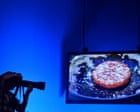
Not just any burger: a world-historic burger, made from cattle cells grown in a laboratory by Mark Post, a professor of vascular physiology at Maastricht University in the Netherlands. The burger had taken two years to produce and cost €250,000 (about £210,000 at the time), money furnished by the Google co-founder Sergey Brin.
We were promised a panacea for the climate crisis and a way to save our food system. So why is nobody firing up the chicken vats? I went to find out
On 5 August 2013, a man and a woman ate a burger. Not just any burger: a world-historic burger, made from cattle cells grown in a laboratory by Mark Post, a professor of vascular physiology at Maastricht University in the Netherlands. The burger had taken two years to produce and cost €250,000 (about £210,000 at the time), money furnished by the Google co-founder Sergey Brin. Now it was being tasted in public for the first time at Riverside Studios in London, at an event attended by 200 members of the press and livestreamed to thousands.
To make this particular burger, Post had extracted stem cells from the shoulder muscle of a living cow, then cultivated them in plastic containers filled with a nutrient-rich supplement called foetal bovine serum, which is derived from cow foetuses. The cells eventually became 20,000 strands of tissue, which in turn became a single 140g patty. Post believed that beef produced this way had the potential to dramatically reduce greenhouse-gas emissions and slow the climate crisis. Raising cattle for consumption requires massive amounts of land and water – and massive amounts of feed grown at a high environmental cost. He projected that global demand for meat would soon outstrip our ability to produce it the old-fashioned way, at which point our food systems would become unsustainable. But that didn’t have to mean a mass recalibration of our consumption habits or a global shift away from red meat. Post and his team had found another way.
Standing at a blond-wood island on an otherwise empty soundstage, Post lifted the kind of stainless-steel cloche usually found on a room service cart to reveal his creation. The raw patty sat in a petri dish on a bare plate, where it shone wetly under the studio lights. With the ITV London anchor Nina Hossain presiding, a Cornish chef named Richard McGeown pan-fried the burger in sunflower oil and butter for two volunteer tasters: Josh Schonwald, the Chicago-based author of The Taste of Tomorrow: Dispatches from the Future of Food, and Hanni Rützler, an Austrian nutrition scientist. So precious was this meat that they were given just the one burger to share between them. It was served deconstructed, alongside a sesame-seed bun, lettuce and tomato – showmanship to sell the burger a bit, give it context. The patty itself was reddish brown, flat and perfectly circular. When Schonwald and Rützler cut it, the burger did not bleed.
The two of them ate with forks and knives, passing the plate, sawing off thoughtful bites. Chewing slowly. Afterwards, they rendered their verdicts. “I would say it is somewhere on the spectrum between a Boca Burger and McDonald’s,” Schonwald told a reporter from NBC. “The absence of fat makes a big difference. It has the texture, which I was not expecting. It was like an animal-protein cake.” Rützler noted the burger’s blandness to a reporter from Science. “There is room for improvement here,” she said. At the end of the event, about €113,000 worth of burger remained uneaten. But none of this stopped Post from predicting that meat cultivated in a lab would become a consumer product within the decade.
The event – the theatrical reveal, the PR spectacle – triggered a kind of gold rush. One hundred and forty companies sprang up in six continents, trying to replicate what Post had done with beef across a range of other species: chicken, pork, fish, even quail. Investment to the tune of $3bn (£2.2bn) flooded into the sector. True believers claimed that cellular agriculture would not only fight the climate crisis and global food insecurity but also slow the spread of zoonotic disease and antibiotic resistance. A company called Upside Foods touted its plans to “set the new standard for meat” and to “make meat a force of good in the world”. A company called Vow created an enormous woolly mammoth meatball, though no one was allowed to eat it, since the DNA came from a fossil and the company didn’t know whether it was actually fit for human consumption. The thinktank RethinkX predicted that cultivated meat would decimate the US beef industry by 2030, reducing demand for the conventional variety by a whopping 70%. As the organisation wrote, “We are already on the cusp of the deepest, fastest, most consequential disruption in food and agricultural production since the first domestication of plants and animals 10,000 years ago.”
And yet, despite the frenzy, the meat itself never arrived. The challenges were numerous. There was the exorbitant upfront cost of building manufacturing facilities and the daunting amounts of energy required to run them. There was the difficulty of producing sufficient quantities of the stuff, at a price point low enough for people to buy. There was the lack of a highly skilled workforce trained to operate the new technology. There were rounds and rounds of inspections by the Food and Drug Administration (FDA) and the US Department of Agriculture (USDA). There was even, occasionally, the unwanted appearance of rodent DNA in research samples, which happened to the companies Upside and Eat Just. After peaking in 2021, investment began to fall off. In 2023, the industry raised a measly $177m globally.
But it wasn’t only venture capitalists who had started to grow sceptical of cultivated meat. The technology soon became a target of conservatives. The state governments of Florida, Alabama, Mississippi, Indiana, Montana, Nebraska and Texas moved in quick succession to legislate against cultivated meat, passing laws that banned its sale, production, or both. The Florida governor Ron DeSantis made a media event out of signing that state’s law, posing for pictures in front of a blood-stained cutting board piled high with steaks. “Take your fake lab-grown meat elsewhere,” he said. “We’re not doing that in the state of Florida.” In 2024, the industrial biotech consultant Joel Stone told the New York Times that, if he had to put odds on it, the likelihood of the industry producing even 10% of the meat supply in the foreseeable future “would be zero”. Today, cultivated meat is available for purchase at just one store in the world: Huber’s Butchery in Singapore, where customers can buy packages of lab-grown chicken shreds from a manufacturer called GOOD Meat.
These developments were inconvenient for me, a person who became obsessed with the prospect of tasting cell-grown meat just as the possibility of ever doing so seemed to recede before my eyes. I was enthralled by the story of the meat, which seemed to contain so much of what defined this era of American life: dubious techno-optimism, bombastic culture-war posturing, carnival oddities like the mammoth meatball. It presented a snarl of competing motives, a mix of altruism and cold-blooded striving for capital (nothing can ever exist just for the common good; it has to make someone a billionaire). There was also the fact that I had been a vegetarian for almost 20 years.
The last meat I ever ate was a hotdog at Shea Stadium in New York in 2007. I don’t remember how it tasted – probably like every other hotdog I had eaten before. I washed it down with an exorbitantly priced but very cold Budweiser in one of those metal bottles. I quit eating meat after that, not because the hotdog had been disgusting but because I didn’t like the sensation of the inevitable bad bite, the periodic tangle with gristle or tendon or bone. Then my abstention grew into habit, and the habit was reinforced by other concerns: the catastrophic environmental consequences of industrial meat production; the creeping doubt, as I grow older, that I’m necessarily higher in the cosmic order than a chicken or a cow. But cultivated meat raised a compelling question. If you could subtract some of the downsides – make meat less destructive, engineer away its aesthetic flaws – what reason would there be not to eat it?
This question had begun to feel moot as the potential of cultivated meat grew less and less promising. But just when it seemed as though Post’s vision would never be realised, encouraging news emerged from a surprising place: North Carolina. In May 2024, when many of his peers were fleeing the sector, Jeff Bezos granted $30m through his Earth Fund to establish the Bezos Center for Sustainable Protein at North Carolina State University, an initiative dedicated to developing “dietary proteins that are environmentally friendly, healthy, tasty and affordable”. The donation cemented the state’s status as a new global centre of the cultivated-meat industry. The Bezos Center would join the North Carolina Biotechnology Center, an economic development organisation for the life sciences in Research Triangle Park.
On the commercial side of things, Believer Meats, an Israeli company producing cultivated chicken, had recently broken ground on a 200,000 sq ft manufacturing plant in Wilson, North Carolina. The plant would be the largest cultivated-meat facility in the world – capable, the company claimed, of producing 9.5m kilos of engineered chicken per year.
In September 2025, Believer received a “no questions” letter from the FDA, indicating that the agency did not encounter safety concerns in its inspection of the company’s products. “We are proud to be commercialising in this state, creating high-quality manufacturing jobs and enabling us to realise our vision to lead food innovations that care for the planet,” said Believer’s then CEO, a man named (for real) Gustavo Burger, in a press release celebrating the milestone. I got in touch with the company shortly after. In a Zoom meeting with Heather Hudson, Believer’s chief product and growth officer, and Rodrigo Lavall, from sales and marketing, the two dangled the possibility of a ribbon-cutting ceremony. They could tentatively plan something and invite me down to visit.
The whole thing felt a bit Wonka-ish. No one from the press had been allowed inside the factory yet. Only a few professionals in the field had even toured it. Why should I get the golden ticket? But I tried not to question my good fortune. Excited by the prospect of exclusive access, I started planning a trip to the Triangle. If lab-grown meat had a future, I might find it there. Maybe, I thought, I’d even get to taste it.
On a mild day in early December, I arrived at NC State’s sprawling campus, home to about 40,000 students. I expected it to be lively, teeming with kids, but it was eerily dead. Rohan Shirwaiker, the friendly, bespectacled director of the Bezos Center, met me in a pristine building where I didn’t see a single student. Everyone, he explained, had gone home for the holidays.
The Bezos Center aims to address, as its website puts it, the “critical barriers and gaps” still dogging cultivated meat. The process has changed as the industry scales up. It’s no longer Post labouring over a single burger in his lab for years at a time. Cultivation now takes place in sterile factories that look more like breweries, with cells grown not in culture dishes but in giant, stainless-steel bioreactors. Producers have also moved away from feeding the cells with foetal bovine serum, which is expensive and requires harvesting cow blood from slaughterhouses (not exactly a good look for a cruelty-free alternative meat product). The industry now relies on what is referred to as “serum-free media”, or SFM, proprietary compounds that vary from company to company. Still, the basic science remains the same: in one typical version of the process, stem cells are harvested from a living animal via needle biopsy, then nourished in solutions containing glucose, vitamins, fats, minerals, proteins and amino acids, which are swished around inside a reactor to ensure an even diffusion of nutrients. In these conditions, the cells divide, multiply and differentiate just as they would inside an animal. They are ready for harvesting when they reach the desired density: roughly within two to eight weeks, depending on the species being cultivated.
But what also remains is one of the industry’s fundamental challenges. You cannot simply grow a steak – yank it out of the reactor and slap it on the table at a restaurant – because a steak contains multiple kinds of tissue. At the moment, muscle and fat can only be cultivated separately, and typically they do not form solid matter but a semisolid slurry that must be taken from the reactors, washed, combined with other ingredients for flavour and texture, and extruded or 3D-printed into something you would recognise as meat: a burger or a nugget or a meatball or a fillet. Some companies are trying to circumnavigate the slurry stage by building scaffolding inside reactors for cells to cling to, producing a firmer product. (Certain types of cells don’t like floating in a tank all free like that. Tissue, I’m told, wants to adhere to bone.)
The cost of all this has come way down since Schonwald called Post’s burger an “animal-protein cake”, but right now, cultivated meat is far more expensive than the real thing. At Huber’s, in Singapore, the ominously named GOOD Meat 3, which contains only 3% chicken cells, sells for $5.62 (£4.20) per 110g serving. Meanwhile, chicken at my local supermarket, containing 100% animal cells, starts at $3.49 per 450g.
Shirwaiker took me on a tour of the Bezos Center’s brand new protein lab, which was still being set up. It was spacious and filled with light, lined with 3D printers and a humming but empty stainless-steel fridge. The printers, in particular, were huge and impressive. But the lab was still in the early phases of assembly; cables dangled from the ceiling, waiting for equipment that had yet to be delivered.
As Shirwaiker and I walked back to his office, we discussed the day’s shocking headline: while I was travelling to North Carolina from my home in upstate New York, news broke that Believer Meats was being sued for $34m by Gray Construction, the firm that built its hulking factory in Wilson. Believer had recently defaulted on an agreement to pay Gray an instalment of $22m. Maybe I should have seen it coming: after her initial enthusiasm, Hudson, my contact at Believer, had ghosted me in the days leading up to my trip.
I asked Shirwaiker what all this meant. He was as surprised as I was. He thought that the plant was so close to opening that the staff just needed to turn on the lights and boot up the chicken vats. No one knows yet what happened at Believer, he told me. It was unclear whether the company would survive.
Before I left the Bezos Center, Shirwaiker introduced me to the concept of the Gartner Hype Cycle. To me, it had the ring of an old concept, a framework invented in the mid-20th century by an economist or a professor. But no: it was formulated in 1995 by a woman named Jackie Fenn, who worked at the consultancy firm Gartner. Its purpose, according to a YouTube video made by the company, is to help you – a savvy investor, the video assumes – “understand the real risks and opportunities of an innovation so you can avoid adopting something too early, giving up too soon, adopting too late, or hanging on too long”.
Shirwaiker showed me a chart to illustrate. The x-axis was time, and the y-axis was visibility. The cycle begins with an “innovation trigger”, when a new technology is introduced to great fanfare, then arcs upward toward the “peak of inflated expectations” as excitement mounts. But this rise is inevitably followed by a dramatic fall, when investors realise how difficult it’s going to be to actually commercialise the innovation. Later comes a gentler climb up the “slope of enlightenment”, when second- and third-generation products emerge, until, finally, we reach the “plateau of productivity”, the slow, unflashy development of the technology. If Post’s burger was the innovation trigger, I asked Shirwaiker, where were we now? He circled the deep valley in the middle of the chart: the “trough of disillusionment”.
Before leaving campus, I tried Hudson again. I let her know that I was in the area and asked if I should “stop by”, as though the Believer facility were a conveniently located coffee shop rather than a meat factory in a rural area. I immediately received an auto-response that her email account was no longer active. Then I thought, what the hell, and decided to drive out to Wilson, about 45 minutes from Raleigh. I’ll go to see what’s up, I figured. I’ll talk to someone face-to-face, have some sort of confrontation with a person overseeing the plant – maybe even Hudson herself.
Rural North Carolina felt enormous, flat and empty. The landscape was almost featureless; huge swaths of nothing streamed by, and then I hit factories. Believer was located among a loose cluster of manufacturing facilities. To get there, I had to turn off a main strip containing a Chick-fil-A, a Bojangles, a McDonald’s and a Best-N-Burgers. At one point, I yielded to the flashing lights of what I thought was an emergency vehicle, only to find, as it passed, that it was a pickup truck towing a meat smoker. I was surrounded by the stuff. I thought of Post’s prediction that demand for meat would soon outstrip our ability to produce it. Sometimes it seems that this will happen tomorrow.
What I found when I got to Believer was grimmer than I expected. Not a chipper-then-confused-then-annoyed desk clerk wondering who this was showing up at a meat factory without an appointment, but no one at all. The facility was deserted, gated: a royal-blue cube under a pale late-autumn sky, millions of dollars of groundbreaking technology locked inside.
There is a widespread feeling in the US that everything is a hoax or a Ponzi scheme, and this feeling is only reinforced by the news. The news that self-driving taxis, when they become confused, are actually operated remotely from the Philippines. The news that the mysterious invention that could scan your blood for any number of disorders was an era-defining scam. The news that the crypto entrepreneur who pledged to secure the longtime survival of the human race was actually stealing $8bn of his customers’ money to fund his polycule in the Bahamas. I became paranoid, standing in front of the abandoned car park, that cultivated meat was just another lie, or a semi-lie, or a bluff. That the reason the meat was so difficult to get my hands on was that it did not exist. The possible implosion of Believer was disappointing not just because it represented a setback in the quest to reduce our carbon emissions and fortify our food systems against climate collapse, but because it seemed to confirm that we live in a cheap, mendacious world, where what passes for progress almost always turns out to be a confidence game.
The morning after my reconnaissance mission, more news broke: Believer was declaring bankruptcy and would shutter the factory in Wilson before it printed a single chicken strip.
I had timed my trip to North Carolina to coincide with the first annual Global Forum for Plant-Based and Alternative Proteins, held at the North Carolina Biotechnology Center. This was how I found myself cloistered among the faithful as their meat dreams unravelled in real time. All the local industry players were in attendance, and more had flown in from around the world. We were sitting together in NCBiotech’s blandly carpeted lecture hall for the opening session, listening to optimistic remarks about international collaboration, an opaque joke about an extruder, a shout-out to “Ian in the back from the insect side”, all the while knowing that the industry’s biggest gambit yet had just failed. With Believer gone bust, I hoped to salvage a glimmer of optimism for the industry from the day’s proceedings – or, at the very least, an honest assessment of what had gone wrong.
- meat
- burger
- world
- way
- post
- cell
- climate
- crisis