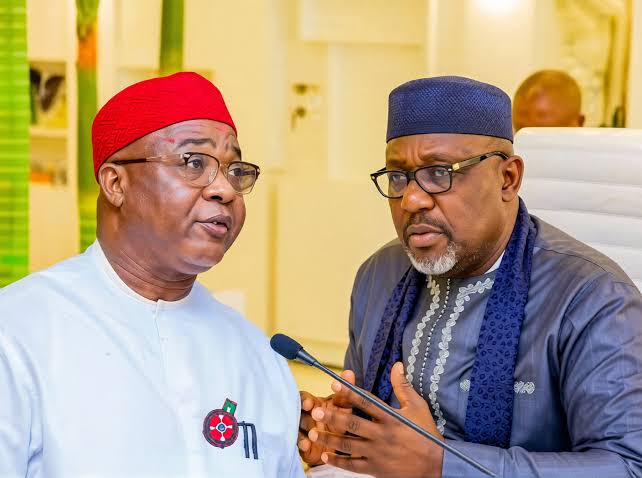
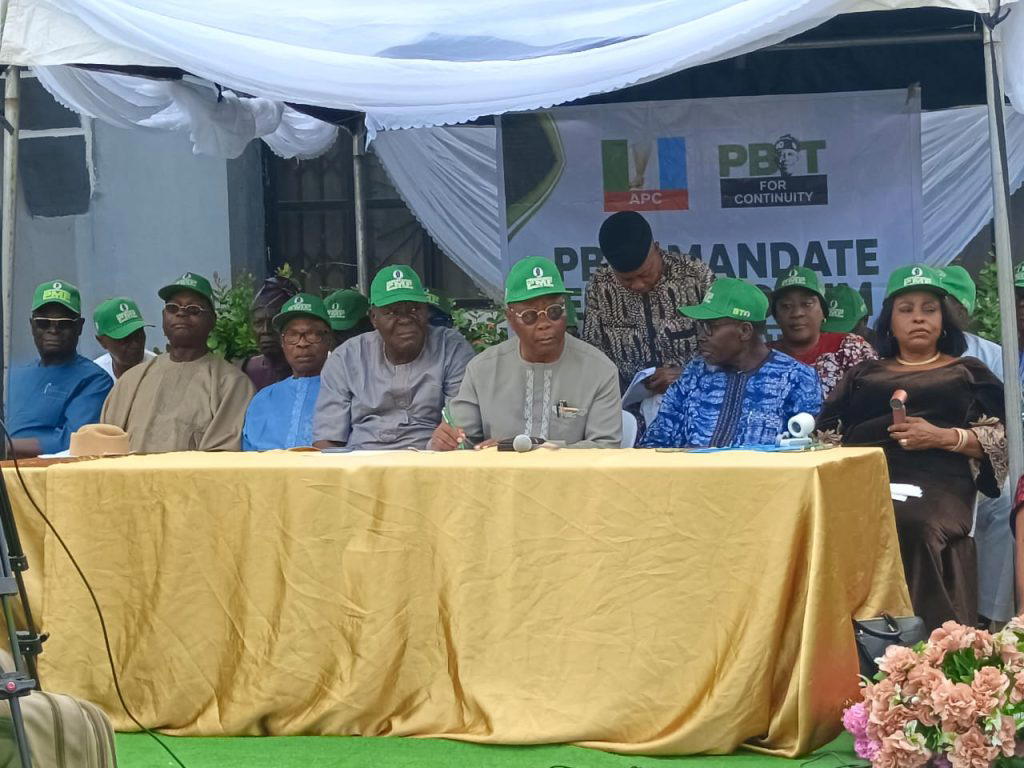
APC has mechanism to manage our govs, Rainbow Coalition’s feud — Yilwatda

*We’ve no plan to make Nigeria one party state *Nigerians should choose leaders based on records, character, capacity to deliver *Says Tinubu’s reforms must translate into jobs, food, better incomes, security By Soni Daniel, Northern Regional Editor National Chairman of the All Progressives Congress, APC, Prof. Nentawe Goshwe Yilwatda, has said the ruling party has no ambition to turn Nigeria into a one-party state despite the influx of politicians from opposition parties into its fold. In an interview with Vanguard, the APC chairman also said the party had mechanisms to resolve differences…
*We’ve no plan to make Nigeria one party state *Nigerians should choose leaders based on records, character, capacity to deliver *Says Tinubu’s reforms must translate into jobs, food, better incomes, security By Soni Daniel, Northern Regional Editor National Chairman of the All Progressives Congress, APC, Prof. Nentawe Goshwe Yilwatda, has said the ruling party has no ambition to turn Nigeria into a one-party state despite the influx of politicians from opposition parties into its fold.
Yilwatda, who spoke on the 2027 general elections, governance and the APC’s preparations for the polls, said a strong ruling party and a competitive multiparty democracy could coexist. In an interview with Vanguard, the APC chairman also said the party had mechanisms to resolve differences between some APC governors and the Federal Capital Territory Minister, Nyesom Wike’s Rainbow Coalition, insisting that internal disagreements would not derail its preparations for the elections.
He defended President Bola Tinubu’s economic reforms, saying the administration had established measures to reposition the economy but must now translate them into jobs, affordable food, better incomes and improved security. Yilwatda urged Nigerians to assess candidates on their records, character and capacity to deliver rather than allow political differences to dictate their choices.
As a democrat, are you not worried that the mass exodus of other politicians into the ruling APC can create a one-party state if the APC wins in January next year? I am a democrat, and I believe that Nigeria’s democracy is stronger when political parties are vibrant, competitive and able to offer citizens credible alternatives. The APC does not seek to eliminate opposition, nor do we believe that a healthy democracy can be sustained without it.
The movement of politicians from one party to another is a feature of democratic politics. Individuals make such decisions for different reasons, and every Nigerian has the constitutional right to freedom of association. What matters is that these movements are voluntary and conducted in accordance with the law. However, the responsibility for maintaining a competitive political environment does not rest with the APC alone.
Opposition parties must also strengthen their internal structures, build public confidence, articulate credible policies and organise effectively. Our ambition is not to turn Nigeria into a one-party state. Our ambition is to build a party that Nigerians freely choose because of its leadership, programmes and record of performance. A strong APC and a competitive multiparty democracy are not mutually exclusive.
We will continue to respect the rights of other parties to organise, campaign and seek the people’s mandate. How is the APC under your leadership helping to actualise the dream of progressive politics, which seeks to make life better for all and reduce authoritarianism? Progressive politics must ultimately be measured by its impact on the lives of ordinary citizens.
It is not enough to speak about progressive ideals; we must demonstrate them through policies, institutions and programmes that expand opportunities, protect citizens’ rights and improve living standards. Under my leadership, the APC is focused on strengthening internal democracy, promoting responsible leadership, expanding grassroots participation and ensuring that the party remains connected to the needs and aspirations of Nigerians.
Our structures must provide opportunities for women, young people, professionals and people from different communities to participate meaningfully in political decision-making. We also recognise that the party has a responsibility beyond winning elections. We must provide constructive feedback to the government, communicate its policies honestly and ensure that the concerns of Nigerians reach the appropriate authorities.
Progressive politics also demands respect for the Constitution, the rule of law, freedom of expression and the independence of democratic institutions. These principles are essential to building a society where government serves the people and power is exercised responsibly. Ultimately, our objective is to ensure that the Renewed Hope Agenda translates into tangible improvements in people’s lives.
For the APC, progressive politics must mean better opportunities, greater inclusion, stronger institutions and a government that remains accountable to the people. The progressive ideology of the APC drives the Renewed Hope Agenda of President Tinubu, which seeks to improve the economy and tackle insecurity, among others. As the chairman of the party, to what extent do you think these ideals have been actualised since 2023?
The Renewed Hope Agenda represents a broad programme of economic reform, infrastructure development, social investment, improved security and sustainable national development. Since 2023, the administration of President Bola Ahmed Tinubu has undertaken significant reforms intend
- apc
- party
- yilwatda
- nigerians
- democracy
- mechanism
- rainbow
- coalition