US midterm elections: Lesson for Nigeria, by Ikechukwu Amaechi

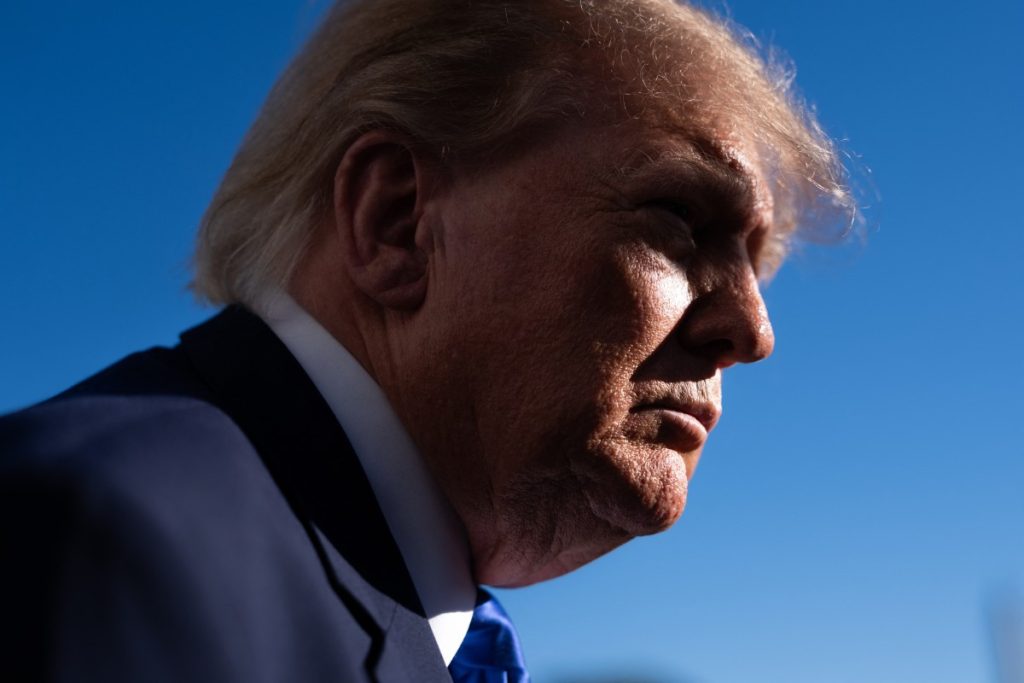
It was, to borrow former U.S. President Barack Obama’s word, a “shellacking” for President Donald Trump and the Republican Party on Tuesday – a damning verdict on his presidency. But unlike Obama in 2010 and President George W. Bush who took responsibility for the thumping of the GOP in the 2006 midterm elections, Trump has, typically, distanced himself from his party’s misfortune.
It was, to borrow former U.S. President Barack Obama’s word, a “shellacking” for President Donald Trump and the Republican Party on Tuesday – a damning verdict on his presidency. On November 3, 2010, Obama, the then U.S. President, famously used the word during a White House press conference to describe his party’s heavy losses in the midterm elections.
In what many considered as “a rare display of vulnerability,” Obama not only spoke openly about the Democratic Party’s drubbing, but also took responsibility for the “humbling” losses in an election that was a referendum on his then two-year presidency. But his experience was not peculiar. Former Presidents Bill Clinton and Ronald Reagan found themselves in similar positions in their first terms.
Now, post-Obama, it is the turn of Trump to lead the Republican Party to the political guillotine. At the end of the midterm elections, the Democrats flipped both the Senate and House of Representatives. Going into the elections, Democrats needed only four seats to win control of the Senate. As I write, they had gained seven seats, taking their numbers to 54.
The Grand Old Party (GOP) has also lost seven seats reducing their numbers to 44. Whatever happens in the contests in Alaska where Republican Dan Sullivan faces Democrat Mary Peltola and two other candidates and Mississippi where Republican Senator Cindy Hyde-Smith faces Democrat Scott Colom in a race that had a very thin margin as of Wednesday morning, Democrats now have the majority in the Senate.
Ditto for the House of Representatives where Democrats that needed only three seats to usher in a historic Hakeem Jeffries’ Speakership – the first Black Speaker in U.S. history – when the new Congress convenes on January 3, 2027. As of Wednesday morning, Democrats have gained 25 seats and still counting, taking their numbers to 228 when they needed 218 to take over the House in what has turned out to be a big blue wave that swept over the country.
But unlike Obama in 2010 and President George W. Bush who took responsibility for the thumping of the GOP in the 2006 midterm elections, Trump has, typically, distanced himself from his party’s misfortune. With the numbers going off the cliff as the results indicated a blue wave tsunami, Trump said the Republican Party would have been victorious had he been on the ballot.
“I wasn’t on the Ballot and if I was, we would have won IN A LANDSLIDE!” he wrote on social media. This is despite his Hail Mary attempt to stave off the shellacking by telling voters to “pretend” he was on the ballot. “When Trump is on the ballot,” he told Fox News in August, “they win.” Americans heeded his advice and pretended he was on the ballot.
The result? Republicans lost control of both the House of Representatives and Senate. Writing in the UK edition of the INDEPENDENT on Wednesday, Alex Woodward said: “The 2026 midterm elections were a Trump-directed referendum about his favourite person. And the Republican president — whose popularity has fallen to historic lows — lost it in a landslide.” Truth is, the midterm elections is a referendum on the first two years of Trump’s second term.
His name was not on the ballot, no doubt, but the election was about him – what he has done and what he has refused to do since 2024. And that is the way it ought to be. I have always argued that democracy does not guarantee victory for the best candidate(s). No! But it guarantees that the electoral will of the people as expressed through the ballot will always carry the day.
And if the people later find out that they elected a knucklehead, they can remedy the situation in subsequent elections like Americans obviously did on Tuesday, while those who excel are rewarded with a mandate renewal. That is why periodic election is the lifeblood of every democracy. As Rick Wilson, an American conservative political strategist, once noted, “Every re-election campaign is a referendum on the incumbent.
Every. Single. One.” So, though Trump was not on the ballot, issues that shaped the outcome included economy and inflation – rising living costs and general economic concerns, state of U.S. democracy, foreign policy and the Iran war, particularly its impact on global oil supplies, medical care and insurance premiums and government corruption and leadership debacle, issues orchestrated by the Trump presidency.
So, despite the fact that his name was not on the ballot, the outcome of the midterm elections is a severe rebuke to him and the Republican Party that enables him ride roughshod over fellow Americans just as it happened in 1974 when, under the presidency of Richard Nixon in the wake of the Watergate scandal, Democrats gained 49 House seats and four Senate seats.
But in reality, it was not just the Watergate scandal that drove the blue wave, but the sense that Republicans had defended corruption and criminality in the White House as they are doing today under the megalomaniac, Donald Trump. In essence, it is just a déjà vu
- midterm
- election
- trump
- party
- ballot
- president
- obama
- republican