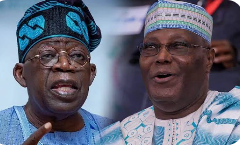
The war on survival: How Tinubu’s elite economy is suffocating Nigeria’s majority, By Ayodele Adio

Whom, then, does this Tinubu economy serve? For the teacher in Ibadan, the trader in Onitsha, the commercial driver in Kano, and the young graduate in Lagos, Nigeria has become a daily
Whom, then, does this Tinubu economy serve? Macro-economic numbers may look clean on press releases emanating from Aso Rock, but they serve only political officeholders, government contractors, and financial gatekeepers. For the teacher in Ibadan, the trader in Onitsha, the commercial driver in Kano, and the young graduate in Lagos, Nigeria has become a daily endurance test with no finish line.
There is a quiet, now-usual, heavy dread settling into homes and marketplaces across Nigeria. It is no longer just the familiar irritation of rising prices; it has hardened into a creeping, collective premonition. Every time a struggling Nigerian calculates his daily commute, a parent stares at an overdue fee payment notice, and a young worker realises their entire salary cannot buy a single bag of rice, the exact same thought crosses their mind: Nigeria will happen to me.
We have to be clear: this is not a temporary rough patch or an unavoidable storm. It is a deliberate economic design. The Nigerian state currently operates an engine built strictly for the political elite and for those whose stock in trade is proximity to power. How do we begin to reckon unchecked borrowing that runs into tens of billions of dollars, while the middle class evaporates and the working poor are shoved off a fiscal cliff? As Tinubu’s administration approaches the National Assembly to seek approval for a staggering $20.52 billion and €1.045 billion external borrowing plan, the gap between official extravagance and public starvation has never been more glaring.
This is the central point of Atiku Abubakar’s economic diagnosis: government now exists primarily to protect the interests of those in power, while ordinary people are left struggling to afford the basic necessities of life.
The numbers tell a story that official press statements cannot spin. The PiggyVest Savings Report 2025 reveals a country operating at the absolute limit of human endurance. Three in ten Nigerian adults earn below ₦100,000 monthly, while more than fifty per cent step into every new month with zero certainty of how they will cover their basic food and utilities. Only six per cent of the entire population reports feeling financially secure. Food alone now devours seventy-two per cent of household income. Meanwhile, data from the EFInA Access to Financial Services Survey shows that while fifty-three per cent of Nigeria’s poorest have zero access to basic financial safety nets, about 80 per cent are experiencing some form of financial strain.
As nominal wages crawl or sits dead still, inflation burns through purchasing power, handing workers money that melts in their hands before they can even reach the market.
Atiku has consistently argued that no economy can protect its working class without aggressively anchoring five fundamental public pillars: transportation, education, health, food and housing. Under the current administration, every single one of these pillars has been turned into a tool of financial punishment.
When petrol subsidies were abruptly yanked away on Day One of this administration, the government promised 1,000 Compressed Natural Gas buses to cushion the impact. That promise dissolved into thin air. The Presidential CNG Initiative has largely stalled out, leaving millions of workers to bleed out their daily wages on extortionate transport fares just to keep low-paying jobs. In contrast, Atiku proposes an industrial subsidy programme to lower energy costs and state-backed investments in public mass transit fleets to immediately collapse commute costs for urban workers.
In public education, rather than funding universities and vocational centres, tuition fees across public institutions were hiked beyond reach. The state’s answer was NELFUND, which has forced vulnerable young Nigerians into institutional debt before they even earn their first paycheck. Atiku advocates replacing these predatory students loan traps with direct university funding grants and debt-forgiveness provisions to ensure education remains a driver of social mobility, rather than lifelong debt.
Public healthcare remains a wrecking ball aimed at family stability. Out-of-pocket medical expenses mean that a single emergency, a single surgery, or one serious diagnosis is all it takes to wipe out lifetime savings and plunge a middle-class family into structural poverty. Atiku’s plan focuses on expanding universal health insurance coverage alongside strengthening primary care centres to shield vulnerable households from crippling catastrophic medical expenses.
Housing delivery is perhaps the most glaring betrayal. Construction is universally recognised as the single most labour-intensive engine for rapid job creation and wealth distribution, yet public housing in Nigeria remains an elite real estate game. Look at what serious governance achieves when the political will exists: between 2020 and 2024, Algeria built and distributed over 1.7 million public housing units through its state-backed AADL programme. That single initiative put roofs over millions of working families while generating massive domestic employment. In Nigeria, state-backed housing is virtually invisible for the poor, built instead for speculative investors in Abuja and Lagos, while everyday workers sleep in slums or pay extortionate rents. This administration promised 100,000 housing units and has delivered less than a thousand, even though it claims about 10,000 units are under construction. In contrast, Atiku’s blueprint calls for massive state-backed investments in affordable, low-cost social housing that will generate widespread economic activity while restoring human dignity to the working class.
At the epicentre of this devastation sits the food crisis. Agricultural output is dropping off a cliff because farmers are caught in a deadly vise of rural insecurity, unpayable diesel costs, and zero federal input support. When farmers cannot access their fields without risking their lives, families in the cities cannot afford to eat. When a basic basket of tomatoes or a tuber of yam becomes so expensive to buy, then the state has surrendered its most primary obligation to its citizens. To turn the tide, Atiku proposes direct input subsidies, security coverage for farming corridors, and targeted incentives for rural agricultural producers to stabilise food supplies and lower market prices. His plan also signals a strategic shift from an over-reliance on subsistence farming to providing the financial and fiscal environment to encourage mechanised farming.
Atiku Abubakar’s warning remains explicit and urgent: you cannot borrow your way into national prosperity while pricing your own people out of bread, transit, and shelter. Until governance shifts its focus from elite privilege to protecting the purchasing power of the poor, that terrifying premonition of “Nigeria could happen to me” will remain the lived reality of an entire generation.
Ayodele Adio writes from Eti Osa 2, Lagos.
- tinubu
- economy
- nigeria
- war
- survival
- majority
- ayodele
- adio