Raise the Red Lantern review – Gong Li gives a decade-defining performance in an addictively ruthless masterpiece
Gong simmers with rage, loneliness and humiliation as the ‘fourth mistress’ navigating the intimate political savagery of her husband’s compound in Zhang Yimou’s 1991 thriller Revisiting Zhang Yimou’s grippingly addictive psychological drama from 1991, adapted from a novella by Su Tong, is a reminder of what a great impact this movie made on western audiences. Like Jung Chang’s memoir Wild Swans from the same year, Raise the Red Lantern opened our eyes to 20th-century China’s secret theatre of cruelty and misogyny; elaborate domestic rituals of submission and servitude coexisted with…
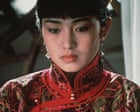
Gong simmers with rage, loneliness and humiliation as the ‘fourth mistress’ navigating the intimate political savagery of her husband’s compound in Zhang Yimou’s 1991 thriller
Revisiting Zhang Yimou’s grippingly addictive psychological drama from 1991, adapted from a novella by Su Tong, is a reminder of what a great impact this movie made on western audiences. They responded to its arguably westernised tale of a young woman’s desperate loneliness in a sinister environment that resembles something by Charlotte Brontë or Daphne du Maurier. Like Jung Chang’s memoir Wild Swans from the same year, Raise the Red Lantern opened our eyes to 20th-century China’s secret theatre of cruelty and misogyny; elaborate domestic rituals of submission and servitude coexisted with infinitely subtle plotting, resentful manoeuvring and covert denunciation, habits of thought that could so easily be absorbed into Maoism.
Gong Li gives one of the great performances of the 1990s as Songlian, a beautiful, intelligent young woman in 1920s China who is forced to abandon her university studies after just six months because her father has died and there is no longer money for the fees. In the unforgettable opening scene, which unfolds with a single unbroken shot of Gong’s pale face, incandescent with shock and pain, Songlian announces to her callous stepmother (who remains off camera) that she is ready to accept marriage – and then her eyes brim with tears. Her suppressed rage, loneliness and humiliation are to simmer below the surface for the rest of the film.
Songlian arrives at the family compound of her autocratic new husband, Chen (Ma Jingwu), whose face is never clearly seen. This is virtually a walled city-state, subject to Chen’s implacably observed family traditions; Songlian is to be the “fourth mistress” occupying her own quarters, attended to by her own maidservant, the disobedient Yan’er (Kong Lin) who had hoped for “mistress” status herself. There are three other women, each in their own apartment: the stately, impassive “first mistress” Yuru (Jin Shuyuan) of Chen’s own age who has given him a grownup son; the homely, blandly smiling “second mistress” Zhuoyun (Cao Cuifen) who has only managed to give Chen a daughter; and the glamorous, haughty “third mistress” Meishan (He Saifei), a former opera singer who clearly resents Songlian, the new favourite.
Chen presides over it all like a Renaissance Tudor monarch, perhaps deriving unspoken erotic pleasure from capriciously transferring his attentions from one woman to the next. He has a bizarre tradition of putting red lanterns around the apartment of whichever of his mistress-wives he wishes to spend the night with, a decision that is bellowingly announced with elaborate formality by his major domo. (The “first mistress” never gets a red lantern, a mortification she accepts without comment.) And furthermore, the mistress currently enjoying Chen’s favour is allowed a privileged kind of foot-massage from a skilled ancient servant, a kind of quasi-conjugal pleasure.
In this way, Chen’s power and authority are imposed with a mesmeric choreography. For their part, his mistresses have to judge how and by how much to undermine each other without getting into trouble, and also how much to submit or show rebellion to Chen himself. A pouting display of resentment might amuse or arouse the master but, pushed too far, it might result in punishment and a disastrous loss of face. Poor Songlian is left alone for much of the day, and chances across a locked section of the compound where some unhappy mistresses are reputed to have died by hanging some time ago. She at first assumes that these women have taken their own lives, but as things turn out, this might not have exactly been the case. More and more, this dysfunctional household starts to resemble, in modern terms, a kind of death cult.
But it is Chen’s achievement – and in its way, the film’s achievement – to make you accept the normality of what is happening. The deeply strange business with the red lanterns and the foot massage is the culture of this enclosed world, which Songlian and the camera never leave. Songlian is to discover a plot against her, via the slippery and treacherous Yan’er who, as the lower-caste figure, is to pay a higher price than any of them. But the film shows that there are, potentially at any rate, any number of poisonous plots and stratagems swirling around at any moment. Survival is about anticipating them and turning them against one’s enemies without abandoning the mask of sisterly politeness.
This is a thrilling, fascinating study in intimate political savagery and a ruthless competition for the right to exist. The women are pitted against each other and their tragedy is that they do not realise that there is no difference between them; they are all decorative items, preserved, cherished or snuffed out like the red lanterns themselves.
- gong
- red
- lantern
- performance
- loneliness
- review
- masterpiece
- rage